
Marissa Mayer launches Dazzle, an AI assistant targeted at mothers
Marissa Mayer, former Yahoo CEO, has introduced Dazzle, an AI assistant designed for mothers. The tool analyzes users' photo libraries to provide personalized assistance, such as describing what makes a child unique or suggesting recipes. The launch has ignited discussions about gender stereotypes, emotional labor, and the role of AI in reinforcing societal biases.

Editor, Lazyfounder
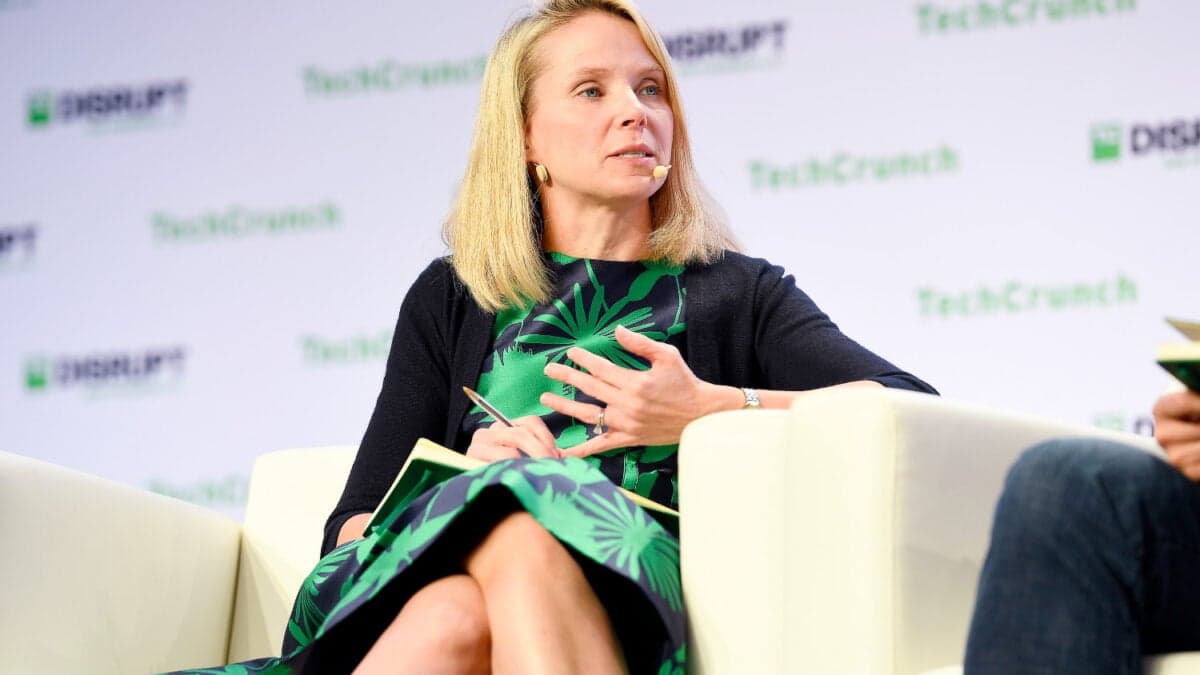
TABLE OF CONTENTS
How Dazzle works
Dazzle is an AI assistant that uses a user’s photo library to generate personalized suggestions and insights. Unlike other AI tools that rely on texts, emails, or documents, Dazzle focuses solely on visual data. According to Mayer, this approach caters to women who prefer visual interactions with technology.
The tool can perform tasks such as describing what makes a user’s child special for a school assignment or recommending recipes based on images of meals or ingredients. Mayer demonstrated this feature by using Dazzle to generate three traits about her daughter for a classroom activity.
Mayer’s rationale for Dazzle
Mayer has acknowledged that women have been underrepresented in AI development and usage. She claims that Dazzle addresses this gap by prioritizing visual engagement, a preference she attributes to women. The tool is marketed as a way to help mothers manage daily tasks without relying on traditional text-based AI assistants.
Dazzle’s design avoids accessing personal communications, such as emails or texts, to maintain privacy and focus on photos as the primary data source. Mayer describes it as transforming a user’s camera into a "proactive assistant" that understands preferences and needs.
Criticism and controversy
Dazzle’s launch has drawn criticism for reinforcing gender stereotypes. Critics argue that the tool frames motherhood as a series of tasks to be outsourced to AI, reducing emotional labor to a transactional process. Some have dubbed it an "AI wife" or "emotional labor bot," designed to alleviate the mental load traditionally shouldered by women.
The debate extends to broader concerns about gender bias in AI. Studies cited by Gizmodo suggest that women are less likely to engage with AI tools than men, a disparity Mayer claims Dazzle aims to address. However, critics question whether the solution lies in creating AI tools that perpetuate existing stereotypes rather than challenging them.
Broader context for founders
The launch of Dazzle intersects with ongoing discussions about Silicon Valley’s role in shaping societal norms, particularly around gender and technology. Earlier reporting from Lazyfounder explored Silicon Valley’s shift from countercultural ideals to a focus on defense contracts and market-driven solutions, raising questions about the ethical responsibilities of tech leaders.
Additionally, the scrutiny of AI tools for bias and inclusivity remains a key concern. For instance, Cognition’s appointment of Alex Stamos as its first Chief Information Security Officer highlights the growing emphasis on making AI tools secure and accessible—a contrast to Dazzle’s niche focus on a specific demographic.
What this means
Lazyfounder analysis — our interpretation, not reported fact.
Dazzle’s launch is a microcosm of the tensions in AI development: innovation versus reinforcement of stereotypes, personalization versus privacy, and inclusion versus exclusion. For founders, it underscores the importance of considering not just the technical capabilities of AI but also its societal impact. Tools like Dazzle may solve immediate problems for a specific audience, but they also risk entrenching outdated norms. The backlash highlights how easily AI can become a lightning rod for broader cultural debates, especially when it touches on gender roles and emotional labor.
Related on Lazyfounder
Sources
- Gizmodo · 2026-10-26
Former Yahoo CEO Needed AI to Help Describe What Makes Her Own Daughter Special
This story is an original summary drafted with AI by Lazyfounder from the reporting listed above and checked by automated validation. Facts are attributed to their original publishers; sections marked as analysis are Lazyfounder's. Where a source is in another language, facts were machine-translated and quotations are reported, not reproduced. Read the original coverage via the links, and see our AI policy and corrections policy.

About the author
Editor, Lazyfounder
Tarun Mottlia edits LazyFounders, covering Indian startups, funding rounds, AI and product launches. Every story on the site is AI-assisted and checked against its cited sources before publication.
More stories by Tarun MottliaGet the LazyFounder Brief
Startup, funding and AI news in a five-minute read. Join the early-access list.
