

Lemnisca builds software to simulate fermentation at factory scale
Lemnisca, a Bengaluru-based startup founded in 2025, has developed a digital twin platform to predict how fermentation processes will behave at industrial scale. The company aims to address the challenges of scaling up biomanufacturing, where lab-tested processes often fail in large production tanks due to physical and biological changes.

Editor, Lazyfounder
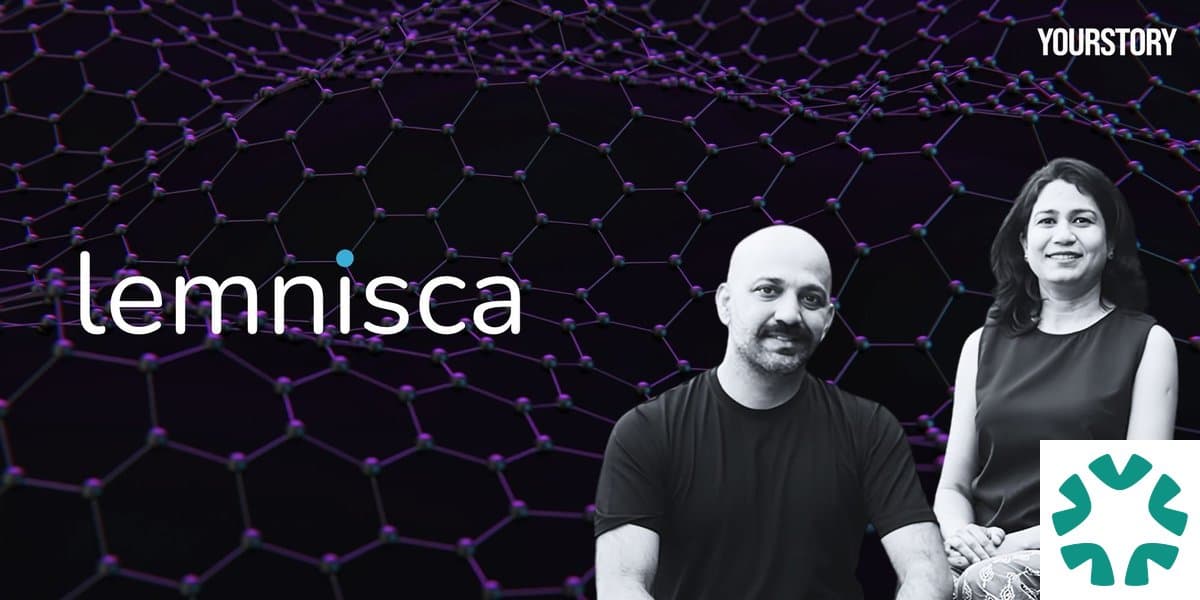
TABLE OF CONTENTS
KEY HIGHLIGHTS
- Lemnisca builds software to simulate fermentation processes at industrial scale using digital twin technology.
- Founded in 2025 in Bengaluru by Pushkar Pendse and Shilpa Nargund, both with prior experience in industrial fermentation.
- The company raised an undisclosed pre-seed round in November 2025, led by Theia Ventures with participation from PointOne Capital and Dr Satakarni Makkapati.
- Lemnisca’s platform combines biology, reactor physics, and data to predict fermentation behavior before scaling up.
- The company claims its software can reduce development timelines by up to 50% and improve operating efficiency by 25%.
What Lemnisca’s software does
Lemnisca’s platform is a digital twin designed to simulate how fermentation processes will behave at industrial scale. The software models the physical and biological dynamics of fermentation tanks, including factors like oxygen distribution, mixing efficiency, and heat buildup. According to YourStory, the company’s approach combines biology, reactor physics, and data rather than relying solely on historical data patterns. This allows manufacturers to predict how engineered microbes will perform in large-scale production before committing to building or scaling a plant.
Why scale-up is a problem in fermentation
Fermentation processes often behave differently when moved from laboratory flasks to industrial tanks, which can hold tens of thousands of litres. According to the company, this discrepancy arises because scale alters physical conditions such as oxygen reach, mixing uniformity, and heat distribution. These changes can lead to unpredictable outcomes, including failed batches or costly redesigns of production plants. Lemnisca’s founders, Pushkar Pendse and Shilpa Nargund, identified this gap as a major source of financial losses in the biomanufacturing industry.
How the platform is built and validated
Lemnisca’s software is trained using a combination of wet-lab experimentation and computational modelling. This means the platform is exposed to real fermentation data rather than relying exclusively on historical datasets. The company claims its approach can cut development timelines by up to 50% and improve operating efficiency by 25%. However, these projections are based on internal estimates, and no independent validation or public deployment data is available yet.
Funding and business strategy
Lemnisca raised an undisclosed pre-seed round in November 2025, led by Theia Ventures, with participation from PointOne Capital and Dr Satakarni Makkapati. The funds are allocated for expanding its Bengaluru laboratory, further developing the platform, and running early pilot programs. The company is targeting fermentation-led manufacturers that are already in the process of scaling up, while also building an internal product pipeline.
Theia Ventures, which has backed other deep-technology startups focused on industrial decarbonisation, has stated that biomanufacturing requires digital simulators capable of predicting microbial performance at industrial scale. Lemnisca is currently inviting pilot collaborations with contract manufacturers, equipment makers, and ingredient brands.
The company operates in a competitive global market, with rivals such as Differential Bio in Germany and Invert Bio in the United States offering similar digital twin solutions for biomanufacturing.
The broader challenge in biomanufacturing
Shilpa Nargund, Lemnisca’s CTO, has framed the challenge as one of cost. While biotechnology has successfully produced high-value molecules like insulin at thousands of dollars per kilogram, scaling the same methods for products sold at a few dollars per kilogram remains difficult. According to Nargund, scale and predictability are critical factors in achieving this transition, and digital tools like Lemnisca’s platform are positioned as a solution.
What this means
Lazyfounder analysis — our interpretation, not reported fact.
Lemnisca’s focus on fermentation simulation reflects a broader trend in biomanufacturing: the need for tools that reduce the financial and operational risks of scaling up. For founders and operators in this space, digital twins could become a standard part of the toolkit, especially as the industry expands into lower-margin products. The presence of deep-tech and decarbonisation-focused investors in Lemnisca’s pre-seed round also signals growing confidence in software-driven approaches to industrial efficiency. However, the lack of public validation data means potential customers and competitors will likely watch closely as the company progresses through its pilot phase.
Key takeaways
- Fermentation startups and contract manufacturers may face a new tool for reducing scale-up risks and costs, potentially accelerating time-to-market.
- Competitors like Differential Bio and Invert Bio offer similar services, signaling a growing market for digital twin solutions in biomanufacturing.
- The pre-seed funding round, backed by deep-tech and decarbonisation-focused investors, highlights investor interest in software-driven industrial efficiency.
- Founders in biomanufacturing may need to evaluate digital twin platforms as a way to bridge the gap between lab-scale development and industrial production.
Sources
This story is an original summary drafted with AI by Lazyfounder from the reporting listed above and checked by automated validation. Facts are attributed to their original publishers; sections marked as analysis are Lazyfounder's. Where a source is in another language, facts were machine-translated and quotations are reported, not reproduced. Read the original coverage via the links, and see our AI policy and corrections policy.

About the author
Editor, Lazyfounder
Tarun Mottlia edits LazyFounders, covering Indian startups, funding rounds, AI and product launches. Every story on the site is AI-assisted and checked against its cited sources before publication.
More stories by Tarun MottliaGet the LazyFounder Brief
Startup, funding and AI news in a five-minute read. Join the early-access list.
