
Environmental groups push to drain Lake Powell as Colorado River Crisis exposes submerged landmarks
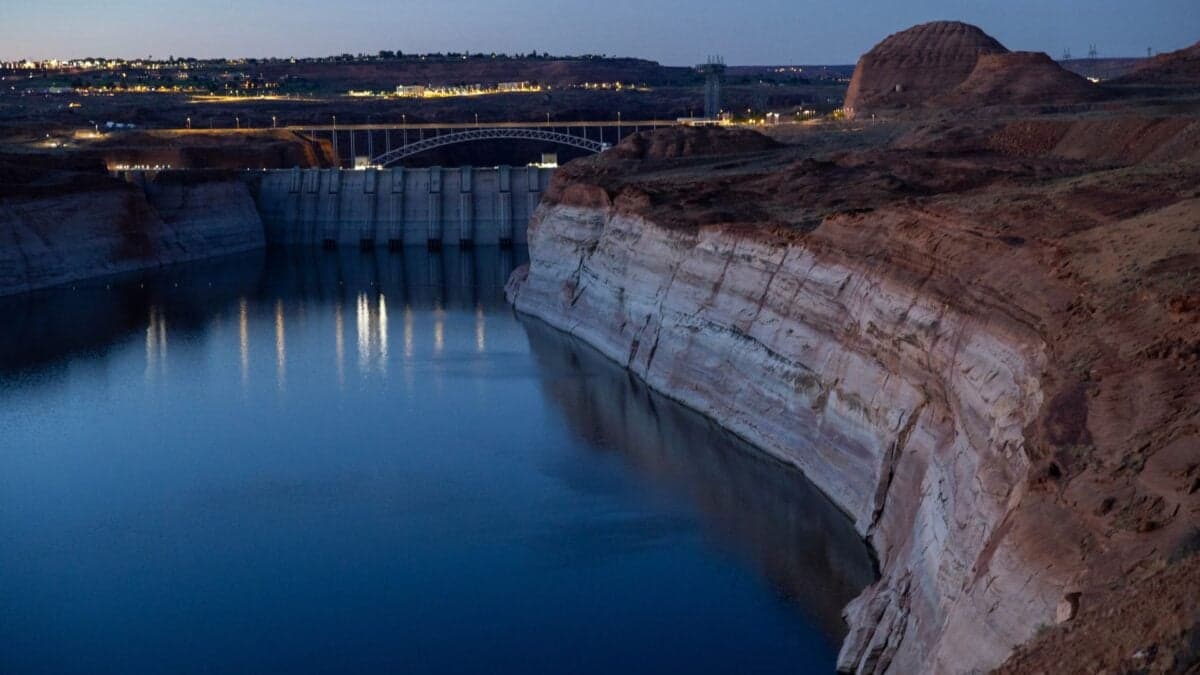
Lake Powell’s plunging water levels, a casualty of the Colorado River Crisis, have resurrected not only submerged natural landmarks but also a contentious proposal: draining the reservoir entirely. Environmental groups argue that restoring Glen Canyon could improve water supply reliability, but the plan faces legal, financial, and political hurdles. Meanwhile, federal cuts to water allocations have triggered lawsuits from Arizona and Nevada, underscoring the stakes for the region’s water future.

Editor, Lazyfounder
30 SEC SUMMARY
- Lake Powell’s record-low water levels, driven by the Colorado River Crisis, are exposing submerged natural features like Gregory Bridge and Cathedral in the Desert.
- Environmental groups, including the Glen Canyon Institute, are pushing to drain Lake Powell to restore ecosystems and improve water supply reliability.
- The 'Fill Mead First' plan aims to consolidate water storage in Lake Mead to reduce evaporation losses but faces legal, financial, and recreational opposition.
- Federal water cuts for Arizona, California, and Nevada have sparked lawsuits, while scientists project a 31% decline in Colorado River flows by 2050.
KEY HIGHLIGHTS
- Lake Powell and Lake Mead reached record-low water levels in 2026, revealing submerged natural landmarks like Gregory Bridge and Cathedral in the Desert.
- The Glen Canyon Institute proposes draining Lake Powell to restore Glen Canyon’s ecosystem, which once supported 79 plant species, 189 bird species, and 3,000 ancient ruins.
- The 'Fill Mead First' strategy involves drilling new diversion tunnels around Glen Canyon Dam to redirect water to Lake Mead, reducing evaporative losses of 860,000 acre-feet annually.
- The federal government mandated cuts to water draws from the Colorado River, prompting lawsuits from Arizona and Nevada over the plan’s legality.
- Climate change and overuse are projected to reduce Colorado River flows by up to 31% by 2050, exacerbating water scarcity in the region.
Why Lake Powell’s decline is accelerating calls for drastic action
Lake Powell, formed by the Glen Canyon Dam in the 1960s, has dropped to record-low levels in 2026, exposing long-submerged features like Gregory Bridge and Cathedral in the Desert. The Glen Canyon Institute and other environmental groups see this as an opportunity to advance a decades-old argument: draining Lake Powell to restore Glen Canyon’s ecosystem and improve water storage efficiency.
Before the dam’s construction, Glen Canyon supported over 79 plant species, 189 bird species, and 34 mammal species, along with thousands of ancient ruins. Advocates claim that consolidating water storage in Lake Mead—a strategy known as 'Fill Mead First'—could reduce evaporative losses, which currently drain 860,000 acre-feet annually from Lake Powell, while reviving the canyon’s natural habitat.
The 'Fill Mead First' plan: engineering challenges and opposition
The 'Fill Mead First' proposal involves drilling new diversion tunnels around Glen Canyon Dam to redirect the Colorado River’s flow toward Lake Mead, effectively bypassing Lake Powell. Proponents suggest installing hydropower turbines in these tunnels to maintain electricity generation. However, the plan faces significant obstacles: estimates suggest it could take a decade and cost billions of dollars to execute.
Opposition comes from multiple fronts. Water recreation industries, which rely on Lake Powell’s tourism, argue that draining the reservoir would devastate local economies. Legal and political resistance is also expected, particularly from stakeholders invested in the status quo of Colorado River management. The federal government’s recent environmental impact statement for Lake Powell and Lake Mead did not even consider the strategy, signaling its low priority among policymakers.
Federal cuts and lawsuits escalate tensions over water rights
In a separate but related development, the federal government ordered Arizona, California, and Nevada to reduce their water draws from the Colorado River. The directive, aimed at stabilizing the river’s dwindling supplies, has provoked legal challenges: Arizona and Nevada have filed lawsuits, calling the federal plan unlawful and arguing that it disproportionately impacts their water rights.
The lawsuits underscore the broader conflict over water allocation in the West. With scientists projecting a 31% decline in Colorado River flows by 2050 due to climate change and unsustainable use, states and stakeholders are increasingly at odds over how to manage—or even rethink—the region’s water infrastructure.
What this means
Lazyfounder analysis — our interpretation, not reported fact.
For founders and operators in the Colorado River Basin, the Lake Powell debate is a microcosm of the larger challenges facing water-dependent industries. The push to drain the reservoir reflects growing pressure to rethink infrastructure built for a 20th-century climate—one that no longer exists. The legal battles over federal cuts, meanwhile, reveal the fragility of water rights, which could force businesses to adapt to tighter allocations, higher costs, or even relocation. Startups in water tech, agriculture, or energy may find opportunities in addressing these inefficiencies, but the political and financial risks of large-scale infrastructure changes remain formidable.
Key takeaways
- Founders in water-intensive industries (e.g., agriculture, tech manufacturing, or beverage production) may face stricter allocations and higher costs as federal cuts take effect.
- Startups in water management, conservation tech, or hydropower infrastructure could see demand rise for solutions addressing evaporative losses and reservoir inefficiency.
- Legal challenges to federal policies highlight the risks of operating in regulated water basins—compliance and advocacy may become critical for long-term planning.
- The debate over reservoir management signals potential shifts in regional water rights, affecting site selection, supply chains, and operational feasibility for businesses.
Related on Lazyfounder
Sources
- Gizmodo · 2026-10-30
Lake Powell Is Hiding Something Spectacular—and Draining It Would Bring It Back
This story is an original summary drafted with AI by Lazyfounder from the reporting listed above and checked by automated validation. Facts are attributed to their original publishers; sections marked as analysis are Lazyfounder's. Where a source is in another language, facts were machine-translated and quotations are reported, not reproduced. Read the original coverage via the links, and see our AI policy and corrections policy.

About the author
Editor, Lazyfounder
Tarun Mottlia edits LazyFounders, covering Indian startups, funding rounds, AI and product launches. Every story on the site is AI-assisted and checked against its cited sources before publication.
More stories by Tarun MottliaGet the LazyFounder Brief
Startup, funding and AI news in a five-minute read. Join the early-access list.
