
Japan ends era of near-zero interest rates, impacting borrowers and savers
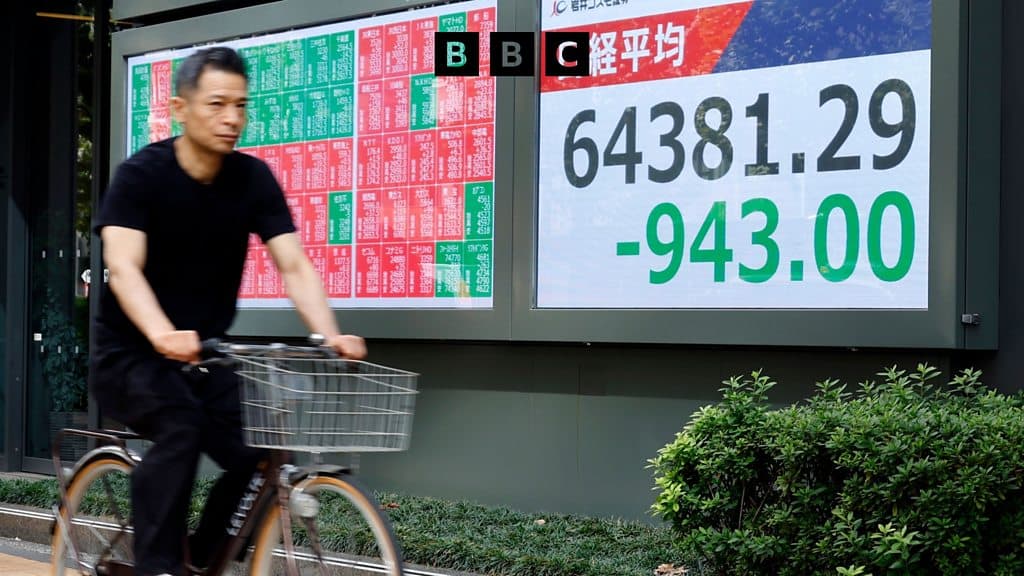
Japan has begun raising interest rates after decades of virtually free borrowing, marking a historic shift in its monetary policy. The change is reverberating through the economy, affecting everything from mortgage costs to investment strategies and creating new opportunities for savers and lenders.

Editor, Lazyfounder
KEY HIGHLIGHTS
- Japan has begun raising interest rates after decades of virtually free borrowing.
- The shift is impacting savers, borrowers, and investors in Japan.
- A former rate-setter at the Bank of Japan discussed the economic implications of this change.
- Mortgage costs are expected to rise for homeowners.
- Some savers are considering repatriating investments to Japan due to higher rates.
- Rising borrowing costs are creating new economic opportunities for certain sectors.
Why Japan is raising rates now
After maintaining near-zero or negative interest rates since the late 1990s, the Bank of Japan has started tightening monetary policy. While the specifics of the rate hike were not detailed in the report, the move reflects a broader effort to normalize policy amid shifts in Japan’s economic outlook, including wage growth, inflation, and a weakening yen.
A former rate-setter at the Bank of Japan, interviewed by BBC News, highlighted the potential implications for borrowers and savers. The interview suggested that the era of ultra-cheap money—long a defining feature of Japan’s economy—may be coming to a close.
Impact on borrowers and savers
For borrowers, the rate hike is already being felt. A Tokyo homeowner, featured in the BBC report, expects her mortgage costs to rise, mirroring concerns among households and businesses that have grown accustomed to negligible borrowing costs. Higher rates could dampen consumer spending and business investment, particularly in sectors reliant on leverage.
For savers, the change presents an opportunity. One saver interviewed is considering repatriating investments to Japan, drawn by the prospect of higher returns on deposits and fixed-income products. This could reverse some of the capital outflows that have long characterized Japan’s low-rate environment.
Broader economic ripple effects
The rising cost of borrowing is also creating opportunities for lenders and certain financial institutions. Banks, for instance, may see improved net interest margins as loan rates climb, while fintech firms offering savings or investment products could attract more customers seeking better yields.
However, the transition could disrupt segments of the economy that have thrived under cheap money. Real estate, construction, and leveraged buyouts—sectors where debt plays a central role—may face headwinds as financing becomes more expensive. The shift could also influence corporate behavior, pushing companies to prioritize profitability over growth-at-all-costs strategies.
What this means
Lazyfounder analysis — our interpretation, not reported fact.
Japan’s shift away from decades of ultra-low interest rates is a historic turning point for global finance. For founders and operators, this move signals a reset in capital costs, particularly for those with exposure to Japanese markets or yen-denominated debt. Startups relying on cheap borrowing—whether for expansion, R&D, or working capital—may face higher financing costs, while savers and fixed-income investors could see improved yields.
For Indian founders, this is a reminder of how swiftly monetary policy can reshape competitive dynamics. Companies with operations or investments in Japan may need to reassess their hedging strategies or repatriation plans, especially if they’ve been parking funds overseas to benefit from low rates. Meanwhile, sectors like real estate, fintech, and lending—where leverage is critical—could see margin pressure or slower growth.
Globally, Japan’s rate hike could also tighten liquidity, as investors rebalance portfolios away from cheaper yen carry trades. This might dampen risk appetite for emerging-market assets, including Indian startups seeking funding. The bigger takeaway: in a world where capital costs were long treated as a given, policy shifts like this force operators to rethink assumptions about debt, investment, and growth.
Key takeaways
- Japan’s rate hike ends an era of ultra-cheap borrowing, increasing costs for leveraged businesses and homeowners.
- Savers and fixed-income investors in Japan may benefit from higher yields, potentially attracting repatriated capital.
- Startups and businesses with yen-denominated debt or investments will face higher financing costs, requiring a review of capital strategies.
- Global liquidity could tighten as investors reassess yen carry trades, potentially impacting funding availability for emerging-market startups.
Related on Lazyfounder
Sources
- BBC News (Tech & Business) · 2026-10-26
Business Daily - Follow the Money: The end of cheap money in Japan - BBC Sounds
This story is an original summary drafted with AI by Lazyfounder from the reporting listed above and checked by automated validation. Facts are attributed to their original publishers; sections marked as analysis are Lazyfounder's. Where a source is in another language, facts were machine-translated and quotations are reported, not reproduced. Read the original coverage via the links, and see our AI policy and corrections policy.

About the author
Editor, Lazyfounder
Tarun Mottlia edits LazyFounders, covering Indian startups, funding rounds, AI and product launches. Every story on the site is AI-assisted and checked against its cited sources before publication.
More stories by Tarun MottliaGet the LazyFounder Brief
Startup, funding and AI news in a five-minute read. Join the early-access list.
