
James Webb Telescope's 'little red dots' may be a new cosmic object: black hole stars
Astronomers using the James Webb Space Telescope (JWST) have proposed that a class of mysterious cosmic objects, dubbed "little red dots," may represent an entirely new astronomical phenomenon: "black hole stars." The debate over their nature has divided the scientific community, with competing theories about their origins, characteristics, and role in the early universe.

Editor, Lazyfounder
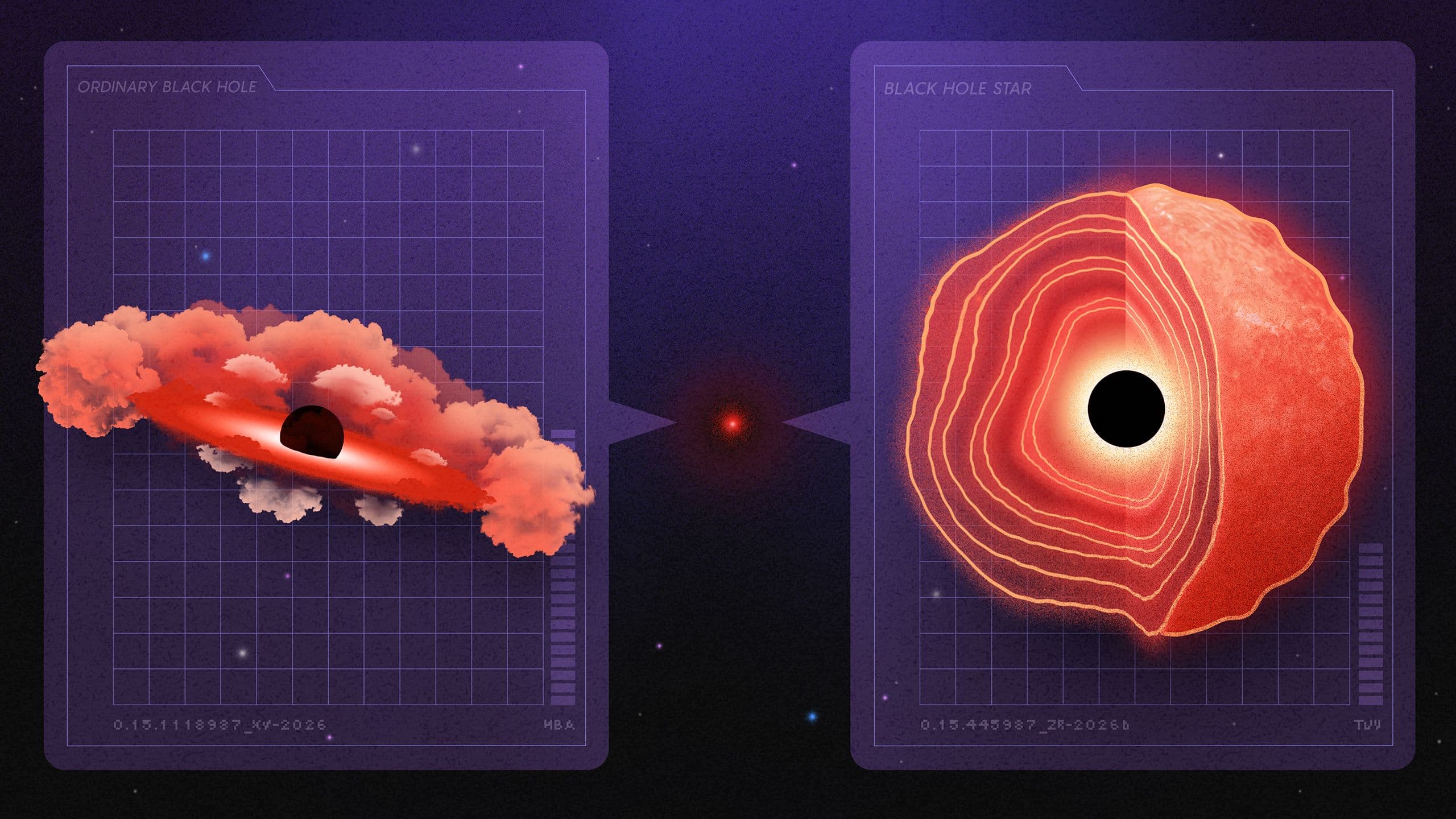
TABLE OF CONTENTS
What are little red dots
The James Webb Space Telescope has captured images of mysterious cosmic objects known as "little red dots," which have puzzled astronomers since their discovery. Initially, researchers thought these objects resembled galaxies or supermassive black holes at the centers of galaxies. However, their unusual spectral signatures and lack of certain expected behaviors, such as flickering or strong x-ray emissions, set them apart from known astronomical objects.
The black hole star hypothesis
In spring 2025, two independent teams of astronomers proposed that little red dots might be a previously unknown type of object called "black hole stars." According to this theory, a black hole star would combine the characteristics of a black hole with the outward appearance of a star—a vast cloud of hydrogen gas, potentially stretching billions of kilometers across.
The teams, led by researchers including Anna de Graaff of the Max Planck Institute for Astronomy and Rohan Naidu of the University of Hawai’i, identified two little red dots with spectral signatures that defied conventional explanations. Their analysis revealed that the hydrogen emissions in these objects were "smeared" across multiple wavelengths, a phenomenon that suggests the presence of a massive black hole embedded within a hydrogen envelope.
This hypothesis challenges the traditional view that little red dots are simply supermassive black holes or young galaxies. If confirmed, black hole stars could represent a missing link in the formation of supermassive black holes, offering new insights into how these cosmic giants evolve.
A polarized debate
The scientific community remains deeply divided over the nature of little red dots. Some astronomers, such as Anna-Christina Eilers of the Massachusetts Institute of Technology and Vadim Rusakov of the University of Manchester, argue that these objects are consistent with supermassive black holes obscured by dust. Others, including Roberto Maiolino of the University of Cambridge and Piero Madau of the University of California, Santa Cruz, have expressed cautious support for the black hole star theory, acknowledging its potential to explain anomalous observations.
Critics of the black hole star hypothesis point to the lack of direct evidence for such objects in existing astrophysical models. They argue that the unusual spectral signatures of little red dots could still be explained by known phenomena, such as highly active galactic nuclei or interactions between multiple black holes. The debate has highlighted gaps in current theories of black hole formation and the behavior of matter in the early universe.
A transient cosmic phase
Observations conducted in August 2026 provided new clues about the fate of little red dots. A census of these objects, along with their blue-hued counterparts, revealed that little red dots appear to vanish as the universe ages beyond 2 to 3 billion years. This suggests they may represent a transient phase in cosmic evolution, potentially bridging the gap between primordial hydrogen clouds and the supermassive black holes observed in older galaxies.
Researchers such as Dale Kocevski of Colby College and Mauro Giavalisco of the University of Massachusetts, Amherst, have speculated that little red dots could be an intermediate stage in the lifecycle of supermassive black holes. If so, studying them could reveal critical details about how these black holes grow and interact with their surrounding environments.
What this means
Lazyfounder analysis — our interpretation, not reported fact.
For astrophysicists and cosmologists, the discovery of little red dots—and the black hole star theory—represents a rare opportunity to rethink fundamental assumptions about the universe. If these objects are indeed a new class of astronomical phenomena, they could force a revision of models describing the formation and evolution of black holes, galaxies, and even the cosmic web itself.
For founders and operators in the space technology sector, this debate underscores the value of cutting-edge observational tools like the JWST. The telescope’s ability to capture unprecedented detail in the early universe is not only advancing scientific knowledge but also highlighting the need for next-generation instruments. Startups working on spectroscopy, data analysis, or telescope technology may find new applications for their innovations in addressing the questions raised by little red dots.
Related on Lazyfounder
Sources
This story is an original summary drafted with AI by Lazyfounder from the reporting listed above and checked by automated validation. Facts are attributed to their original publishers; sections marked as analysis are Lazyfounder's. Where a source is in another language, facts were machine-translated and quotations are reported, not reproduced. Read the original coverage via the links, and see our AI policy and corrections policy.

About the author
Editor, Lazyfounder
Tarun Mottlia edits LazyFounders, covering Indian startups, funding rounds, AI and product launches. Every story on the site is AI-assisted and checked against its cited sources before publication.
More stories by Tarun MottliaGet the LazyFounder Brief
Startup, funding and AI news in a five-minute read. Join the early-access list.
