
96% of coral reefs face collapse within 50 years, IUCN reports
A new report from the International Union for the Conservation of Nature (IUCN) reveals that 96% of the world’s shallow coral reefs are critically endangered and at risk of collapse within the next 50 years. The findings highlight the devastating impact of rising ocean temperatures and marine heatwaves, driven by climate change, on these vital ecosystems.

Editor, Lazyfounder
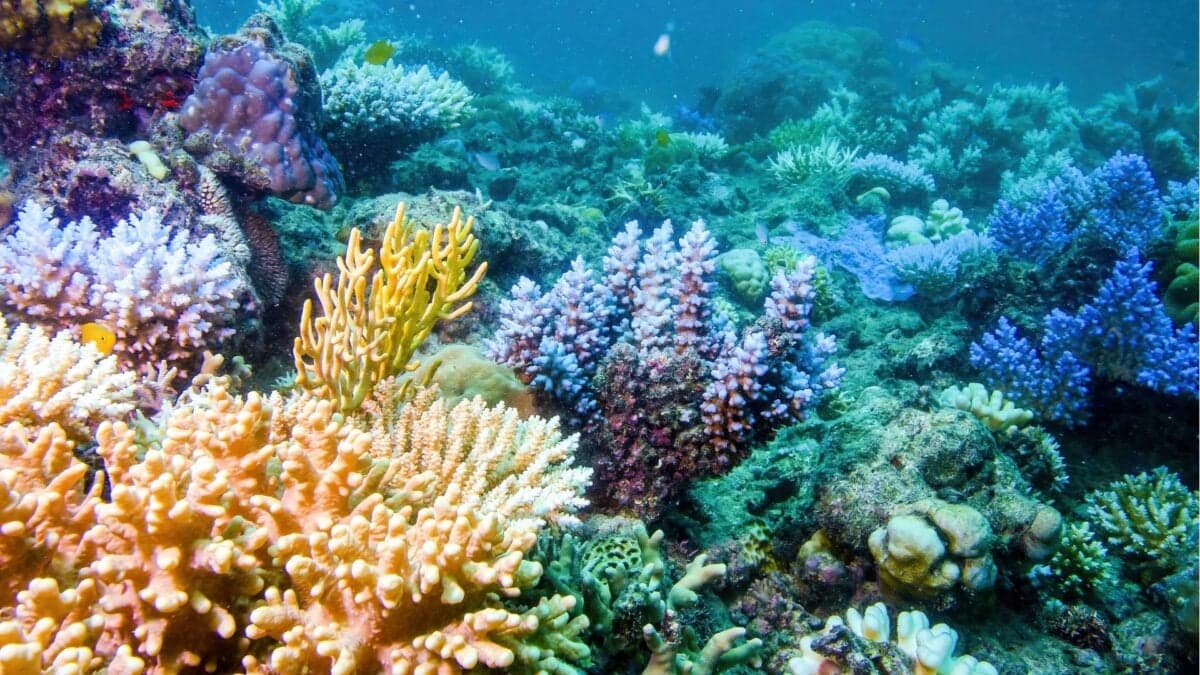
Critical risk to coral reefs
The International Union for the Conservation of Nature (IUCN) has classified 96% of the world’s shallow coral reefs as critically endangered, warning they face an extremely high risk of collapse within the next 50 years. The findings, published in a recent report, attribute the crisis to rising ocean temperatures and intensifying marine heatwaves driven by climate change.
According to the report, global coral coverage has halved since the 1950s, with marine heatwaves emerging as the most immediate threat. Over the past five decades, 77% of coral reefs have been threatened by heat stress, and 84% of the world’s reef area experienced bleaching-level heat stress during the 2023–2025 bleaching event.
Ecological and human impact
Coral reefs are vital to marine biodiversity, supporting approximately 25% of all marine fish species and countless invertebrates. They also provide food, income, and coastal protection for hundreds of millions of people worldwide. The IUCN report warns that without urgent reductions in fossil fuel emissions, heat stress alone could push 95% of assessed reefs into critical danger within 50 years.
Local pressures such as overfishing and pollution further exacerbate the vulnerability of these ecosystems. The report notes that 63% of evaluated reefs already show disruption in the balance between corals, algae, and fish, while 45% are so small or isolated that a single event—such as a cyclone, disease outbreak, or bleaching—could wipe them out entirely. A quarter of assessed reefs have already lost much of their living coral.
Potential for recovery
The report highlights a rare glimmer of hope: bleached corals can recover rapidly when in contact with healthy, genetically identical corals. Lab experiments demonstrated that dying corals regained their color and fully recovered within seven weeks, with as little as five days of contact sufficient to initiate the healing process. However, the IUCN stresses that such recovery is only possible if global warming is limited and local conservation efforts are strengthened.
What this means
Lazyfounder analysis — our interpretation, not reported fact.
For founders and operators in industries reliant on marine ecosystems—such as fisheries, tourism, and coastal infrastructure—the IUCN’s findings are a stark warning. The collapse of coral reefs would disrupt food chains, reduce fish stocks, and weaken natural coastal defenses, increasing vulnerability to storms and erosion. This could lead to higher operational costs, supply chain disruptions, and regulatory pressures, particularly for businesses in regions dependent on reef-based livelihoods.
The report also underscores the need for innovation in climate adaptation and conservation technologies. Startups working on marine restoration, sustainable aquaculture, or carbon reduction solutions may find new opportunities to address these challenges, but the window for action is narrowing. Investors and founders should consider the long-term risks of inaction, as ecological collapse could reshape markets and regulatory landscapes in the coming decades.
Related on Lazyfounder
Sources
- Gizmodo · 2026-10-23
Earth’s Shallow Coral Reefs May Have Just 50 Years Left
This story is an original summary drafted with AI by Lazyfounder from the reporting listed above and checked by automated validation. Facts are attributed to their original publishers; sections marked as analysis are Lazyfounder's. Where a source is in another language, facts were machine-translated and quotations are reported, not reproduced. Read the original coverage via the links, and see our AI policy and corrections policy.

About the author
Editor, Lazyfounder
Tarun Mottlia edits LazyFounders, covering Indian startups, funding rounds, AI and product launches. Every story on the site is AI-assisted and checked against its cited sources before publication.
More stories by Tarun MottliaGet the LazyFounder Brief
Startup, funding and AI news in a five-minute read. Join the early-access list.
