
Indian startups raise ₹41,248 Cr via IPOs in 2025-26, with mixed debuts in 2026
India’s startup ecosystem saw a historic surge in IPOs, with 18 companies raising ₹41,248 Cr in 2025 and 17 more debuting in 2026. While regulatory reforms and profitability drove the listings, investor caution is rising, leading to mixed market reactions.

Editor, Lazyfounder
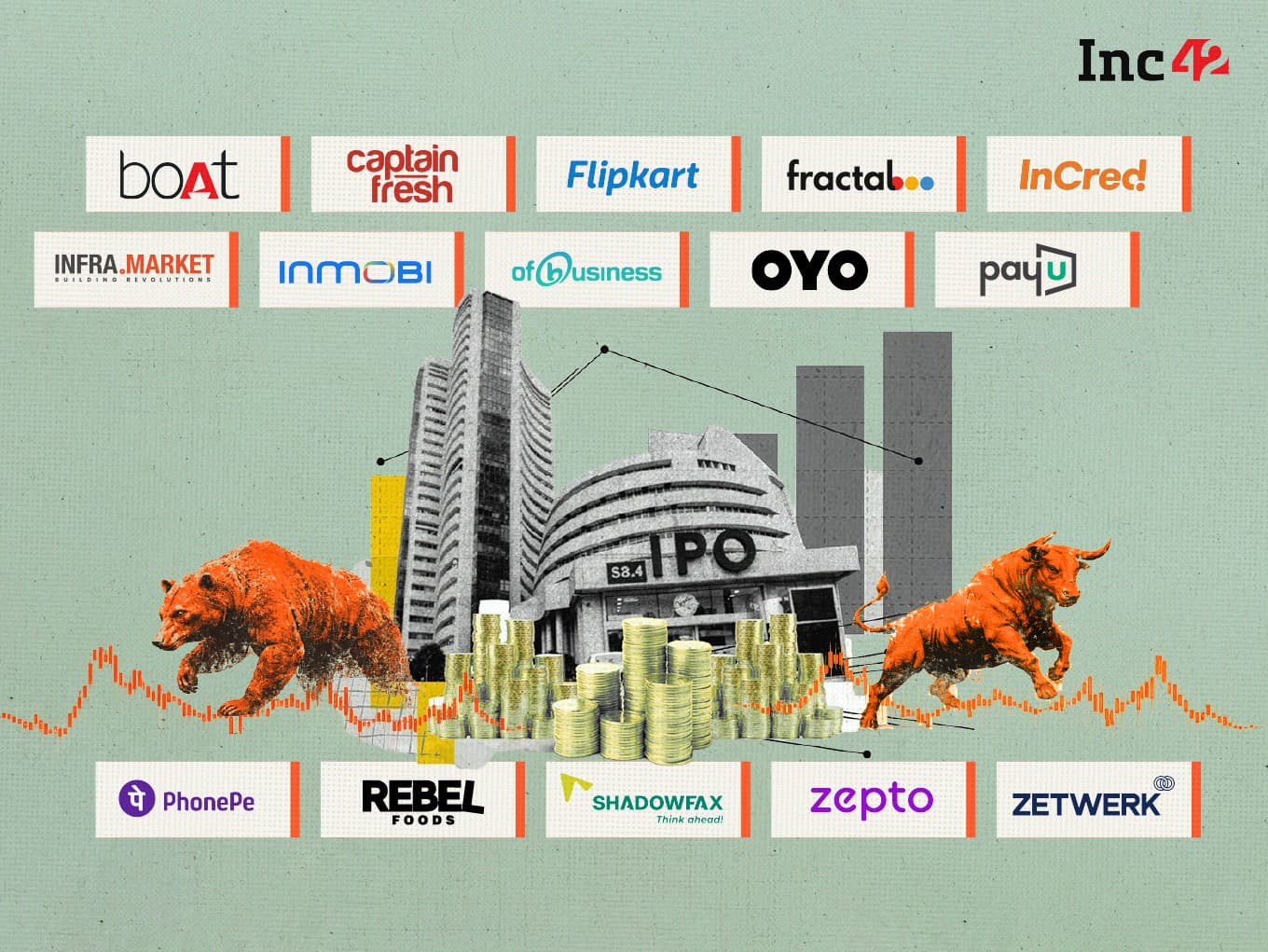
TABLE OF CONTENTS
Record IPO surge in 2025 and 2026
Indian startups raised a record ₹41,248 Cr through 18 IPOs in 2025, according to Inc42. The momentum continued into 2026, with 17 new-age tech companies already listed on Dalal Street. An additional 25 startups have filed their Draft Red Herring Prospectuses (DRHPs) with SEBI, while over 25 more are planning their public debuts.
The surge was driven by macroeconomic tailwinds, regulatory reforms, and a shift toward profitability. SEBI’s measures, including simplified DRHP filings and more flexible ESOP rules, played a key role in enabling this trend. Retail investor participation also surged, with demat accounts crossing the 20 Cr mark.
Investor focus shifts to fundamentals
The public markets in 2025 rewarded startups that prioritized sustainable growth, governance, and profitability over rapid expansion. This trend has carried into 2026, with investors scrutinizing fundamentals, low cash burn, and profitability before committing capital.
However, signs of caution are emerging. Average retail subscription levels are moderating, and foreign institutional investors (FIIs) are pulling back amid geopolitical tensions, particularly the conflict in West Asia. Unicorns like OYO and Razorpay are still expected to raise nearly ₹20,000 Cr in 2026, but the landscape is becoming more selective.
Mixed debuts highlight market volatility
While several startups saw strong oversubscription, their market debuts have been mixed. Tonbo Imaging, a defence tech startup, listed at a 66% premium to its issue price of ₹700 per share, reflecting strong investor appetite in niche sectors. ESDS Software Solution and Shiprocket also saw significant listing gains, with premiums of 76.5% and 35.05%, respectively.
Others, however, faced weak or muted debuts. AceVector, the parent company of Snapdeal, listed at an 11.6% discount to its issue price despite being oversubscribed 4.93X. Aye Finance’s IPO was undersubscribed by 97%, and its shares listed flat at the issue price of ₹129. Fractal, Shadowfax, and Turtlemint also saw their shares list at discounts, highlighting investor caution even amid oversubscription.
Profitability and revenue growth in focus
Financial performance has become a critical factor in IPO success. Startups like Amagi, which turned profitable in the first half of FY26, and ESDS Software Solution, which reported a 117% jump in net profit, saw strong market reactions. Kissht, Klassroom, and RentoMojo also posted impressive revenue growth and profitability, contributing to their successful listings.
In contrast, startups with widening losses or declining profitability faced challenges. Atomberg’s losses widened 26.5% in FY26, while Zetwerk’s net loss climbed 333% despite a 40% rise in revenue. Purple Style Labs and Turtlemint also reported significant losses, which affected their IPO performance.
Razorpay, which reported a 365% surge in net profit in FY24, is targeting a $500 Mn to $700 Mn raise at a valuation of $5 Bn to $6 Bn for its IPO. The company’s strong financials position it as a key player in the 2026 IPO wave.
What this means
Lazyfounder analysis — our interpretation, not reported fact.
The IPO surge in India’s startup ecosystem signals a maturity phase where public markets are rewarding profitability and sustainable growth. However, the mixed debuts of several startups highlight that investor patience is not unlimited—companies must demonstrate clear paths to profitability or face valuation corrections. For founders, this means prioritizing unit economics and governance over growth-at-all-costs strategies.
The pullback of foreign institutional investors amid geopolitical tensions also underscores the importance of diversifying investor bases. Startups should focus on building strong retail and domestic institutional participation to mitigate external risks.
For operators, the IPO wave presents an opportunity to benchmark against peers. Companies like Razorpay and Amagi, which turned profitable ahead of their listings, offer valuable lessons in financial discipline. Meanwhile, the challenges faced by startups with widening losses serve as a cautionary tale for those still burning cash.
Related on Lazyfounder
Sources
- Inc42 · 2026-11-01
Indian Startup IPO Tracker 2026
This story is an original summary drafted with AI by Lazyfounder from the reporting listed above and checked by automated validation. Facts are attributed to their original publishers; sections marked as analysis are Lazyfounder's. Where a source is in another language, facts were machine-translated and quotations are reported, not reproduced. Read the original coverage via the links, and see our AI policy and corrections policy.

About the author
Editor, Lazyfounder
Tarun Mottlia edits LazyFounders, covering Indian startups, funding rounds, AI and product launches. Every story on the site is AI-assisted and checked against its cited sources before publication.
More stories by Tarun MottliaGet the LazyFounder Brief
Startup, funding and AI news in a five-minute read. Join the early-access list.
