

Imfresh reports 7x revenue growth in FY26 with bootstrapped personal care line
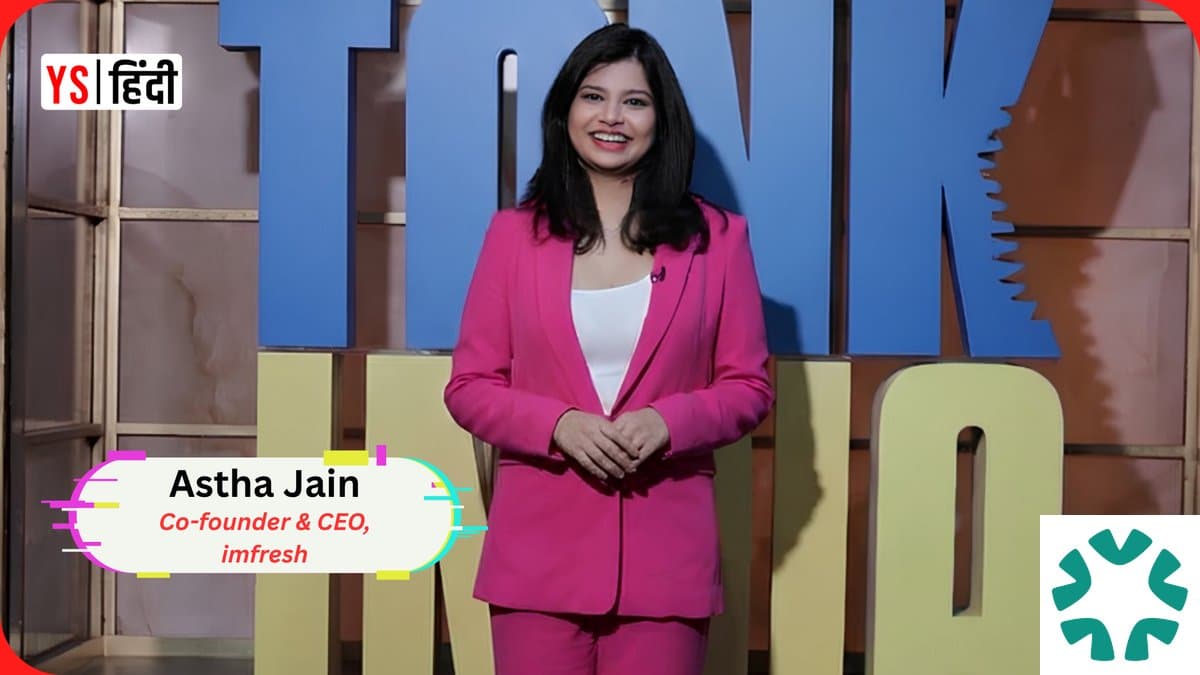
Delhi-based direct-to-consumer (D2C) personal care brand Imfresh reported a sevenfold increase in revenue, from ₹2 crore in FY25 to ₹14.7 crore in FY26. Founded in June 2022 with ₹5 lakh in seed capital, the startup focuses on deodorant creams designed to address skin irritation and pigmentation, a segment it identified through personal experience and consumer feedback.

Editor, Lazyfounder
30 SEC SUMMARY
- Imfresh, a Delhi-based D2C personal care brand, launched in June 2022 with ₹5 lakh in seed capital.
- The startup focuses on fragrance and skin-friendly deodorant creams, addressing issues like irritation, pigmentation, and short-lasting scent.
- Revenue grew from ₹2 crore in FY25 to ₹14.7 crore in FY26, per the company.
- Imfresh operates on a bootstrapped model, reinvesting profits into R&D, manufacturing, and marketing.
- The brand gained visibility after appearing on Shark Tank India and now sells via e-commerce, quick commerce, and offline retail.
TABLE OF CONTENTS
KEY HIGHLIGHTS
- Imfresh was founded in June 2022 by Aastha Jain, Tanishk Pandey, and Pavanjot Kaur with ₹5 lakh in initial capital.
- The company reported revenue of ₹2 crore in FY25 and ₹14.7 crore in FY26.
- Imfresh’s deodorant cream uses Alpha Arbutin and targets underarm pigmentation and skin sensitivity.
- The startup has not raised external funding, relying on bootstrapping and reinvested profits.
- Imfresh appeared on Shark Tank India, boosting brand visibility and customer reach.
- The brand is expanding into body mists, roll-ons, and other personal care products with a fragrance-centric approach.
How Imfresh started and grew
Imfresh was founded by Aastha Jain, Tanishk Pandey, and Pavanjot Kaur after Pandey experienced skin irritation from traditional deodorants. The trio identified a broader consumer need for personal care products that combined fragrance with skin-friendly formulations.
The startup launched its deodorant cream in June 2022 with an initial investment of ₹5 lakh. According to the company, the product uses Alpha Arbutin to tackle underarm pigmentation and body odor while avoiding common irritants found in sprays or roll-ons.
The founders initially faced the challenge of educating consumers about the deodorant cream format, which was unfamiliar to most Indian users accustomed to sprays or roll-ons. The company relied on customer feedback to refine its product.
Bootstrapped growth and financials
Imfresh has operated without external funding, reinvesting its profits into research, manufacturing, and marketing. The founders used the initial ₹5 lakh for product development and later directed revenue from sales back into the business.
The company reported revenue of ₹2 crore in FY25, which grew to ₹14.7 crore in FY26. According to Imfresh, this growth was driven by product innovation, customer feedback, and a mix of online and offline distribution channels.
Distribution and market reach
Imfresh gained significant visibility after appearing on Shark Tank India, which helped the brand reach a wider audience. The startup now sells through its website, e-commerce platforms, quick commerce apps, and offline retail stores.
According to the company, quick commerce’s share of online beauty and personal care (BPC) sales in India grew from 9% in FY25 to 18% in FY26, with BPC sales through this channel increasing by over 120% in FY26.
Expansion plans and competition
Imfresh is expanding beyond deodorant creams into body mists, roll-ons, and other personal care products. The company aims to build a fragrance-centric personal care brand, with each new product addressing a specific consumer problem.
The startup faces competition from established brands like Vini Cosmetics (Fogg), ITC, Nivea, Reckitt, Wild Stone, Park Avenue, Axe, Set Wet, and Dove. According to Imfresh, its focus is on solving real consumer problems rather than launching multiple products.
The challenge for Imfresh will be to extend customer trust and brand recognition from its deodorant cream to new product categories in a crowded market.
What this means
Lazyfounder analysis — our interpretation, not reported fact.
Imfresh’s trajectory underscores two trends relevant to founders and operators in the D2C personal care space. First, bootstrapped growth is still possible in a segment dominated by well-funded incumbents, provided the product addresses a clear, underserved need—like skin sensitivity or pigmentation. Second, the startup’s reliance on quick commerce aligns with data showing this channel’s rapid growth in beauty and personal care, offering a lower-cost way to test demand and scale distribution. However, the challenge of expanding beyond a single hero product into a broader brand is a reminder that early success doesn’t guarantee long-term traction in a competitive market.
Key takeaways
- Imfresh’s bootstrapped growth demonstrates a viable path for D2C startups in crowded categories like personal care.
- The shift from sprays/roll-ons to creams shows how addressing unmet consumer needs can create a niche.
- Quick commerce’s growing share in online BPC (beauty and personal care) sales—18% in FY26—signals a key distribution channel for startups.
- Competition with established brands like Nivea, Fogg, and Dove highlights the challenge of scaling trust and recognition beyond a single product.
Sources
- yourstory.com
स्किन प्रॉब्लम ने दिया बिजनेस आइडिया, Shark Tank India से मिली शोहरत — पर्सनल केयर ब्रांड imfresh की कहानी
This story is an original summary drafted with AI by Lazyfounder from the reporting listed above and checked by automated validation. Facts are attributed to their original publishers; sections marked as analysis are Lazyfounder's. Where a source is in another language, facts were machine-translated and quotations are reported, not reproduced. Read the original coverage via the links, and see our AI policy and corrections policy.

About the author
Editor, Lazyfounder
Tarun Mottlia edits LazyFounders, covering Indian startups, funding rounds, AI and product launches. Every story on the site is AI-assisted and checked against its cited sources before publication.
More stories by Tarun MottliaGet the LazyFounder Brief
Startup, funding and AI news in a five-minute read. Join the early-access list.
