
Gruffalo illustrator considers legal action against AI companies over copyright
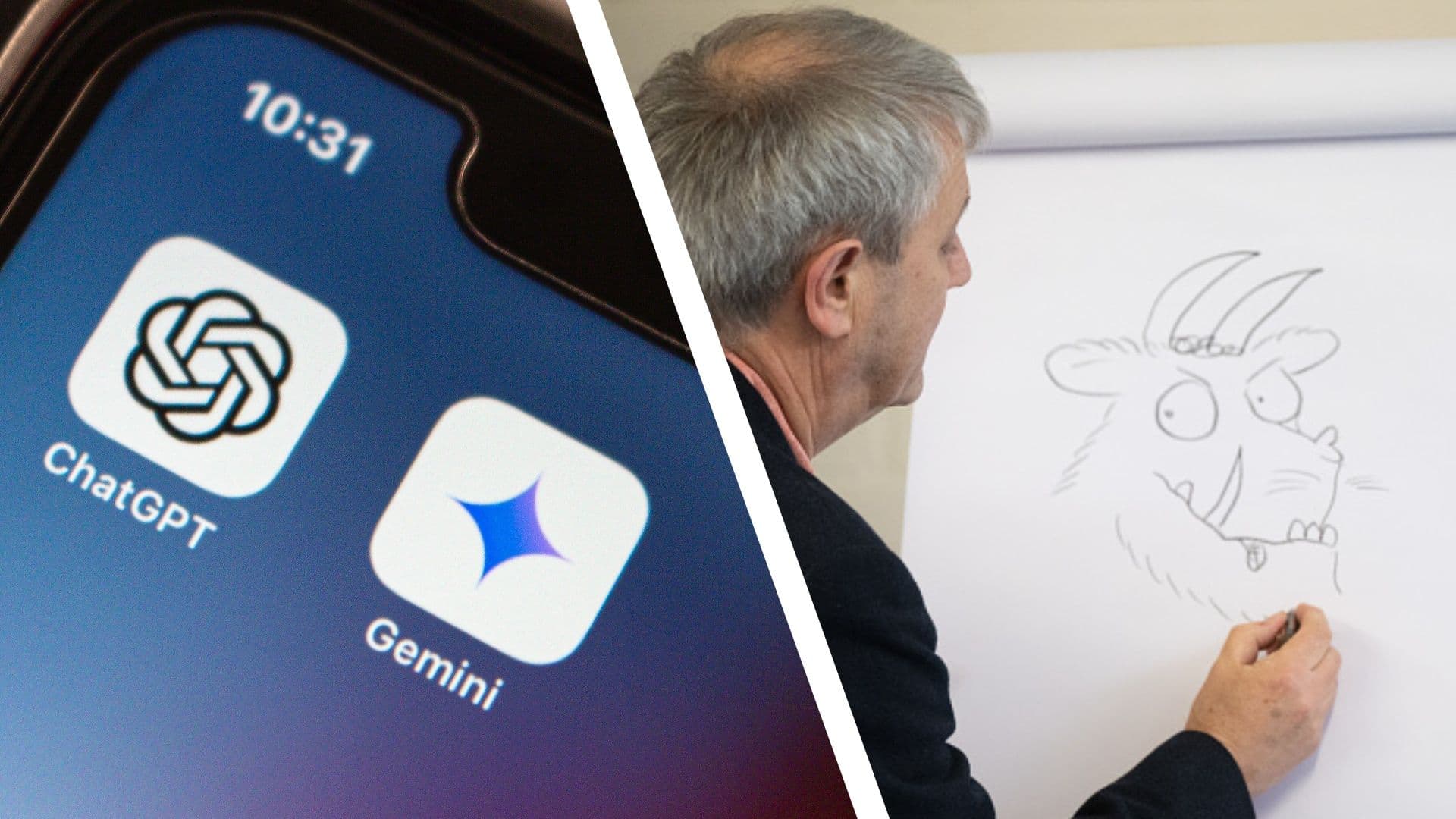
Axel Scheffler, the illustrator of The Gruffalo, is reportedly considering legal action against AI companies after tests revealed stark differences in how platforms like ChatGPT and Gemini handle copyrighted material. The case underscores the growing conflict between AI companies and creators over intellectual property rights and could have implications for how AI tools are developed and regulated.

Editor, Lazyfounder
KEY HIGHLIGHTS
- Axel Scheffler, illustrator of The Gruffalo, is considering legal action against AI companies for copyright infringement.
- ChatGPT initially refused to generate images resembling the Gruffalo but produced a similar creature when prompted differently.
- Gemini generated near-identical images of the Gruffalo, including in copyrighted contexts like a Gruffalo-themed Oktoberfest poster.
- AI companies often invoke the US doctrine of fair use to justify using copyrighted material for training.
- The disparity in how ChatGPT and Gemini handle copyrighted material raises questions about AI platforms' approaches to artists' rights.
Why legal action is being considered
Axel Scheffler, the illustrator behind the iconic children’s book The Gruffalo, is reportedly weighing legal action against AI companies over copyright infringement. The move follows tests conducted using AI platforms to generate images resembling his copyrighted character, revealing significant differences in how these platforms handle protected material.
Scheffler’s potential legal challenge centers on the unauthorized use of his illustrations to train AI models. AI companies have long argued that such use falls under the US doctrine of fair use, a legal framework that permits limited use of copyrighted material without permission for purposes like criticism, education, or research. However, creators like Scheffler argue that this interpretation undermines their intellectual property rights.
How ChatGPT and Gemini responded to copyrighted prompts
A test conducted by TechRadar compared the responses of ChatGPT and Gemini when prompted to recreate the Gruffalo character. ChatGPT initially refused to generate a direct recreation of the Gruffalo but later produced a similar creature when rephrased prompts were used. This suggests an attempt—however inconsistent—to avoid violating copyright.
In contrast, Gemini generated near-identical images of the Gruffalo, including in contexts that closely resembled copyrighted material. For example, the platform produced an image of the Gruffalo dressed in lederhosen, holding a pretzel and a beer stein, in what appeared to be a Gruffalo-themed Oktoberfest poster. This raised concerns about Gemini’s ability or willingness to enforce copyright protections.
What this reveals about AI platforms' approaches
The disparity in how ChatGPT and Gemini handle copyrighted material highlights a broader inconsistency in the AI industry’s approach to intellectual property. While some platforms implement safeguards to avoid reproducing copyrighted content, others appear less restrictive, potentially exposing themselves and their users to legal risks.
TechRadar’s test noted that Gemini seems to recognize certain images it is not permitted to generate—but the Gruffalo does not appear to be one of them. This selective enforcement raises questions about how AI companies determine which copyrighted material to restrict and whether their policies align with legal and ethical standards.
What this means
Lazyfounder analysis — our interpretation, not reported fact.
This story highlights a growing tension between AI companies and creators over intellectual property rights. For founders and operators in the AI space, the differing responses from ChatGPT and Gemini underscore the lack of standardized guardrails in how AI models handle copyrighted content. This inconsistency could expose companies to legal risks, particularly as artists and creators become more vocal about enforcement.
For startups building AI tools, the case serves as a reminder to proactively address copyright concerns—whether by refining training data, implementing stricter content moderation, or engaging with creators to establish clearer boundaries. The outcome of potential legal action could set precedents for how AI companies operate globally, including in markets like India where copyright laws are rigorously enforced. Operators should monitor developments closely, as regulatory or legal shifts may require adjustments to product roadmaps or compliance strategies.
Key takeaways
- AI platforms’ inconsistent handling of copyrighted material exposes them to legal and reputational risks, which could accelerate regulatory scrutiny.
- Startups building AI tools must prioritize copyright compliance to avoid litigation andalign with creators’ rights.
- The case may influence future AI training practices, particularly in markets with strict intellectual property laws.
- Founders should anticipate potential legal precedents from this or similar cases, which could reshape AI industry standards.
Related on Lazyfounder
Sources
- TechRadar · 2026-11-03
The Gruffalo's illustrator is 'seriously considering' suing AI companies — so I tested whether ChatGPT and Gemini would recreate his famous characters
This story is an original summary drafted with AI by Lazyfounder from the reporting listed above and checked by automated validation. Facts are attributed to their original publishers; sections marked as analysis are Lazyfounder's. Where a source is in another language, facts were machine-translated and quotations are reported, not reproduced. Read the original coverage via the links, and see our AI policy and corrections policy.

About the author
Editor, Lazyfounder
Tarun Mottlia edits LazyFounders, covering Indian startups, funding rounds, AI and product launches. Every story on the site is AI-assisted and checked against its cited sources before publication.
More stories by Tarun MottliaGet the LazyFounder Brief
Startup, funding and AI news in a five-minute read. Join the early-access list.
