
Greggs to cut 740 jobs as it closes four factories in UK restructuring
Greggs, the UK’s largest bakery chain, has announced plans to close four factories and cut 740 jobs as part of a restructuring effort aimed at improving efficiency. The closures will affect sites in Cumbria, Scotland, County Durham, and Greater London, with some locations transitioning to distribution centres.

Editor, Lazyfounder
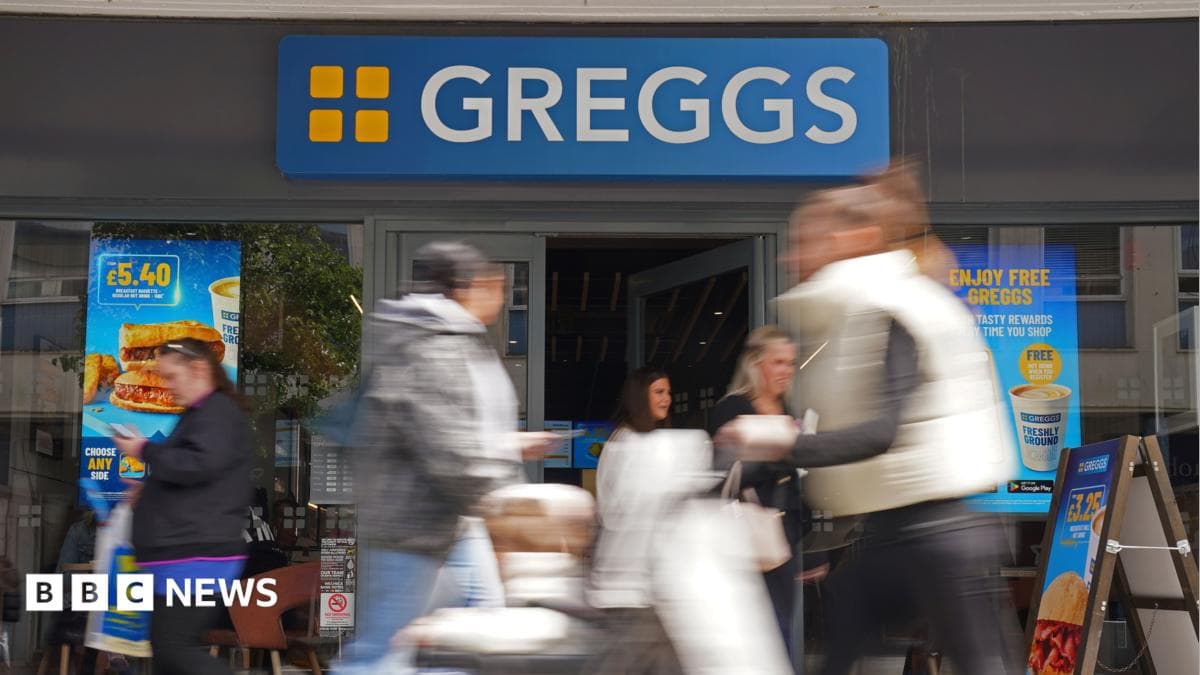
Greggs, the UK’s largest bakery chain, has announced plans to close four factories and cut 740 jobs as part of a restructuring effort aimed at improving efficiency. The closures will affect sites in Cumbria, Scotland, County Durham, and Greater London, with some locations transitioning to distribution centres.
30 SEC SUMMARY
- Greggs announced plans to close four factories and cut 740 jobs over the next two-and-a-half years as part of a restructuring effort.
- The closures affect sites in Cumbria, Scotland, County Durham, and Greater London, with Enfield and Treforest continuing as distribution centres.
- The restructuring aims to save £20 million by 2028-2029 but will cost Greggs £60 million in redundancy and disruption costs.
- Greggs’ retail sales grew 7.7% in the latest quarter, with 2,796 shops across the UK.
- The Bakers, Food and Allied Workers Union expressed deep concern for affected workers and communities.
TABLE OF CONTENTS
- Restructuring details and job cuts
- Financial impact and retail performance
- Union and local reactions
- Greggs’ statement on restructuring
- What this means
- Key takeaways
- FAQ
- Sources
KEY HIGHLIGHTS
- Greggs will close factories in North Lakes (Cumbria), Kelso (Scotland), Seaham (County Durham), and Enfield (Greater London), resulting in 740 job cuts.
- Enfield and Treforest will continue as distribution centres, while manufacturing operations at Treforest will be impacted.
- The restructuring is expected to cost £60 million but deliver £20 million in savings by 2028-2029.
- Greggs’ retail sales grew 7.7% in the three months to September 26, with 2,796 shops across the UK.
- The Bakers, Food and Allied Workers Union expressed concern for affected workers and communities.
Restructuring details and job cuts
According to BBC News, Greggs plans to close four factories and cut 740 jobs over the next two-and-a-half years as part of a broader restructuring effort. The closures will affect sites in North Lakes near Penrith (Cumbria), Pettigrews in Kelso (Scotland), Seaham (County Durham), and Enfield (Greater London).
The Enfield site will continue as a distribution centre, while Treforest in Wales will retain its distribution operations but see its manufacturing processes impacted. Production of tinned bread at Greggs’ Gosforth site will stop, and some products will be sourced from specialist suppliers instead.
Financial impact and retail performance
The restructuring is expected to cost Greggs £60 million, including redundancy payments and disruption costs, but is projected to save the company £20 million across the 2028 and 2029 financial years. Despite the job cuts, Greggs reported strong retail performance, with sales growing by 7.7% in the three months to September 26, compared to the same period last year.
Like-for-like sales in managed stores grew by 3.4%, and the company opened 95 new shops while closing 38 in the year to date, bringing its total estate to 2,796 shops. Greggs attributed the sales growth to resilience in challenging market conditions, with chief executive Roisin Currie stating that positive trading and cost control are expected to deliver a modestly improved outcome for 2026.
Union and local reactions
The Bakers, Food and Allied Workers Union (BFAWU) expressed deep concern about the job cuts, with General Secretary Sarah Woolley reportedly stating that workers would understandably question why their jobs are at risk in the name of efficiency. The union highlighted the impact on affected workers and communities.
Local councillor Euan Robson, representing Kelso and District, reportedly described the news as "a sad day" for the community, noting that the factory had been a long-standing presence in the area.
Greggs’ statement on restructuring
Greggs stated that the proposed changes are intended to strengthen its manufacturing network, improve efficiency, and ensure long-term competitiveness. The company emphasised that its retail shops would remain unaffected by the restructuring and that it continues to perform strongly in a challenging market.
What this means
Lazyfounder analysis — our interpretation, not reported fact.
Greggs’ decision to close four factories and cut 740 jobs reflects a broader trend among established UK businesses: balancing growth in retail with cost efficiency in manufacturing. The company’s retail sales are rising, and it continues to expand its shop estate, but its manufacturing operations are facing pressure to adapt to changing consumer demands and cost structures.
For founders and operators, Greggs’ move underscores the challenges of scaling while managing legacy operations. The £60 million cost of restructuring highlights the financial burden of transitioning to more efficient models, even when the long-term savings are clear. The company’s ability to grow its retail footprint while streamlining manufacturing also demonstrates how businesses can segment their strategies—prioritising customer-facing growth while making tough decisions behind the scenes.
The union’s response is a reminder of the human cost of corporate restructuring, and the potential reputational risks for brands that rely on public goodwill. Greggs’ emphasis on protecting its retail business may help mitigate backlash, but the impact on affected workers and communities will remain a sensitive issue.
Key takeaways
- Greggs is closing four factories and cutting 740 jobs as part of a broader restructuring plan.
- The affected sites are in North Lakes (Cumbria), Kelso (Scotland), Seaham (County Durham), and Enfield (Greater London).
- Enfield and Treforest will transition to distribution centres, while manufacturing operations will be impacted.
- The restructuring is expected to cost £60 million but save £20 million by 2028-2029.
- Greggs’ retail business remains strong, with sales growth of 7.7% in the latest quarter and 2,796 shops nationwide.
- Unions have raised concerns about the impact on workers and local communities.
FAQ
Why is Greggs closing factories and cutting jobs?
Greggs is closing four factories and cutting 740 jobs as part of a restructuring plan to improve efficiency and save £20 million by 2028-2029. The company aims to strengthen its manufacturing network and ensure long-term competitiveness.
Which locations are affected by the closures?
The closures affect factories in North Lakes near Penrith (Cumbria), Pettigrews in Kelso (Scotland), Seaham (County Durham), and Enfield (Greater London). Enfield and Treforest will continue as distribution centres.
How will this impact Greggs’ retail business?
Greggs’ retail business will remain unaffected by the restructuring. The company reported a 7.7% increase in sales for the three months to September 26 and continues to expand its shop estate.
What is the financial impact of the restructuring?
The restructuring is expected to cost Greggs £60 million, including redundancy payments and disruption costs, but is projected to save £20 million across the 2028 and 2029 financial years.
Related on Lazyfounder
Sources
- BBC News (Tech & Business) · 2026-09-30
Greggs to shut four factories and cut 740 jobs - BBC News (Tech & Business) · 2026-09-30
Greggs to shut four factories and cut 740 jobs - BBC News (Tech & Business) · 2026-09-30
Greggs to shut four factories and cut 740 jobs
This story is an original summary drafted with AI by Lazyfounder from the reporting listed above and checked by automated validation. Facts are attributed to their original publishers; sections marked as analysis are Lazyfounder's. Where a source is in another language, facts were machine-translated and quotations are reported, not reproduced. Read the original coverage via the links, and see our AI policy and corrections policy.

About the author
Editor, Lazyfounder
Tarun Mottlia edits LazyFounders, covering Indian startups, funding rounds, AI and product launches. Every story on the site is AI-assisted and checked against its cited sources before publication.
More stories by Tarun MottliaGet the LazyFounder Brief
Startup, funding and AI news in a five-minute read. Join the early-access list.
