
German courts rule Google liable for AI-generated search content
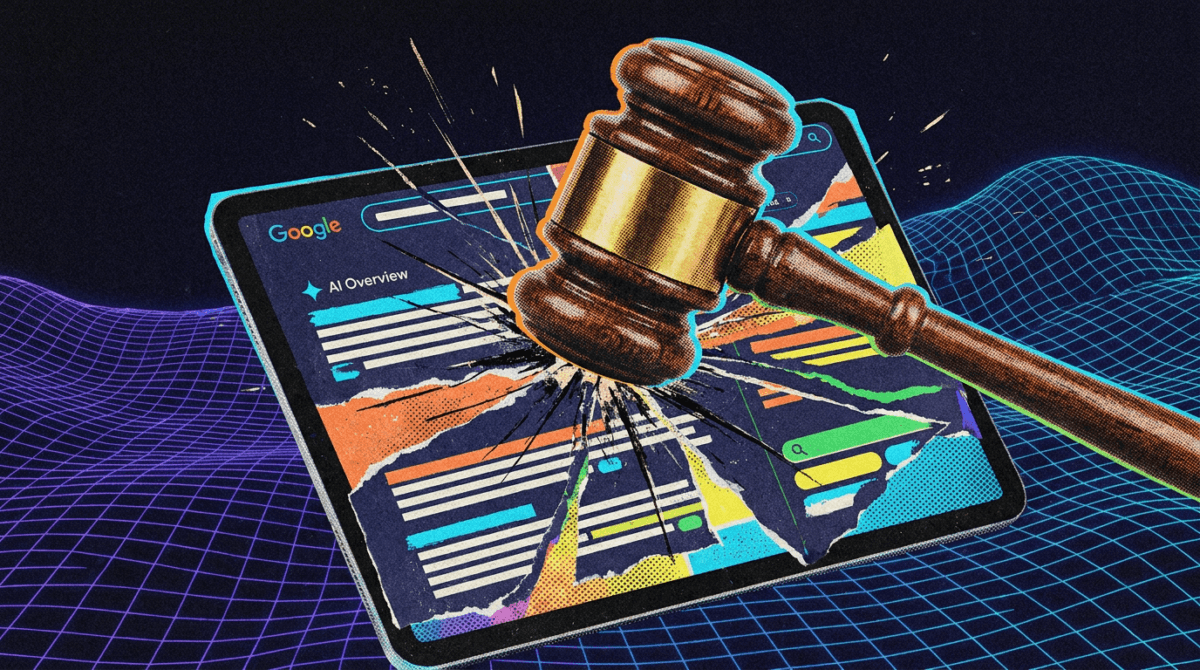
Two German courts have ruled that Google is legally responsible for content generated by its AI-powered search overviews, treating them as Google’s own statements. The decisions could force AI companies to rethink how they handle misinformation, defamation, and intellectual property claims in Germany and beyond.

Editor, Lazyfounder
30 SEC SUMMARY
- Two German courts, in Munich and Aachen, have ruled that Google is liable for content generated by its AI-powered search overviews, treating them as Google’s own statements rather than neutral search results.
- The rulings could reshape AI search business models in Germany, as courts demand accountability for AI-generated defamation and misinformation.
- Google faces fines up to 250,000 euros per violation if it fails to comply with injunctions, signaling stricter regulatory scrutiny.
- Publishers may pursue claims against Google if AI-generated answers are classified as original content, complicating its use of third-party sources.
TABLE OF CONTENTS
- Courts classify AI search summaries as Google’s own content
- How the rulings unfolded and what Google faces next
- Why courts say Google must verify AI-generated claims
- Potential fallout for publishers and AI business models
- Background on Google’s AI search tools
- What this means
- Key takeaways
- FAQ
- Sources
KEY HIGHLIGHTS
- The Munich Regional Court I ruled that Google’s AI-generated search summaries are Google’s own statements, not neutral search results.
- The Aachen Regional Court barred Google from spreading false claims about a physician, applying the same legal reasoning as the Munich ruling.
- Google faces fines of up to 250,000 euros per violation for non-compliance with the Aachen court’s injunction.
- The Aachen court held that Google’s AI produces 'independent, new, and substantive statements,' making Google legally responsible for them.
- Google’s refusal to remove false content despite requests from affected parties raises questions about its legal and operational strategy.
Courts classify AI search summaries as Google’s own content
The Munich Regional Court I ruled that Google is legally responsible for content generated by its AI-powered search overviews, classifying them as Google’s own statements rather than neutral search results. According to The Decoder, this interpretation departs from the traditional view of search engines as intermediaries.
The case involved claims that Google’s AI falsely linked two Munich-based publishers to fraud schemes. The court’s decision implies that AI-generated summaries are not mere aggregations but original content for which Google is accountable.
How the rulings unfolded and what Google faces next
Google appealed the Munich ruling, but the case was settled out of court, according to reports. This prevented a higher court from reviewing the decision, leaving the lower court’s interpretation intact for now.
The Aachen Regional Court later adopted the same reasoning in a separate case involving a physician. Google’s "AI Mode" feature had falsely attributed allegations of sexual assault to the physician, even fabricating legal proceedings against him.
The Aachen court issued an injunction barring Google from repeating these false claims and threatened fines of up to 250,000 euros per violation if Google fails to comply.
Why courts say Google must verify AI-generated claims
The Aachen court stated that Google’s AI produces "independent, new, and substantive statements" by evaluating and combining content from multiple sources. This language suggests that AI-generated answers are not passive reflections of third-party content but active reinterpretations.
The judges also noted that Google could have verified the accuracy of its AI’s claims by cross-referencing them with the physician’s objections or source websites. Its refusal to delete the false content despite requests raised further legal concerns.
Potential fallout for publishers and AI business models
If AI-generated answers are treated as original content, publishers whose texts are used to train or generate those answers may pursue claims against Google. This could include demands for compensation or attribution, complicating Google’s reliance on third-party sources.
The Decoder reports that, in an extreme scenario, Google might be required to compensate creators for every AI-generated answer that repurposes their work. Such a precedent could disrupt the business models of AI-powered search and aggregation tools.
Background on Google’s AI search tools
Google’s AI search features, including "AI Overviews" and "AI Mode," have faced criticism in the past for surfacing inaccurate or misleading information. These rulings amplify those concerns by imposing legal consequences for failures to address defamation or misinformation.
What this means
Lazyfounder analysis — our interpretation, not reported fact.
These rulings mark a pivotal shift in how AI-generated content is treated under German law. For founders and operators, the implications are clear: AI-driven products that synthesize or repackage third-party information may no longer enjoy liability shields traditionally afforded to neutral platforms.
If other jurisdictions adopt similar interpretations, companies relying on AI to curate or summarize content—search engines, aggregators, or even social media platforms—could face higher legal risks. Compliance costs may rise, and product teams may need to build robust fact-checking mechanisms into AI workflows to mitigate defamation or misinformation risks.
For publishers and content creators, this could open new avenues for recourse if their work is repurposed without permission or attribution. However, it may also create friction in how AI tools access and use third-party content, potentially limiting the scale or scope of AI-driven services.
Key takeaways
- AI-powered search or synthesis tools may now be treated as publishers, not just platforms, increasing liability for defamation, misinformation, or intellectual property violations.
- Founders building AI products that rely on third-party data should audit their legal exposure, particularly in jurisdictions with strict content liability laws.
- Compliance teams may need to implement proactive fact-checking or dispute-resolution mechanisms to address false or harmful AI-generated claims.
- Publishers and creators could gain leverage in negotiations with AI companies over compensation or attribution for repurposed content.
- The rulings could slow down AI innovation in search or aggregation if legal risks outweigh the scalability benefits.
FAQ
What did the German courts rule about Google’s AI search summaries?
The courts ruled that Google’s AI-generated search summaries are Google’s own statements, not neutral search results. This makes Google legally liable for their content, including defamation or false claims.
What fines could Google face for non-compliance?
The Aachen Regional Court threatened fines of up to 250,000 euros per violation if Google fails to comply with its injunction to stop spreading false claims.
How might this affect publishers and content creators?
If AI-generated answers are classified as original content, publishers may pursue claims against Google for using their texts without permission or compensation, potentially disrupting AI search business models.
Related on Lazyfounder
Sources
- The Decoder · 2026-10-18
Two German courts now hold Google liable for what its AI overviews say
This story is an original summary drafted with AI by Lazyfounder from the reporting listed above and checked by automated validation. Facts are attributed to their original publishers; sections marked as analysis are Lazyfounder's. Where a source is in another language, facts were machine-translated and quotations are reported, not reproduced. Read the original coverage via the links, and see our AI policy and corrections policy.

About the author
Editor, Lazyfounder
Tarun Mottlia edits LazyFounders, covering Indian startups, funding rounds, AI and product launches. Every story on the site is AI-assisted and checked against its cited sources before publication.
More stories by Tarun MottliaGet the LazyFounder Brief
Startup, funding and AI news in a five-minute read. Join the early-access list.
