
GamerCard Review: A Raspberry Pi Retro Gaming Device with Promise and Pitfalls
The GamerCard, an ultra-slim Raspberry Pi-based retro gaming device, has drawn attention for its portability and programmability. However, early reviews highlight significant usability and technical flaws, raising questions about its appeal to both gamers and developers. Critics argue the device feels more like a prototype than a finished product.

Editor, Lazyfounder
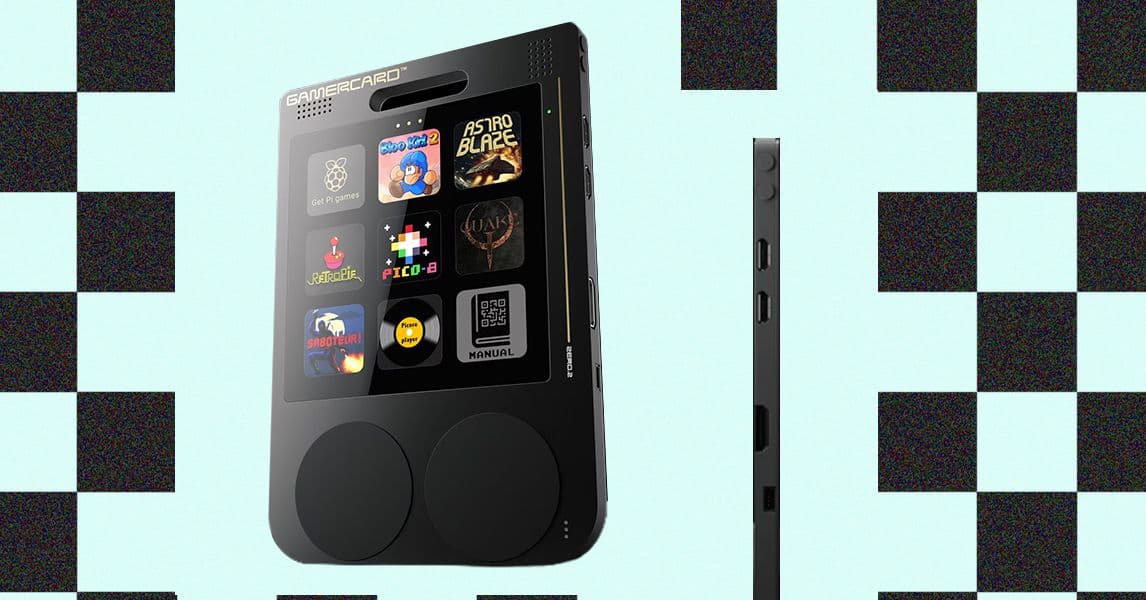
The GamerCard, an ultra-slim Raspberry Pi-based retro gaming device, has drawn attention for its portability and programmability. However, early reviews highlight significant usability and technical flaws, raising questions about its appeal to both gamers and developers. Critics argue the device feels more like a prototype than a finished product.
30 SEC SUMMARY
- The GamerCard is a Raspberry Pi-based ultra-slim retro gaming device designed for portability and programmability.
- Its 60-frames-per-second display is bright but stretches games to fit its square screen, distorting visuals.
- The device lacks user guidance, with hidden menus and unreliable emulation for Game Boy and SNES games.
- Critics highlight inconsistent controls, laggy inputs, and unclear target audience appeal.
- Grant Sinclair, nephew of ZX Spectrum creator Clive Sinclair, developed the GamerCard as a programmable prototype.
TABLE OF CONTENTS
- A Promising but Flawed Retro Gaming Device
- Usability Challenges and Technical Issues
- Programmability and Educational Potential
- A Prototype in Search of an Audience
- Background: Raspberry Pi and Retro Gaming
- What this means
- Key takeaways
- FAQ
- Sources
KEY HIGHLIGHTS
- The GamerCard is a Raspberry Pi-based retro gaming device with a 60 FPS display but stretches games to fit its square screen.
- Accessing the emulation menu requires holding Select and a face button, with no instructions provided.
- RetroPie on the GamerCard failed to load Game Boy ROMs and had unreliable save functionality for SNES games.
- The device is programmable and includes the Pico-8 game development engine but suffers from laggy inputs and unresponsiveness.
- Grant Sinclair, nephew of ZX Spectrum creator Clive Sinclair, developed the GamerCard.
A Promising but Flawed Retro Gaming Device
According to WIRED, the GamerCard is an ultra-slim, portable retro gaming device built on Raspberry Pi technology. It aims to combine the nostalgia of classic gaming with the flexibility of a programmable computer. However, early impressions suggest it falls short of being a polished product.
The device features a bright, 60-frames-per-second display, which WIRED describes as one of its strongest points. Yet, games are stretched to fit its square screen, regardless of aspect ratio settings in the emulation software, RetroPie. This distorts visuals and undermines the authenticity of the gaming experience.
Usability Challenges and Technical Issues
The GamerCard’s user experience is marred by unintuitive design choices. Accessing the emulation menu requires holding the Select button and the "north" face button simultaneously, a process WIRED notes is not explained anywhere in the device’s documentation or packaging. This lack of guidance could frustrate casual users.
Emulation performance is also inconsistent. WIRED reports that RetroPie on the GamerCard failed to load any Game Boy ROMs tested. For Super Nintendo Entertainment System (SNES) games, save functionality proved unreliable, risking progress loss for users.
Beyond emulation, the device suffers from general unresponsiveness and laggy inputs, according to WIRED. These issues, combined with inconsistent control layouts, make gameplay frustrating rather than enjoyable.
Programmability and Educational Potential
Like any Raspberry Pi-based device, the GamerCard is fully programmable. WIRED highlights that it supports multiple languages, including MicroPython, C, C++, and Basic. Additionally, a version of the Pico-8 game development engine is preloaded, suggesting potential for educational use or creative experimentation.
These features could appeal to hobbyists or developers interested in tinkering with hardware. However, WIRED argues that the device’s flaws—such as its lack of clear instructions and unreliable performance—may limit its effectiveness even in these contexts.
A Prototype in Search of an Audience
The GamerCard is the brainchild of Grant Sinclair, nephew of Clive Sinclair, the inventor behind the iconic Sinclair ZX Spectrum 8-bit home computer. While the family connection adds a layer of nostalgia, it also raises expectations for innovation—a bar the GamerCard struggles to meet.
WIRED describes the device as feeling more like a prototype than a finished product. Its unclear target audience further complicates its appeal: retro gaming enthusiasts may be put off by its emulation issues, while programmers might find its lack of documentation and reliability frustrating.
Despite these challenges, the GamerCard’s slim form factor and programmability could spark interest among a niche audience. Whether it evolves into a viable product will depend on addressing its technical and usability shortcomings.
Background: Raspberry Pi and Retro Gaming
Raspberry Pi has long been a favorite platform for DIY electronics projects, including retro gaming devices. Its affordability and versatility have enabled hobbyists to build everything from simple emulators to full-fledged gaming consoles. Projects like RetroPie have made it easier to turn a Raspberry Pi into a dedicated retro gaming machine, though performance and user experience can vary widely depending on the hardware and software configuration.
The retro gaming market itself remains a niche but passionate community. Enthusiasts often prioritize authenticity, seeking devices that faithfully replicate the look, feel, and performance of classic consoles. However, there is also a subset of users interested in programmable or customizable devices, blending gaming with learning and experimentation.
What this means
Lazyfounder analysis — our interpretation, not reported fact.
The GamerCard is an ambitious but uneven attempt to merge retro gaming with modern DIY computing. For founders and operators, it highlights a few key lessons:
First, user experience cannot be an afterthought. The device’s inconsistent controls, hidden menus, and lack of instructions suggest a product rushed to market without enough testing or feedback from non-technical users. Startups building hardware—especially niche products—must prioritize intuitive design, or risk alienating their audience before they even power on the device.
Second, clarity of purpose matters. The GamerCard’s identity crisis—is it a gaming console, an educational tool, or a Raspberry Pi kit?—undermines its appeal. Founders should ask: Who is this really for? A product trying to serve everyone often ends up serving no one well. If the goal was to attract retro gaming enthusiasts, the emulation issues and aspect ratio problems are dealbreakers. If it was meant for programmers, why not lean harder into that narrative with better documentation and development tools?
Finally, prototypes need polish to cross the chasm. The GamerCard reads like a passion project with potential, but its flaws make it feel more like a proof of concept than a retail-ready device. For startups, this is a reminder that shipping something isn’t the same as shipping something people will pay for. The gap between a working prototype and a product that delights users is often wider than teams expect—and bridging it requires ruthless iteration, not just enthusiasm.
Key takeaways
- The GamerCard is a Raspberry Pi-based portable retro gaming device with a bright 60 FPS display.
- It suffers from usability issues, including hidden menus, unreliable emulation, and stretched visuals.
- The device is programmable in MicroPython, C, C++, and Basic, and includes the Pico-8 game engine.
- Critics argue it lacks a clear target audience, with flaws that limit its appeal to both gamers and developers.
- Grant Sinclair, nephew of ZX Spectrum creator Clive Sinclair, designed the GamerCard as a prototype-like product.
FAQ
What is the GamerCard?
The GamerCard is an ultra-slim, portable retro gaming device based on Raspberry Pi technology. It aims to emulate classic games while offering programmability through languages like MicroPython and C++.
Who created the GamerCard?
The GamerCard was developed by Grant Sinclair, nephew of Clive Sinclair, the inventor of the Sinclair ZX Spectrum 8-bit home computer.
What are the main issues with the GamerCard?
According to reviews, the GamerCard suffers from unintuitive controls, unreliable emulation, stretched visuals, laggy inputs, and a lack of clear instructions. These issues make it frustrating to use for both gaming and programming.
Can the GamerCard be used for game development?
Yes, the GamerCard includes the Pico-8 game development engine and supports programming in MicroPython, C, C++, and Basic. However, its technical flaws may limit its effectiveness for developers.
Is the GamerCard a finished product?
Critics describe the GamerCard as feeling more like a prototype than a retail-ready product. Its usability and emulation issues suggest it needs further development before appealing to a broader audience.
Related on Lazyfounder
Sources
- WIRED · 2026-10-06
The Ultra-Slim GamerCard Isn’t Ready to Play
This story is an original summary drafted with AI by Lazyfounder from the reporting listed above and checked by automated validation. Facts are attributed to their original publishers; sections marked as analysis are Lazyfounder's. Where a source is in another language, facts were machine-translated and quotations are reported, not reproduced. Read the original coverage via the links, and see our AI policy and corrections policy.

About the author
Editor, Lazyfounder
Tarun Mottlia edits LazyFounders, covering Indian startups, funding rounds, AI and product launches. Every story on the site is AI-assisted and checked against its cited sources before publication.
More stories by Tarun MottliaGet the LazyFounder Brief
Startup, funding and AI news in a five-minute read. Join the early-access list.
