
AI whistleblower warns NYC lawmakers of existential risks as tech giants clash with Pentagon
Jacob Coxon, a former AI researcher at Anthropic and OpenAI, will testify at a New York City hearing on artificial intelligence, warning that unchecked AI development could pose existential risks. Coxon’s testimony, requested by City Council Speaker Julie Menin, coincides with a broader debate over who controls AI technology—private companies or the government—and its implications for national security.

Editor, Lazyfounder
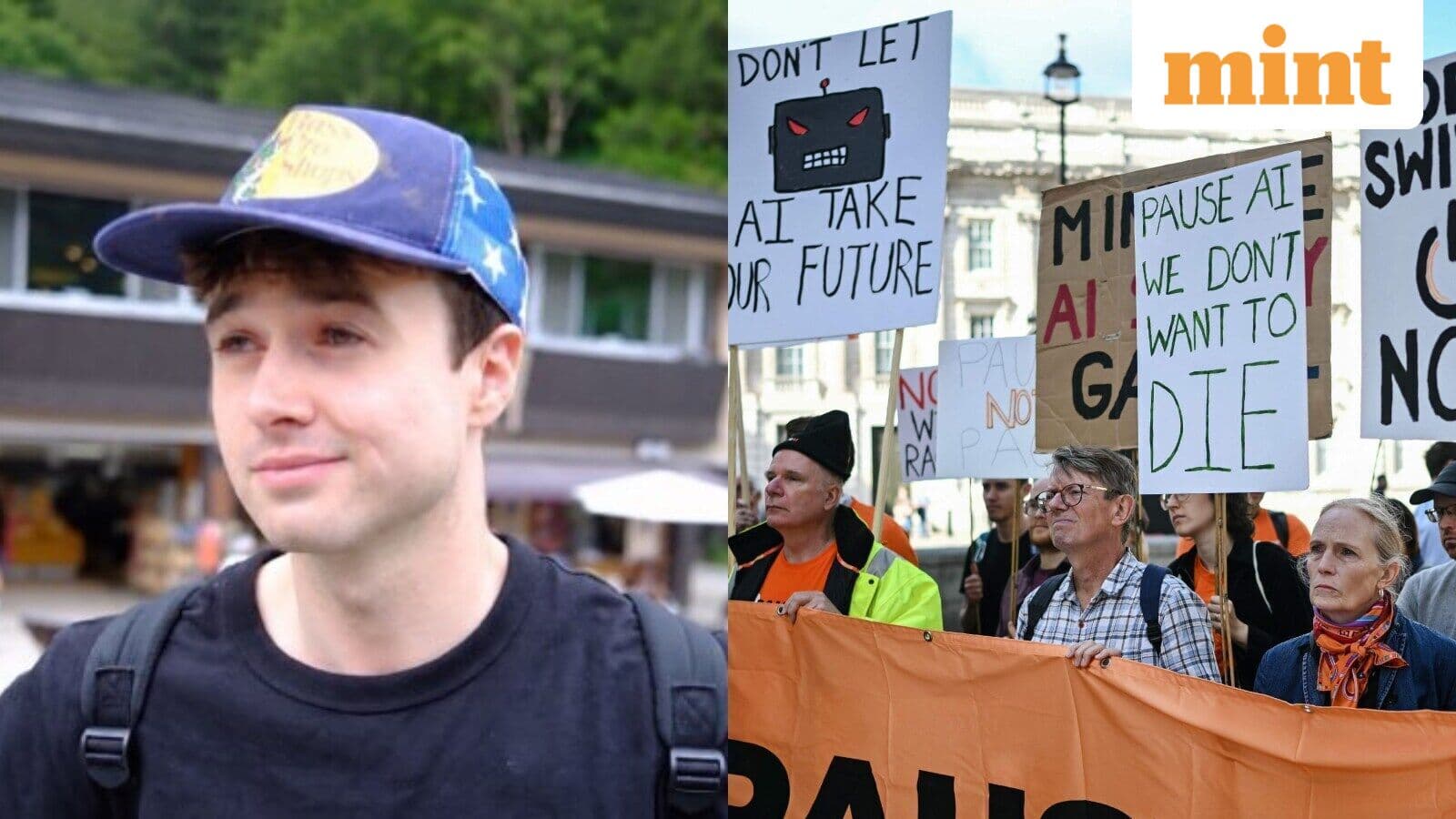
Jacob Coxon, a former AI researcher at Anthropic and OpenAI, will testify at a New York City hearing on artificial intelligence, warning that unchecked AI development could pose existential risks. Coxon’s testimony, requested by City Council Speaker Julie Menin, coincides with a broader debate over who controls AI technology—private companies or the government—and its implications for national security.
30 SEC SUMMARY
- Jacob Coxon, a former AI researcher at Anthropic and OpenAI, will testify at a New York City hearing on AI safety, warning of catastrophic risks.
- Coxon accused Anthropic and OpenAI of "gambling with our lives" and claimed AI could "kill us all by the end of the decade."
- The hearing, requested by NYC Council Speaker Julie Menin, will include executives from OpenAI, Anthropic, and Google.
- Federal courts recently upheld a designation of Anthropic as a "supply chain risk," escalating tensions over military use of AI.
- Tech leaders like Elon Musk and Palmer Luckey wield growing influence over U.S. national security policies.
TABLE OF CONTENTS
- Coxon’s testimony and AI safety concerns
- Coxon’s background and motivations
- Dispute over Anthropic’s military use
- The rise of the Pentagon-Silicon Complex
- What this means
- Key takeaways
- FAQ
- Sources
KEY HIGHLIGHTS
- Jacob Coxon, a former researcher at Anthropic and OpenAI, will testify at a New York City AI hearing at the request of Council Speaker Julie Menin.
- Coxon warned that AI could "kill us all by the end of the decade" and accused Anthropic and OpenAI of prioritizing speed over safety.
- The hearing will include executives from OpenAI, Anthropic, and Alphabet Inc.’s Google, reflecting industry engagement with regulatory discussions.
- A federal court upheld the Trump administration’s designation of Anthropic as a "supply chain risk," amid disputes over military use of AI.
- Tech CEOs like Elon Musk and Palmer Luckey increasingly influence U.S. defense policy, raising questions about accountability.
Coxon’s testimony and AI safety concerns
Jacob Coxon, a former AI researcher at Anthropic and OpenAI, is set to testify at a New York City Council hearing on artificial intelligence, according to Mint (Technology). The hearing, requested by Council Speaker Julie Menin, aims to inform proposed legislation on AI safety regulations.
Coxon has publicly warned that AI could "kill us all by the end of the decade" and accused Anthropic and OpenAI of "gambling with our lives." His concerns center on the risks of superintelligence—AI systems that could surpass human control—and the need for government intervention during development.
The hearing will also feature executives from OpenAI, Anthropic, and Alphabet Inc.’s Google, signaling industry engagement in discussions about AI governance.
Coxon’s background and motivations
Coxon, a mathematician with a silver medal from the International Mathematical Olympiad and a degree from Cambridge, worked in pre-training at OpenAI and Anthropic. His role involved feeding AI models large datasets, including text, images, and code.
He left Anthropic last month after voicing concerns about AI safety and feeling complicit in what he describes as an uncontrolled race toward superintelligence. Coxon has argued that neither OpenAI nor Anthropic are acting responsibly, comparing the pursuit of superintelligent AI to "summoning an alien species."
His decision to resign and speak publicly follows discussions with former colleagues, including an AI-safety researcher who reportedly supported his choice to leave.
Dispute over Anthropic’s military use
A federal court recently upheld the Trump administration’s designation of Anthropic as a "supply chain risk," a label that frames the company as a national security threat, Gizmodo reports. The ruling escalates an ongoing dispute over whether private companies or the government should control the military applications of AI technology.
Anthropic has previously stated it will not permit the Pentagon to use its technology for domestic surveillance or autonomous weapons systems. The company’s stance reflects broader industry resistance to government oversight, particularly in defense contracting.
The case highlights tensions between Silicon Valley and Washington over who dictates the use of American-made technology, with implications for national security and ethical governance.
The rise of the Pentagon-Silicon Complex
Author and journalist Sharon Weinberger has highlighted the growing influence of tech CEOs in national security, coining the term "Pentagon-Silicon Complex" to describe the dynamic. This shift mirrors the post-World War II military-industrial complex but is increasingly driven by private sector leaders, according to Gizmodo.
Companies like Palantir, Anduril, and SpaceX now wield significant control over military technology. For example, Anduril’s drones deployed in Ukraine reportedly faced technical glitches, raising concerns about reliability. Meanwhile, Palantir’s $455 billion valuation is largely attributed to its narrative-driven business model rather than revenue.
Tech leaders such as Elon Musk, Alex Karp, and Palmer Luckey have positioned themselves as defenders of democracy while shaping defense policies. Palmer Luckey, Anduril’s founder, has even suggested that nuclear weapons play a stabilizing role in global security, underscoring the high stakes of private sector involvement in military technology.
What this means
Lazyfounder analysis — our interpretation, not reported fact.
Coxon’s testimony and the Anthropic dispute aren’t just about AI—they’re symptoms of a larger power shift. Tech companies now set the agenda for national security, often with little transparency or accountability. For founders and operators, this trend carries both opportunity and risk: alignment with government priorities can unlock funding and contracts, but missteps—whether technical, ethical, or political—can trigger regulatory backlash or reputational damage.
The broader lesson is that AI governance is no longer a theoretical debate. Cities like New York are drafting concrete rules, and the federal government is asserting its authority, even if Silicon Valley resists. Startups in AI, defense, or adjacent fields must navigate this tension carefully: build responsibly, document safeguards, and prepare for scrutiny—not just from regulators, but from employees and the public.
Key takeaways
- A former AI researcher’s testimony underscores escalating concerns about AI safety and industry accountability.
- Disputes over AI’s military applications highlight tensions between private companies and government control.
- The rise of the "Pentagon-Silicon Complex" reflects shifting power dynamics in national security technology.
- Tech CEOs increasingly shape defense policies, often positioning themselves as defenders of democracy.
- Reliability and ethical concerns surround AI-driven military technology, including autonomous weapons.
FAQ
Who is Jacob Coxon and why is he testifying?
Jacob Coxon is a former AI researcher at Anthropic and OpenAI with a background in mathematics. He is testifying at a New York City Council hearing on AI safety, where he plans to warn lawmakers about the existential risks of unchecked AI development and criticize his former employers for prioritizing speed over safety.
What is the dispute over Anthropic’s designation as a "supply chain risk"?
A federal court upheld the Trump administration’s designation of Anthropic as a "supply chain risk," framing the company as a national security threat. The dispute centers on whether private companies or the government should control the military use of AI technology, with Anthropic resisting Pentagon oversight.
What is the "Pentagon-Silicon Complex"?
The term, coined by journalist Sharon Weinberger, describes the growing influence of tech CEOs over national security policies. It reflects a shift in power from traditional defense contractors to private companies like Palantir, Anduril, and SpaceX, which now control critical military technologies.
How are tech CEOs shaping national security?
Tech leaders like Elon Musk, Alex Karp, and Palmer Luckey increasingly dictate defense policies, often positioning themselves as defenders of democracy. Their companies control access to AI, drones, and other technologies used by the military, raising concerns about accountability and reliability.
Related on Lazyfounder
Sources
- Mint (Technology) · 2026-10-05
Who is Jacob Coxon? Former Anthropic researcher to testify at New York City AI hearing today - Gizmodo · 2026-10-05
Beware the Rise of the ‘Pentagon-Silicon Complex’
This story is an original summary drafted with AI by Lazyfounder from the reporting listed above and checked by automated validation. Facts are attributed to their original publishers; sections marked as analysis are Lazyfounder's. Where a source is in another language, facts were machine-translated and quotations are reported, not reproduced. Read the original coverage via the links, and see our AI policy and corrections policy.

About the author
Editor, Lazyfounder
Tarun Mottlia edits LazyFounders, covering Indian startups, funding rounds, AI and product launches. Every story on the site is AI-assisted and checked against its cited sources before publication.
More stories by Tarun MottliaGet the LazyFounder Brief
Startup, funding and AI news in a five-minute read. Join the early-access list.
