
Study provides forensic evidence of human sacrifice in ancient Egypt
New research by Egyptologist Roselyn Campbell offers forensic proof of human sacrifice in ancient Egypt, nearly a century after Flinders Petrie first proposed the theory. The study, based on cranial trauma found in 46 skulls, suggests that retainer sacrifice was practiced around 5,000 years ago.

Editor, Lazyfounder
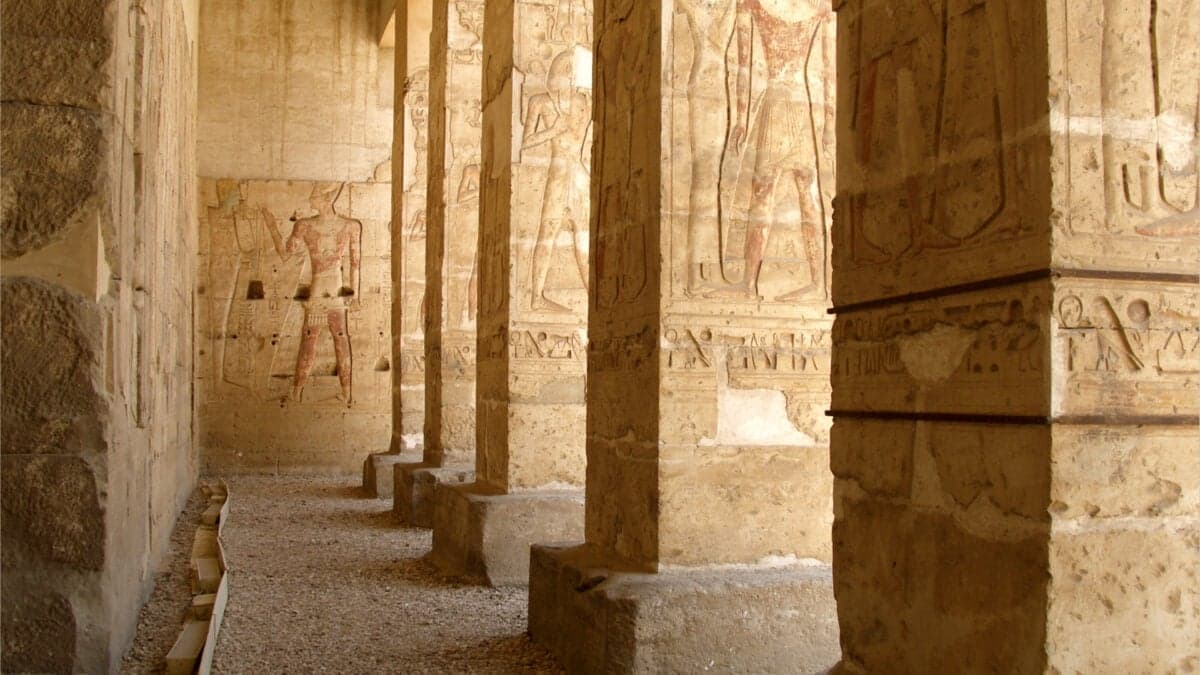
New research by Egyptologist Roselyn Campbell offers forensic proof of human sacrifice in ancient Egypt, nearly a century after Flinders Petrie first proposed the theory. The study, based on cranial trauma found in 46 skulls, suggests that retainer sacrifice was practiced around 5,000 years ago.
30 SEC SUMMARY
- A study by Purdue University Egyptologist Roselyn Campbell provides forensic evidence of human sacrifice in ancient Egypt around 5,000 years ago.
- The research, published in Frontiers in Environmental Archaeology, supports a theory first proposed by Egyptologist Flinders Petrie in the 1920s.
- Campbell analyzed 46 skulls excavated by Petrie, finding cranial trauma on 18, suggesting intentional killings.
- The findings point to retainer sacrifice, where individuals were killed to serve a ruler in the afterlife or display power.
- Petrie’s decision to rebury most remains limits further analysis today.
TABLE OF CONTENTS
- Forensic Evidence Supports Century-Old Theory
- Retainer Sacrifice: Motivations and Methods
- Limitations of Modern Analysis
- What this means
- Key takeaways
- FAQ
- Sources
KEY HIGHLIGHTS
- Roselyn Campbell’s study, published in Frontiers in Environmental Archaeology, identifies cranial trauma on 18 of 46 skulls excavated in Abydos.
- The findings suggest at least 39% of individuals in subsidiary graves were intentionally killed, supporting Flinders Petrie’s retainer sacrifice theory.
- Retainer sacrifice may have served religious beliefs or as a display of a ruler’s power in ancient Egypt.
- Petrie’s decision to rebury most remains limits modern analysis of these burials.
Forensic Evidence Supports Century-Old Theory
A study published in Frontiers in Environmental Archaeology by Egyptologist Roselyn Campbell of Purdue University offers new forensic evidence of human sacrifice in ancient Egypt. According to Gizmodo, the research supports a theory first proposed by Egyptologist Flinders Petrie in the 1920s, who suggested that burials in Abydos were evidence of retainer sacrifice—killing individuals to accompany a ruler in death.
Campbell examined 46 skulls excavated by Petrie, identifying previously overlooked cranial trauma on 18 of them. The injuries, including linear fractures and sharp-force trauma, indicate that at least 39% of the individuals may have been intentionally killed, likely by blows to the head. Some injuries, such as a chopping wound near an eye, suggest violent deaths consistent with sacrificial practices.
Retainer Sacrifice: Motivations and Methods
Retainer sacrifice, as described in the study, was a practice where individuals—often members of a ruler’s household—were killed upon the ruler’s death. According to the findings, this may have been motivated by beliefs that the sacrificed would serve the ruler in the afterlife or as a demonstration of the ruler’s power. The study notes that some individuals may have volunteered for sacrifice, seeking honor or eternal life, while others may have been forced.
The evidence also raises questions about how these killings were carried out. While the skull injuries point to blunt-force trauma, some individuals may have died from methods that leave no skeletal traces, such as suffocation. The study acknowledges that not all deaths in subsidiary graves were necessarily sacrificial.
Limitations of Modern Analysis
One significant challenge in studying these remains is the limited access to full skeletons. According to reports, Petrie reburied most of the remains he excavated, preserving only the skulls. This decision complicates efforts to conduct comprehensive forensic analysis, leaving unanswered questions about the broader context of these burials.
What this means
Lazyfounder analysis — our interpretation, not reported fact.
This study is a rare example of forensic science intersecting with archaeology to challenge—and validate—longstanding historical theories. For founders and operators, it underscores the value of revisiting old assumptions with new tools. The findings also highlight how limited access to historical artifacts can shape (or restrict) our understanding of the past. While the evidence is compelling, it leaves room for debate about the ethics and motivations behind retainer sacrifice, a practice that blurs the line between devotion and coercion.
Key takeaways
- A new study offers forensic evidence of human sacrifice in ancient Egypt, validating a century-old theory.
- Cranial trauma on 39% of studied skulls suggests intentional killings in royal burials.
- Retainer sacrifice may have involved voluntary or forced participation for religious or political purposes.
- Limited access to full skeletons complicates further research into these practices.
FAQ
What is retainer sacrifice?
Retainer sacrifice is the practice of killing individuals, often members of a ruler’s household, upon the ruler’s death. This was sometimes done to serve the ruler in the afterlife or to display the ruler’s power.
Why did Flinders Petrie rebury the remains he excavated?
According to the study, Petrie reburied most of the remains he excavated, preserving only the skulls. The reasons for this decision are not fully documented, but it has limited modern researchers’ ability to analyze the full skeletons for further evidence.
Could the injuries on the skulls have other explanations?
While the study suggests the injuries are consistent with intentional killings, linear fractures can also result from falls or accidents. However, the presence of sharp-force trauma on some skulls strengthens the case for violent, sacrificial deaths.
Related on Lazyfounder
Sources
- Gizmodo · 2026-10-05
Skulls Reveal Evidence of Human Sacrifice in Egypt 5,000 Years Ago
This story is an original summary drafted with AI by Lazyfounder from the reporting listed above and checked by automated validation. Facts are attributed to their original publishers; sections marked as analysis are Lazyfounder's. Where a source is in another language, facts were machine-translated and quotations are reported, not reproduced. Read the original coverage via the links, and see our AI policy and corrections policy.

About the author
Editor, Lazyfounder
Tarun Mottlia edits LazyFounders, covering Indian startups, funding rounds, AI and product launches. Every story on the site is AI-assisted and checked against its cited sources before publication.
More stories by Tarun MottliaGet the LazyFounder Brief
Startup, funding and AI news in a five-minute read. Join the early-access list.
