

Fabindia adds services and premium western wear sub-brand to counter quick commerce
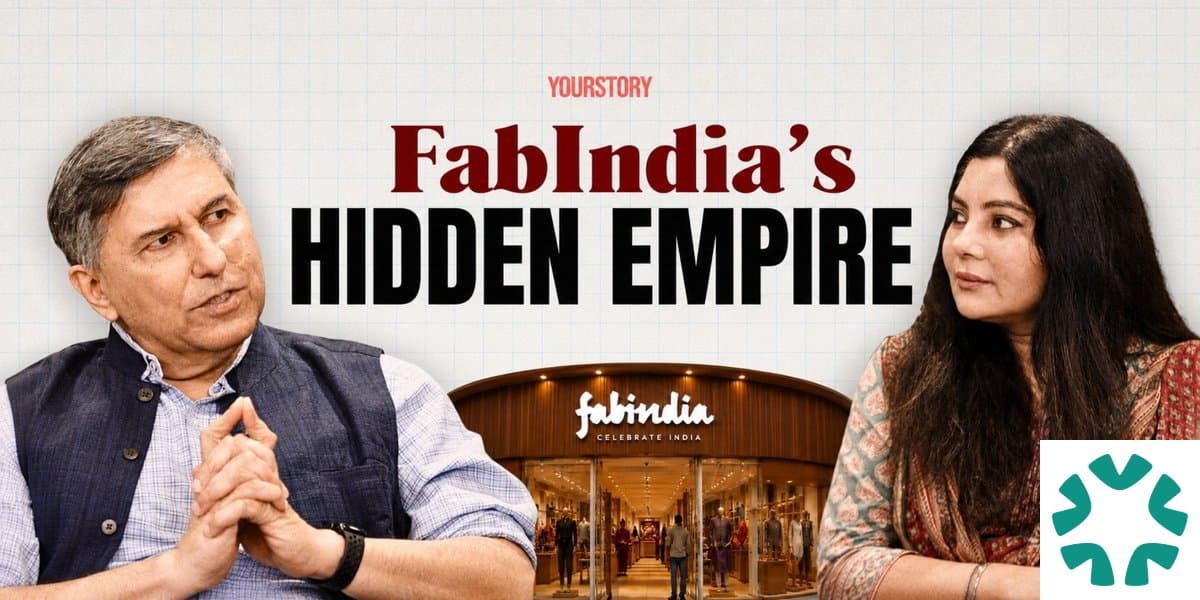
Fabindia, the 66-year-old Indian retail brand known for handcrafted apparel and home goods, is repositioning its stores to compete with quick commerce and digital marketplaces. The company has launched Fabels, a premium western wear sub-brand, and is expanding services like bespoke tailoring and interior design to create a competitive moat. These moves accompany an operational overhaul using RFID and AI-driven automation.

Editor, Lazyfounder
30 SEC SUMMARY
- Fabindia, a 66-year-old Indian retail brand, is adapting to modern retail trends while maintaining its focus on craft-based micro-enterprises and tradition.
- The company operates 340+ stores in India and 13 international outlets, sourcing from a network of craft-based micro-entrepreneurs.
- Fabindia launched Fabels, a sub-brand for premium western wear, to enter a high-growth segment without diluting its core identity.
- It is expanding services like bespoke tailoring and interior design to create a competitive moat against quick commerce and digital marketplaces.
- The company is using RFID and AI-driven automation to manage inventory and operations while preserving regional product variety.
TABLE OF CONTENTS
KEY HIGHLIGHTS
- Fabindia operates over 340 stores in 127 Indian cities and 13 international outlets across seven countries.
- The company launched Fabels, a premium western wear sub-brand, on 26 June 2026.
- Fabindia sources from craft-based micro-enterprises, including community-owned Rangsutra, which also supplies IKEA.
- It is adding services like alterations, bespoke tailoring, and interior design to its stores to differentiate from digital competitors.
- RFID technology and AI-driven automation are being used to streamline inventory and backend operations.
Why Fabindia is prioritizing services over trends
Managing Director William Nanda Bissell described Fabindia as a "compass brand" rather than one chasing trends. He emphasized that longevity—66 years—reflects a focus on rootedness and customer recall over fleeting fashion cycles. For Fabindia, this means maintaining strong ties with craft-based micro-enterprises, some of which span three generations.
Bissell highlighted a shift in retail: physical stores are no longer the sole channel, competing with quick commerce, marketplaces, and social commerce. Digital players benefit from data asymmetry, knowing who browses and what they do. Fabindia’s response is to turn stores into destinations for services that cannot be replicated online, such as bespoke tailoring and interior design.
Launching Fabels to enter premium western wear
Fabindia launched Fabels, a sub-brand for premium western wear, on 26 June 2026. Bissell said the goal was not to create an undifferentiated label but to translate the brand’s craft techniques into western silhouettes while retaining its design DNA. He cited an 18% compounded growth rate in western wear as the rationale for entering the segment.
The sub-brand reflects Fabindia’s approach to expansion: entering new categories without diluting its core identity. The company spent years refining how to adapt its traditional craft methods to contemporary styles.
How RFID and AI are reshaping operations
Fabindia has deployed RFID technology to streamline inventory management. A handheld device can now capture a store’s full inventory in 12 to 18 minutes, down from three days. This data feeds an AI-driven system the company calls the "self-driving enterprise," which Bissell expects to automate backend operations within a year, including issuing instructions to village suppliers.
The technology addresses a key challenge for India’s retail market: its lack of homogeneity. Most retailers simplify product ranges to scale, but Fabindia is using automation to preserve regional variety while improving efficiency.
The pending public listing and its implications
Fabindia’s proposed public listing remains pending, with no date or price band announced as of July 2026. The outcome could serve as a test case for how investors value businesses built on craft-based micro-enterprises, particularly those with a strong service component.
The company’s margin structure depends on thousands of small producers, making its performance a broader signal for similar models in India.
What this means
Lazyfounder analysis — our interpretation, not reported fact.
Fabindia’s moves reflect a broader tension facing traditional retailers: how to compete with digital-first models without losing their identity. Its focus on services as a moat is a deliberate bet that convenience and craft serve different customer needs. For founders, this offers a case study in leveraging existing strengths—like supplier relationships and regional variety—to adapt rather than overhaul. The RFID and AI-driven automation also signal how technology can help maintain complexity in operations, a challenge for businesses in diverse markets like India.
The pending listing, if it proceeds, will be closely watched. It could redefine how investors perceive businesses built on micro-enterprises, particularly those that prioritize services over pure product sales. For operators in craft-driven sectors, Fabindia’s approach may provide a template—or a cautionary tale—on balancing scale with authenticity.
Key takeaways
- Fabindia’s strategy of being a "compass brand" rather than chasing trends offers a model for long-term brand building, relevant for founders balancing tradition and innovation.
- Its focus on services as a moat against quick commerce and marketplaces could inspire retailers facing similar challenges.
- The use of AI and RFID to retain regional product variety while scaling may provide lessons for businesses operating in diverse markets.
- The pending public listing could set a benchmark for how craft-based, micro-enterprise-driven businesses are valued.
Sources
This story is an original summary drafted with AI by Lazyfounder from the reporting listed above and checked by automated validation. Facts are attributed to their original publishers; sections marked as analysis are Lazyfounder's. Where a source is in another language, facts were machine-translated and quotations are reported, not reproduced. Read the original coverage via the links, and see our AI policy and corrections policy.

About the author
Editor, Lazyfounder
Tarun Mottlia edits LazyFounders, covering Indian startups, funding rounds, AI and product launches. Every story on the site is AI-assisted and checked against its cited sources before publication.
More stories by Tarun MottliaGet the LazyFounder Brief
Startup, funding and AI news in a five-minute read. Join the early-access list.
