

EPFL physicists crack 40-year-old puzzle: the exact heating power fusion reactors need
Forty years after scientists first spotted fusion plasma jumping to high-confinement mode, a team at the Swiss Federal Institute of Technology in Lausanne has finally figured out how to predict the exact heating power required. The discovery hands engineers a concrete number for tokamaks like ITER in France and SPARC in the U.S., removing a stubborn barrier to commercial fusion.

Editor, Lazyfounder
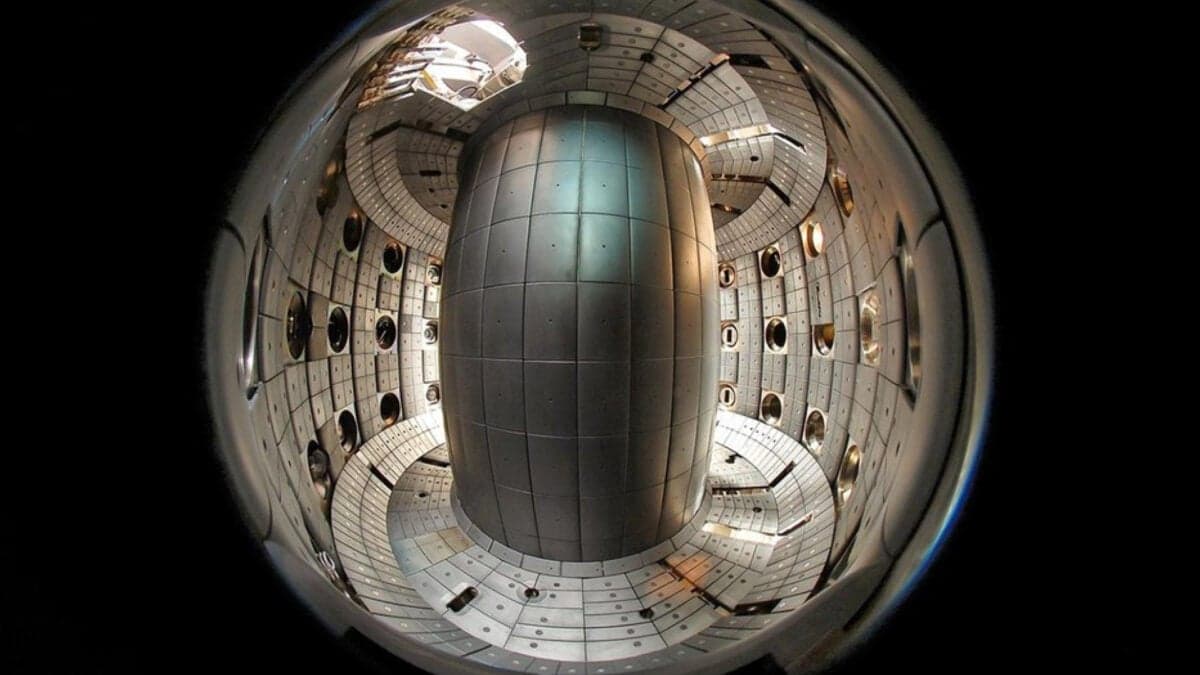
TABLE OF CONTENTS
KEY HIGHLIGHTS
- EPFL’s framework predicts the heating power needed for fusion plasma to switch from low- to high-confinement mode, solving a question open since 1982.
- The model ties heating thresholds to plasma density and magnetic-field direction, explaining why power needs rise in one density range and fall in another.
- According to the calculations, ITER must deliver at least 43 megawatts to reach H-mode; SPARC needs 26 megawatts—one megawatt above its expected capacity.
- Validation came from both computer simulations and real-world data recorded in existing tokamaks.
How the formula plugs a 40-year hole
In 1982, scientists noticed fusion plasma suddenly trap heat far better—a state they called high-confinement or H-mode. Ever since, that shift remained stubbornly unpredictable. Brenno De Lucca, a doctoral assistant at EPFL’s Swiss Plasma Center, and his team have now built a mathematical framework that forecasts the heating power required. Gizmodo reports the model leans on decades of tokamak experiments and tracks two levers: plasma density and the magnetic field’s direction.
Why heating demands swing with density
The formula reveals a U-shaped curve. At low plasma densities, cranking up density forces operators to pump in more heating power. Once density passes a certain point, the relationship flips—more density means less power is needed. The bottom of that U marks the sweet spot where the reactor needs the least energy to flip into H-mode. Gizmodo explains this pattern springs from turbulence at the plasma’s edge: suppressing it chokes off heat loss, letting the plasma retain energy far more efficiently.
ITER clears the bar, SPARC falls short by a megawatt
ITER, the giant international tokamak under construction in France, must hit at least 43 megawatts of heating power to achieve H-mode—comfortably below its 73-megawatt capacity. SPARC, the U.S.-based tokamak designed by Commonwealth Fusion Systems and MIT, faces a tighter squeeze: the model demands 26 megawatts, while its systems are sized for 25. The mismatch means SPARC’s operators will likely need to tweak plasma parameters or hunt for an extra megawatt of heating power.
Simulations meet real-world tokamaks
De Lucca’s group started inside computers, simulating how plasma responds as heating ramps up. They then distilled those observations into a concise mathematical rule and tested it against years of experimental records from working tokamaks. Gizmodo notes the payoff: the team could finally explain how turbulent eddies spawn flows that tamp down heat loss at the plasma’s edge, unlocking H-mode. That insight not only validates the model but also gives engineers a clear target for future designs.
What this means
Lazyfounder analysis — our interpretation, not reported fact.
The EPFL model shifts fusion road-maps from educated guesses to data-driven plans, letting teams budget heating systems and capital with real precision. SPARC’s backers now face a concrete choice: stretch their heating capacity, accept a later H-mode entry, or rework plasma conditions to shave a megawatt off the requirement. ITER, meanwhile, can move ahead confident its 73-megawatt margin is ample, which may quiet investor nerves and speed up funding commitments.
Key takeaways
- SPARC needs 26 MW to reach H-mode—one MW above its 25 MW budget—forcing operators to seek work-arounds or extra capital.
- ITER’s 43 MW threshold sits well under its 73 MW capacity, cutting technical risk and easing investor discussions.
- Startups can now benchmark their tokamaks against a standard formula, letting investors compare designs apples-to-apples.
- Fine-tuning density and magnetic field early in the design cycle can dodge costly redesigns later.
Related on Lazyfounder
Sources
- Gizmodo · 2026-11-20
Physicists Finally Solve a 40-Year-Old Mystery About Fusion Plasma
This story is an original summary drafted with AI by Lazyfounder from the reporting listed above and checked by automated validation. Facts are attributed to their original publishers; sections marked as analysis are Lazyfounder's. Where a source is in another language, facts were machine-translated and quotations are reported, not reproduced. Read the original coverage via the links, and see our AI policy and corrections policy.

About the author
Editor, Lazyfounder
Tarun Mottlia edits LazyFounders, covering Indian startups, funding rounds, AI and product launches. Every story on the site is AI-assisted and checked against its cited sources before publication.
More stories by Tarun MottliaGet the LazyFounder Brief
Startup, funding and AI news in a five-minute read. Join the early-access list.
