
South Korean doctors remove 11 parasitic worms from patient’s eyes ahead of cataract surgery
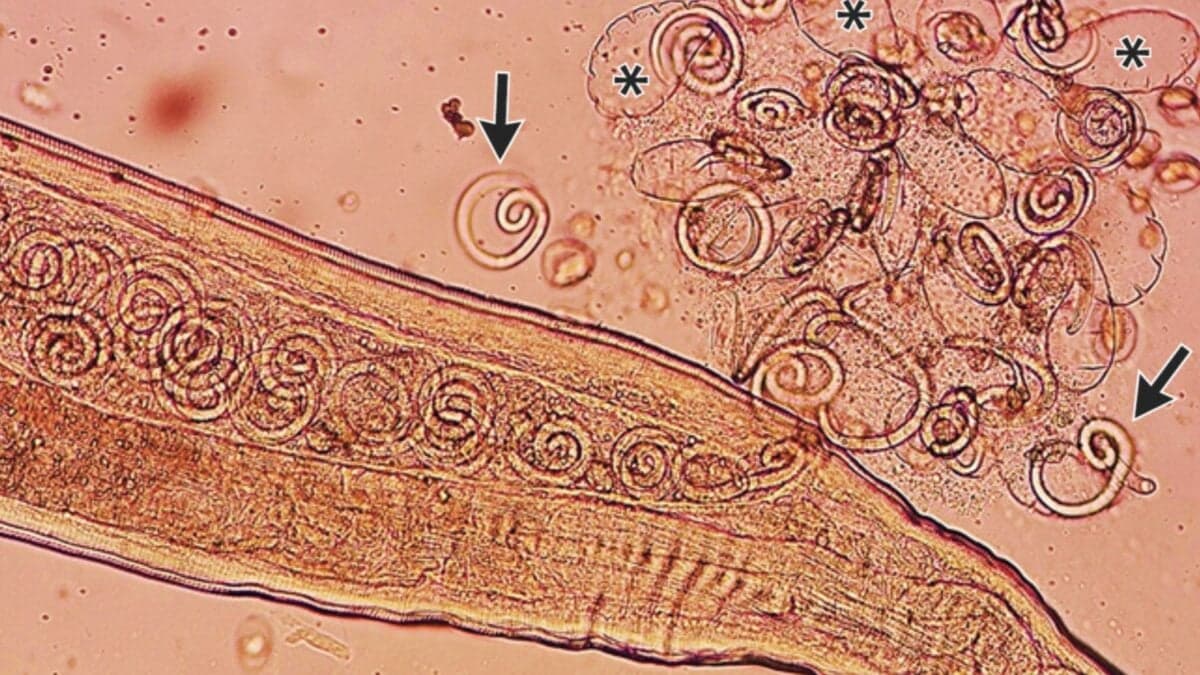
Doctors at a South Korean hospital removed 11 parasitic roundworms from the eyes of a 71-year-old farmer who had initially sought treatment for cataract surgery. The worms, identified as Thelazia callipaeda, were found to have reached reproductive maturity, with some releasing fertilized eggs and larvae.

Editor, Lazyfounder
30 SEC SUMMARY
- A 71-year-old farmer in South Korea was found to have 11 parasitic worms in his eyes during pre-cataract surgery checks.
- The worms, Thelazia callipaeda, are rare in humans and typically infect animals like dogs and cats.
- Doctors removed the worms using fine forceps after administering topical anesthesia.
- The patient recovered fully with no signs of recurrence after five months.
KEY HIGHLIGHTS
- The worms measured between 11 and 20 millimeters in length.
- Some female worms were pregnant and had released fertilized eggs, with a few hatching into larvae.
- Humans are usually a dead-end host for this parasite, making this case uncommon.
- The patient is scheduled to undergo cataract surgery as planned next month.
Discovery during cataract evaluation
A 71-year-old farmer in South Korea visited Kangwon National University Hospital for a routine evaluation ahead of cataract surgery. Doctors discovered 11 live parasitic worms in his eyes, identified as Thelazia callipaeda. This species typically infects animals such as dogs and cats but rarely affects humans.
According to reports, the worms ranged from 11 to 20 millimeters in length. Some female worms were pregnant and had already released fertilized eggs, with a few hatching into larvae. The discovery was unexpected, as humans are usually a dead-end host for this parasite, meaning infections rarely persist or spread.
Removal and recovery
Ji Eun Song, an ophthalmologist at Kangwon National University Hospital, and Kyuseong Jo removed the worms using fine forceps after administering topical anesthesia. The procedure was successful, and the patient showed no further symptoms or signs of recurrence during five months of follow-up.
The patient is now scheduled to undergo cataract surgery as originally planned next month. The case underscores the importance of investigating unusual findings, even in routine medical evaluations.
How the infection occurs
Thelazia callipaeda worms are transmitted by face flies, which feed on tears and eye-related fluids of animals. Humans can become accidental hosts through contact with infected flies, though sustained infections are rare. This case is notable for the number of worms and their reproductive maturity.
What this means
Lazyfounder analysis — our interpretation, not reported fact.
For healthcare operators, this case is a reminder that even routine procedures like cataract surgery can uncover unexpected conditions. It highlights the value of thorough pre-operative assessments, particularly in regions where zoonotic infections may occur. Founders developing diagnostic or telemedicine tools for ocular health may also find this case relevant, as it underscores the need for solutions that can identify atypical symptoms early.
Key takeaways
- Rare ocular infections like Thelazia callipaeda can mimic or complicate common conditions such as cataracts, emphasizing the need for thorough pre-surgical evaluations.
- Persisting or unusual ocular symptoms—even in routine cases—may require deeper investigation to rule out atypical causes.
Related on Lazyfounder
Sources
- Gizmodo · 2026-10-29
A Farmer Went in for Cataract Surgery. Doctors Found 11 Worms Wriggling in His Eyes
This story is an original summary drafted with AI by Lazyfounder from the reporting listed above and checked by automated validation. Facts are attributed to their original publishers; sections marked as analysis are Lazyfounder's. Where a source is in another language, facts were machine-translated and quotations are reported, not reproduced. Read the original coverage via the links, and see our AI policy and corrections policy.

About the author
Editor, Lazyfounder
Tarun Mottlia edits LazyFounders, covering Indian startups, funding rounds, AI and product launches. Every story on the site is AI-assisted and checked against its cited sources before publication.
More stories by Tarun MottliaGet the LazyFounder Brief
Startup, funding and AI news in a five-minute read. Join the early-access list.
