

Cal Newport's Deep Work quotes highlight focus as a skill for meaningful productivity
Cal Newport’s Deep Work argues that the ability to focus without distraction is a rare and valuable skill in today’s digital landscape. According to YourStory, the book offers insights on prioritization, discipline, and the deeper benefits of sustained attention—ideas that resonate with founders and operators balancing competing demands.

Editor, Lazyfounder
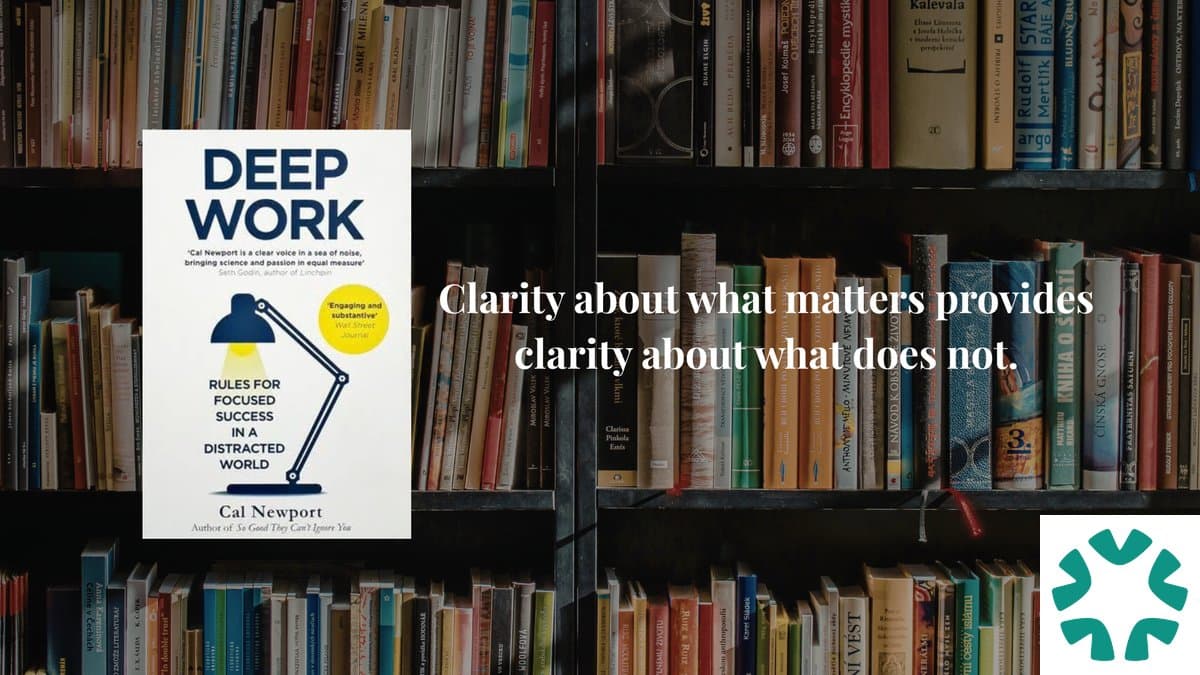
TABLE OF CONTENTS
Focus as a competitive advantage
According to YourStory, Cal Newport’s book Deep Work presents focus as a rare and increasingly valuable skill in a world dominated by notifications, interruptions, and constant digital distractions. Newport argues that the ability to concentrate without distraction is not just a productivity tool but a competitive advantage, particularly in environments where multitasking and fragmented attention are common.
Prioritization and clarity
One of the book’s central messages, as highlighted by YourStory, is that clarity about priorities is essential for sustained focus. Newport writes, “Clarity about what matters provides clarity about what does not.” This idea encourages founders and operators to distinguish between meaningful work and distractions, allowing them to direct energy toward tasks that align with long-term goals.
Newport also emphasizes that attention shapes identity. The quote, “Who you are, what you think, feel, and do, is the sum of what you focus on,” underscores how sustained attention on specific areas can influence skills, beliefs, and personal growth. For operators, this means that focus is not just about output but about shaping the trajectory of their work and leadership.
The role of discipline and discomfort
YourStory reports that Newport links focus to discipline, particularly in tolerating boredom. He argues that constantly seeking stimulation weakens the ability to concentrate. The quote, “Efforts to deepen your focus will struggle if you don't embrace boredom,” suggests that learning to sit with discomfort—rather than defaulting to distractions—can strengthen focus over time.
Newport also connects deep focus to action. “If you don't produce, you won't thrive,” he writes, urging readers to move beyond passive consumption and dedicate time to creating, building, and learning. For founders, this translates to a need for structured, uninterrupted time to develop ideas, products, or strategies.
Depth as a path to fulfillment
The book challenges the cultural celebration of busyness, arguing that depth leads to fulfillment. Newport’s quote, “A deep life is a good life,” suggests that sustained attention—whether in work, relationships, or personal growth—creates more meaningful experiences than constant distraction. For operators, this could mean rethinking how they structure their teams’ workflows to prioritize depth over superficial productivity.
Newport also notes that deep work is inherently satisfying. “Human beings are at their best when immersed deeply in something challenging,” he writes. This idea resonates with founders who often seek not just efficiency but a sense of purpose in their work.
Focus as a tool for adaptation
YourStory highlights Newport’s perspective that focus is critical for learning and adaptation. The quote, “To remain valuable in our economy, you must master the art of quickly learning complicated things,” connects deep focus with the ability to acquire difficult skills efficiently. For founders and operators, this reinforces the idea that focus is not just about executing tasks but also about staying ahead in a changing market by continuously upskilling and adapting.
What this means
Lazyfounder analysis — our interpretation, not reported fact.
Newport’s argument in Deep Work is especially relevant for founders and operators who often juggle competing demands, tight deadlines, and the pressure to stay ahead of market trends. The book’s emphasis on focus as a skill—rather than a innate trait—means it can be cultivated, which is a practical takeaway for those looking to improve their own productivity or that of their teams.
The idea that focus shapes identity and fulfillment also challenges the glorification of busyness in startup culture. Founders might reconsider how they measure success, shifting from sheer volume of activity to the depth and quality of their output. This could influence everything from how they structure their workdays to how they evaluate their teams’ performance.
Finally, Newport’s connection between focus and adaptability is a useful reminder that in fast-moving industries, the ability to learn quickly is a competitive edge. For operators, this might mean carving out time for focused learning amid operational demands, or encouraging their teams to do the same.
Sources
This story is an original summary drafted with AI by Lazyfounder from the reporting listed above and checked by automated validation. Facts are attributed to their original publishers; sections marked as analysis are Lazyfounder's. Where a source is in another language, facts were machine-translated and quotations are reported, not reproduced. Read the original coverage via the links, and see our AI policy and corrections policy.

About the author
Editor, Lazyfounder
Tarun Mottlia edits LazyFounders, covering Indian startups, funding rounds, AI and product launches. Every story on the site is AI-assisted and checked against its cited sources before publication.
More stories by Tarun MottliaGet the LazyFounder Brief
Startup, funding and AI news in a five-minute read. Join the early-access list.
