
Cuban-American exiles draft economic plans for post-Communist Cuba
Wealthy Cuban-American exiles in Miami are drafting economic reconstruction plans for Cuba, including a stock exchange and energy reforms, in anticipation of a potential collapse of the Communist government. While their influence shapes U.S. policy, Cuba’s government dismisses their efforts as interference, and sanctions have failed to force political change.

Editor, Lazyfounder
Wealthy Cuban-American exiles in Miami are drafting economic reconstruction plans for Cuba, including a stock exchange and energy reforms, in anticipation of a potential collapse of the Communist government. While their influence shapes U.S. policy, Cuba’s government dismisses their efforts as interference, and sanctions have failed to force political change.
30 SEC SUMMARY
- Wealthy Cuban-American exiles in Miami are drafting economic reconstruction plans for Cuba after a potential fall of the Communist government.
- The Cuban American National Council of Cuba (CANCC) has proposed a Cuban Stock Exchange and committees on energy, infrastructure, and food security.
- The Trump administration’s push for regime change in Cuba is influenced by Cuban-American leaders like Sixto, a real estate developer.
- Cuba’s recent economic reforms are dismissed as cosmetic by exiles, who demand compensation for nationalised properties.
- U.S. sanctions have worsened living conditions in Cuba but failed to trigger political change.
TABLE OF CONTENTS
- Exiles prepare economic blueprints for post-Communist Cuba
- U.S. policy and exile influence
- Cuba’s economic reforms and exile scepticism
- Sanctions, crises, and the road ahead
- What this means
- Key takeaways
- FAQ
- Sources
KEY HIGHLIGHTS
- Cuban-American exiles organised under the Cuban American National Council of Cuba (CANCC) are drafting economic reconstruction plans for a post-Communist Cuba.
- The CANCC’s proposals include a Cuban Stock Exchange and committees focused on energy, infrastructure, and food security.
- The Trump administration’s push for regime change in Cuba is influenced by Cuban-American leaders like Sixto.
- Cuba’s recent economic liberalisation measures, including private business reforms, are dismissed as cosmetic by exiles.
- U.S. sanctions have worsened living conditions in Cuba but have not triggered the political shift Washington seeks.
Exiles prepare economic blueprints for post-Communist Cuba
A group of wealthy Cuban-American exiles in Miami, organised under the Cuban American National Council of Cuba (CANCC), is drafting detailed plans for Cuba’s economic reconstruction. According to BBC News, these exiles—many of whom fled Cuba after Fidel Castro’s 1959 revolution—are leveraging political and economic influence to shape U.S. policy toward Cuba and prepare for business opportunities in a post-Communist transition.
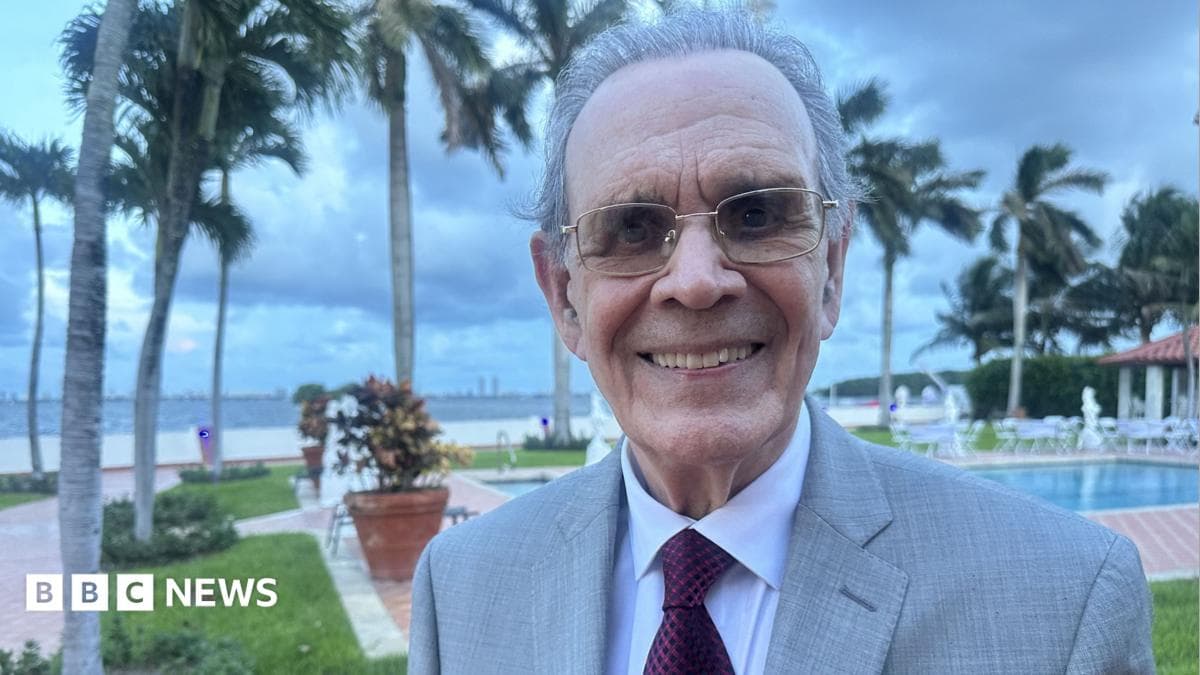
Sixto, a real estate developer and organiser within the CANCC, is leading efforts to plan for what he calls 'the day after.' The group’s proposals include establishing a Cuban Stock Exchange and forming committees on energy infrastructure and food security, reflecting a long-term vision for Cuba’s economic revival.
U.S. policy and exile influence
The Trump administration’s policy toward Cuba has focused on regime change, with Cuban-American leaders like Sixto playing a key role in shaping this approach. According to BBC News, Sixto claims to have access to high-profile U.S. officials, including those close to Secretary of State Marco Rubio, a Cuban-American politician.
Despite their influence in Washington, the exiles’ claims about immediate business opportunities in Cuba are met with scepticism on the island. The Cuban government, led by President Miguel Díaz-Canel, has dismissed such efforts as interference and insists it will not be forced out by critics in Miami.
Cuba’s economic reforms and exile scepticism
In response to economic pressures, the Cuban government recently announced 176 measures to liberalise the economy. According to BBC News, these reforms include lifting caps on private business hiring and allowing direct hiring and firing of employees—changes that critics argue resemble capitalism. The government frames these measures as necessary to defend socialism and expand social justice.
However, CANCC members dismiss the reforms as superficial, arguing they lack meaningful guarantees for investors. Exiles are also demanding compensation for properties nationalised after the 1959 revolution, a contentious issue the Cuban government views as unjust and rooted in historical grievances.
Sanctions, crises, and the road ahead
U.S. sanctions, including a fuel blockade, have worsened living conditions in Cuba, leading to acute shortages of food, water, fuel, and medicines. According to BBC News, while these measures have made life unbearable for ordinary Cubans, they have not triggered the political change Washington seeks.
The exiles’ plans face significant challenges, including Cuba’s crumbling infrastructure. Fixing the island’s electrical grid alone is estimated to cost between $8 billion and $10 billion. For most Cubans, the immediate priority remains easing daily hardships, not engaging with the exiles’ long-term economic blueprints.
What this means
Lazyfounder analysis — our interpretation, not reported fact.
This story highlights how diaspora communities can shape post-conflict economic strategies, even from afar. For founders and operators, it’s a case study in preparing for high-risk, high-reward transitions. The exiles’ plans—ranging from a stock exchange to infrastructure overhauls—show how private-sector thinking can emerge in political vacuums.
However, their ambitions clash with Cuba’s reality. The island’s recent economic reforms, while limited, signal a shift toward market mechanisms, but exiles dismiss them as superficial. Meanwhile, U.S. sanctions have deepened humanitarian crises without achieving their political goals, raising questions about their effectiveness.
For investors, this underscores the challenges of engaging with a transitioning Cuba: legal uncertainties, political instability, and a population focused on immediate relief over long-term reforms. The exiles’ demand for restitution of nationalised properties adds another layer of complexity, as any transition would need to balance historical grievances with pragmatic recovery efforts.
Key takeaways
- Cuban-American exiles are leveraging political and economic influence to prepare for a post-Communist Cuba.
- Their plans include a Cuban Stock Exchange and sector-specific committees, but face scepticism on the island.
- Cuba’s recent economic reforms are seen as cosmetic by exiles, who prioritise restitution of nationalised properties.
- U.S. sanctions have worsened humanitarian conditions but have not forced political change.
- The Cuban government dismisses exile-led initiatives as interference, complicating transition scenarios.
FAQ
What are Cuban-American exiles proposing for Cuba’s economy?
The Cuban American National Council of Cuba (CANCC) has proposed a Cuban Stock Exchange and committees focused on energy infrastructure, food security, and other critical sectors to rebuild Cuba’s economy after a potential fall of the Communist government.
How is the U.S. government involved in these plans?
The Trump administration’s push for regime change in Cuba is influenced by Cuban-American leaders like Sixto, who claims to have connections to high-profile U.S. officials, including Secretary of State Marco Rubio.
What is Cuba’s response to the exiles’ plans?
The Cuban government has not directly addressed the CANCC’s proposals but has traditionally dismissed such groups as interference. President Miguel Díaz-Canel insists the government will not be forced out by critics in Miami.
How have U.S. sanctions affected Cuba?
U.S. sanctions, including a fuel blockade, have worsened living conditions in Cuba, leading to shortages of food, water, fuel, and medicines. However, they have not triggered the political change Washington seeks.
What are the main challenges to Cuba’s economic recovery?
Cuba faces severe infrastructure challenges, including a failing electrical grid estimated to cost $8 billion to $10 billion to fix. Historical property claims by exiles and ongoing humanitarian crises further complicate any transition.
Related on Lazyfounder
Sources
- BBC News (Tech & Business) · 2026-10-01
The wealthy Cuban Americans ready and waiting for Havana to fall
This story is an original summary drafted with AI by Lazyfounder from the reporting listed above and checked by automated validation. Facts are attributed to their original publishers; sections marked as analysis are Lazyfounder's. Where a source is in another language, facts were machine-translated and quotations are reported, not reproduced. Read the original coverage via the links, and see our AI policy and corrections policy.

About the author
Editor, Lazyfounder
Tarun Mottlia edits LazyFounders, covering Indian startups, funding rounds, AI and product launches. Every story on the site is AI-assisted and checked against its cited sources before publication.
More stories by Tarun MottliaGet the LazyFounder Brief
Startup, funding and AI news in a five-minute read. Join the early-access list.
