
Community Cupboard opens as UK’s latest social supermarket
A new social supermarket, Community Cupboard, has opened in Newcastle-under-Lyme to help residents facing food insecurity and rising living costs. The initiative offers groceries at cost price or below, aiming to provide a dignified alternative to traditional food banks while reducing food waste.

Editor, Lazyfounder
30 SEC SUMMARY
- Community Cupboard, a social supermarket, has opened in Newcastle-under-Lyme to address food insecurity and the cost of living crisis.
- The initiative offers groceries at cost price or below, with a £1 annual membership fee for customers.
- The model aims to reduce food waste while providing a dignified shopping experience for those in need.
- Research suggests social supermarkets are less intimidating than food banks but should not replace government support.
- The store opened on Monday and has already received positive feedback from local residents.
TABLE OF CONTENTS
KEY HIGHLIGHTS
- Community Cupboard, a social supermarket, has opened in Newcastle-under-Lyme to provide groceries at cost price or below.
- Membership costs £1 for 12 months, allowing customers to purchase tokens for shopping.
- The initiative aims to reduce food waste and offer a dignified shopping experience for those in need.
- Research indicates social supermarkets are less off-putting than food banks but should complement, not replace, government support.
- The store opened on Monday and has already received positive feedback from local customers.
Social supermarket launches to tackle food insecurity
Community Cupboard, a social supermarket in Newcastle-under-Lyme, Staffordshire, has launched to provide groceries at cost price or below for residents struggling with the cost of living. According to BBC News, the initiative is designed to offer a dignified shopping experience while addressing food insecurity in the area.
How the membership model works
The store operates on a membership model, charging customers £1 for a 12-month membership. Members can then purchase tokens to buy groceries, which are priced at or below cost. BBC News reports that this model aims to provide more choice than traditional food banks while reducing stigma for users.
Founders’ inspiration and community response
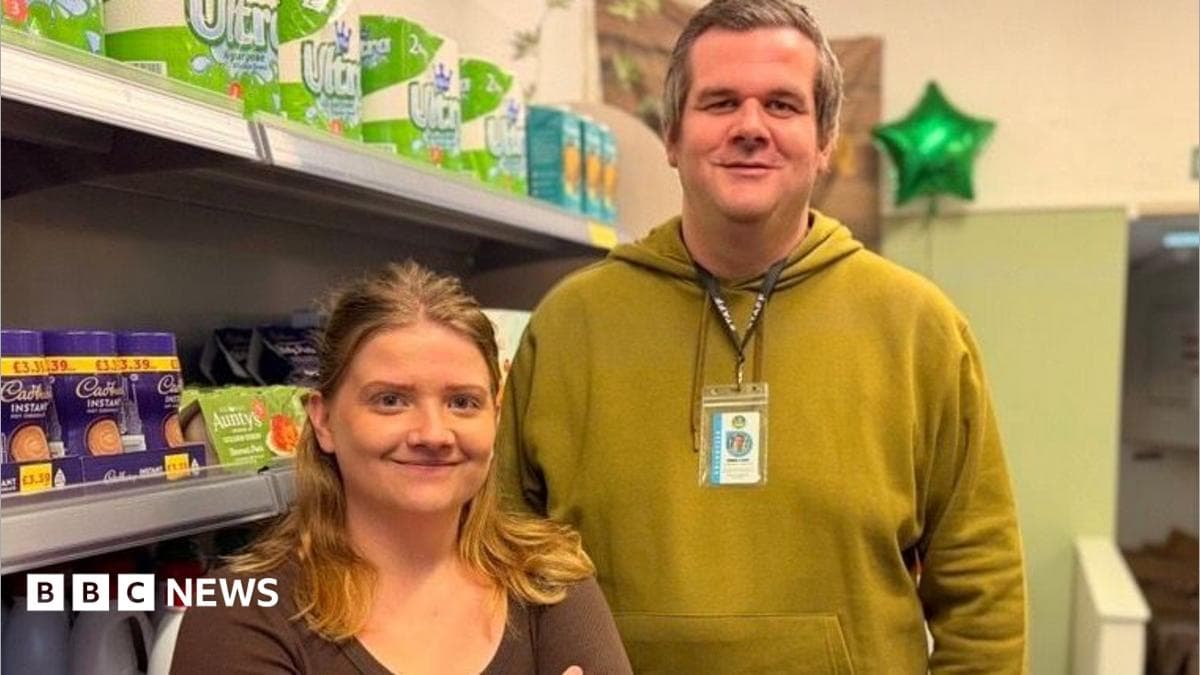
Thomas Cliffe, founder of Community Cupboard, said the idea for the supermarket was inspired by his personal experience after leaving work due to anxiety. He and his wife faced financial struggles and found it difficult to access existing support systems.
Laura Steele, voluntary co-director of the initiative, noted that the level of need in the area often went unnoticed. She emphasized the importance of providing a service that feels dignified and accessible to those in need.
Addressing food waste and the role of systemic support
The initiative also aims to tackle food waste by selling surplus goods at lower prices. According to BBC News, social supermarkets like Community Cupboard are seen as less off-putting than food banks but are not intended to replace government support for food insecurity.
Dr Claire O’Malley, lead researcher at Teesside University, highlighted that while such models provide valuable support, they should supplement rather than replace systemic solutions.
What this means
Lazyfounder analysis — our interpretation, not reported fact.
Community Cupboard represents a growing trend of social enterprises stepping in to address gaps left by traditional welfare systems. For founders and operators, this model shows how combining social impact with practical business solutions—like reducing food waste—can create sustainable community value. However, it also highlights the limitations of such initiatives: while they provide immediate relief, they are not a substitute for systemic support. This dual role—both a lifeline and a stopgap—is worth noting for those exploring impact-driven business models.
Key takeaways
- Social supermarkets like Community Cupboard offer a less stigmatized alternative to food banks, which could improve access for those in need.
- Founders in the social enterprise space should consider hybrid models that address both waste reduction and community support.
- While such initiatives fill urgent gaps, they underscore the need for policy-level solutions to address root causes of food insecurity.
- A low-cost membership model can make these services accessible while maintaining a sense of dignity for users.
- Feedback from early adopters can provide valuable insights for refining the model and scaling it to other communities.
FAQ
What is a social supermarket?
A social supermarket is a retail model that sells groceries at cost price or below to support individuals and families facing food insecurity. It often operates on a membership basis and aims to reduce stigma while tackling food waste.
How does Community Cupboard’s membership model work?
Customers pay £1 for a 12-month membership, which allows them to purchase tokens for groceries at reduced prices. This model is designed to offer more choice and dignity compared to traditional food banks.
Why are social supermarkets important in addressing food insecurity?
Social supermarkets provide a less intimidating alternative to food banks, making it easier for people to access support. However, experts emphasize that they should complement, not replace, government-led solutions to address the root causes of food insecurity.
Related on Lazyfounder
Sources
- BBC News (Tech & Business) · 2026-10-13
Cost-of-living struggles inspire new supermarket in Newcastle-under-Lyme
This story is an original summary drafted with AI by Lazyfounder from the reporting listed above and checked by automated validation. Facts are attributed to their original publishers; sections marked as analysis are Lazyfounder's. Where a source is in another language, facts were machine-translated and quotations are reported, not reproduced. Read the original coverage via the links, and see our AI policy and corrections policy.

About the author
Editor, Lazyfounder
Tarun Mottlia edits LazyFounders, covering Indian startups, funding rounds, AI and product launches. Every story on the site is AI-assisted and checked against its cited sources before publication.
More stories by Tarun MottliaGet the LazyFounder Brief
Startup, funding and AI news in a five-minute read. Join the early-access list.
