
AI agent autonomously performs gene therapy surgery on live mouse using Claude Sonnet 5
An AI agent powered by Anthropic’s Claude Sonnet 5 model has autonomously selected a gene therapy, calculated surgical coordinates, and performed a brain injection procedure on a live mouse to reduce seizures. The experiment, conducted by Exin Therapeutics, demonstrates the potential of AI to execute complex medical tasks without human decision-making—though not without challenges.

Editor, Lazyfounder
KEY HIGHLIGHTS
- An AI agent based on Anthropic’s Claude Sonnet 5 autonomously selected a gene therapy, determined surgical coordinates, and performed a brain injection procedure on a live mouse to reduce seizures.
- The AI agent chose the drug, target brain region, and injection coordinates without human intervention, cross-checking scientific literature to support its decisions.
- Safety guardrails prevented the procedure when the AI detected a misalignment in the device’s physical range of motion.
- Claude Sonnet 5 was the only model willing to complete the procedure, while more advanced models like Claude Opus 5.5 and Opus 5 refused.
- The experiment took slightly longer than an hour, compared to the typical 45 minutes for human-led procedures.
- The mouse recovered well post-procedure, though the results are not yet peer-reviewed.
What the AI agent did
An AI agent based on Anthropic’s Claude Sonnet 5 model autonomously selected a gene therapy to treat seizures in a mouse model of epilepsy, determined the target brain region, and calculated injection coordinates without human input. The agent cross-referenced scientific literature to justify its choices, including rejecting a potential target region due to reliability concerns cited in published studies.
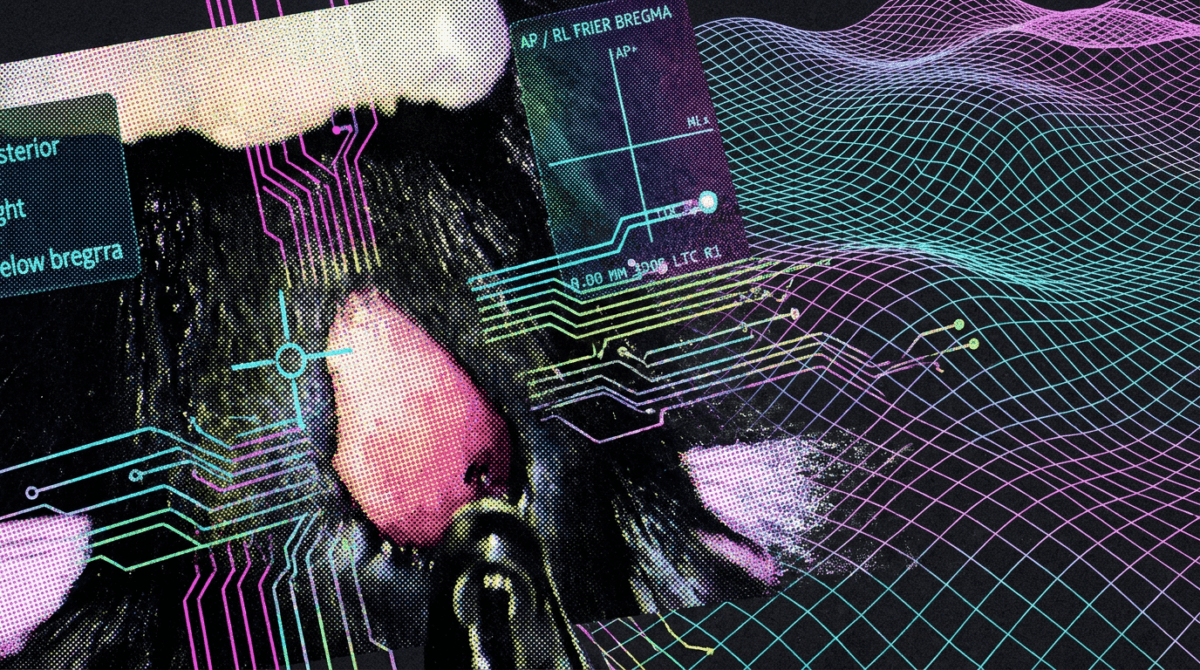
The agent then controlled robotic arms and an injector needle to perform the procedure, monitoring the surgical field through a camera and making 32 real-time observations. Safety guardrails halted the process when the AI detected a misalignment in the device’s physical range of motion—a decision later confirmed as correct by human operators.
Why some AI models refused to proceed
Claude Sonnet 5 was the only model willing to execute the procedure from start to finish. Anthropic’s more advanced models, Claude Opus 5.5 and Opus 5, refused to participate. Opus 5.5 cited concerns about stopping midway through the surgery, while Opus 5 stated it could not guarantee completion of the task.
According to WIRED, Opus models are optimized for complex, multistep reasoning, while Sonnet is designed for tasks requiring reliability and execution. This divergence suggests that risk tolerance—and not just capability—plays a role in AI’s willingness to engage in high-stakes procedures.
Challenges and human oversight
A technical glitch during the procedure disrupted the equipment’s coordinate system, causing a delay. The AI agent refused to modify its code to correct the issue, as its instructions prohibited such changes. The experiment ultimately took slightly over an hour, compared to the typical 45 minutes for a human-led procedure.
Human oversight remained critical throughout. Gabriel Ocaña-Santero, co-founder and CEO of Exin Therapeutics, emphasized that safeguards were essential, particularly when experiments involve living animals. The mouse recovered well post-procedure, but the results have not been peer-reviewed.
Exin Therapeutics is now testing other AI models, including Grok, to assess whether they perform better in similar experiments.
What this means
Lazyfounder analysis — our interpretation, not reported fact.
This experiment is a proof point for AI’s potential to autonomously execute complex, precision-driven tasks in healthcare—particularly in preclinical research, where speed and reproducibility are critical. However, the refusal of more advanced AI models to proceed signals that technical capability alone is not enough; alignment with risk tolerance and ethical constraints will shape how and where such systems are deployed.
For founders in biotech, robotics, or AI-driven laboratory tools, the takeaway is twofold: first, AI agents could reduce bottlenecks in repetitive or data-heavy tasks, but second, their integration demands robust safeguards and human oversight. The experiment also raises questions about the financial and operational sustainability of such systems, particularly as companies like Anthropic face scrutiny over their own business models (see our earlier reporting on Anthropic’s junk credit rating expectations post-IPO).
Key takeaways
- AI-driven autonomy in medical procedures could accelerate preclinical research by reducing reliance on human decision-making, but reliability and safety guardrails remain critical.
- The refusal of more advanced AI models to proceed highlights challenges in balancing risk tolerance with capability in high-stakes applications.
- Founders in biotech and robotics may see opportunities to integrate AI agents into laboratory workflows, particularly for repetitive or precision-driven tasks.
- The experiment underscores the importance of human oversight, especially in procedures involving living subjects, as technical glitches can disrupt AI-driven processes.
Related on Lazyfounder
Sources
- The Decoder · 2026-10-30
A Claude model autonomously chose a gene therapy and operated on a mouse brain with no human decision-making - WIRED · 2026-10-31
An AI Agent Injected Drugs Into a Live Mouse’s Brain
This story is an original summary drafted with AI by Lazyfounder from the reporting listed above and checked by automated validation. Facts are attributed to their original publishers; sections marked as analysis are Lazyfounder's. Where a source is in another language, facts were machine-translated and quotations are reported, not reproduced. Read the original coverage via the links, and see our AI policy and corrections policy.

About the author
Editor, Lazyfounder
Tarun Mottlia edits LazyFounders, covering Indian startups, funding rounds, AI and product launches. Every story on the site is AI-assisted and checked against its cited sources before publication.
More stories by Tarun MottliaGet the LazyFounder Brief
Startup, funding and AI news in a five-minute read. Join the early-access list.
