
China’s 2030 solid-state battery target splits policy and industry reality
China has set a 2030 target for the large-scale use of all-solid-state batteries, aligning industrial policy with its ambitions in energy storage. However, CATL’s chairman has dismissed the likelihood of million-vehicle adoption before then, highlighting tensions between government goals and technical feasibility. Meanwhile, Europe’s reliance on Asian battery standards deepens as ProLogium’s Dunkirk plant adopts a Chinese certification.

Editor, Lazyfounder
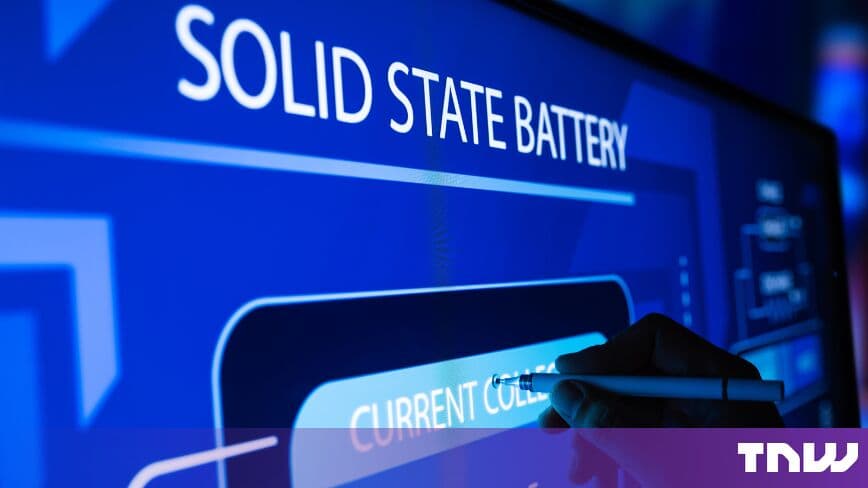
China has set a 2030 target for the large-scale use of all-solid-state batteries, aligning industrial policy with its ambitions in energy storage. However, CATL’s chairman has dismissed the likelihood of million-vehicle adoption before then, highlighting tensions between government goals and technical feasibility. Meanwhile, Europe’s reliance on Asian battery standards deepens as ProLogium’s Dunkirk plant adopts a Chinese certification.
30 SEC SUMMARY
- China’s industry ministry and six agencies set a 2030 target for large-scale use of all-solid-state batteries, signaling a push for advanced battery technology.
- CATL’s chairman, Robin Zeng, expressed skepticism about the technology’s readiness, calling million-vehicle adoption before 2030 unlikely.
- ProLogium is building a 12 GWh battery plant in Dunkirk, France, certified under a Chinese standard, highlighting Europe’s reliance on Asian battery suppliers.
- China and South Korea supply 90% of Europe’s batteries, underscoring the region’s dependence on foreign manufacturers.
- The Chinese plan focuses on initial large-scale use rather than full mass production by 2030.
TABLE OF CONTENTS
- China sets 2030 target for all-solid-state batteries
- Industry skepticism over near-term adoption
- Europe’s reliance on Asian battery standards
- Background: China’s EV dominance and policy push
- What this means
- Key takeaways
- FAQ
- Sources
KEY HIGHLIGHTS
- China’s industry ministry and six agencies set 2030 as the target for large-scale use of all-solid-state batteries.
- CATL’s chairman, Robin Zeng, rates the technology’s readiness as low and calls million-vehicle adoption before 2030 unlikely.
- ProLogium’s Dunkirk plant will produce 0.8 GWh in 2028 and scale to 12 GWh by 2032, certified under the Chinese standard GB/T 43568-2026.
- China and South Korea supply 90% of Europe’s batteries, highlighting the region’s reliance on Asian manufacturers.
- The Chinese plan focuses on initial large-scale use rather than full mass production by 2030.
China sets 2030 target for all-solid-state batteries
According to The Next Web, China’s industry ministry and six other agencies have set a target for the large-scale use of all-solid-state batteries by 2030. The plan covers the period from 2026 to 2030 and is part of a broader strategy to advance battery technology and address weaknesses in innovation and supply-demand imbalances.
Industry skepticism over near-term adoption
CATL’s chairman, Robin Zeng, expressed skepticism about the feasibility of widespread adoption of all-solid-state batteries before 2030. According to reports, Zeng rated the technology’s readiness as four out of nine and called the prospect of million-vehicle use by 2030 very unlikely. CATL reportedly plans limited production of these batteries in 2027.
The industry ministry’s plan also includes targets for lithium cells capable of 15,000 charge cycles, reflecting ambitions beyond just solid-state technology.
Europe’s reliance on Asian battery standards
ProLogium, a Taiwanese battery manufacturer, is constructing a plant in Dunkirk, France, which will be the largest new European cell project since Northvolt’s bankruptcy. The plant is slated to produce 0.8 GWh in 2028 and scale to 12 GWh by 2032. Notably, its cells are certified under the Chinese standard GB/T 43568-2026, signaling Europe’s continued dependence on Asian standards.
China and South Korea together supply 90% of Europe’s batteries, further underscoring the region’s reliance on Asian manufacturers. Northvolt’s recent bankruptcy, after raising $15 billion, has left a gap in Europe’s battery production capacity.
LG Energy Solution, another major player, reportedly expects all-solid-state battery technology to reach smartphones a decade before electric vehicles, highlighting the slower pace of adoption in the automotive sector.
Background: China’s EV dominance and policy push
Under its previous five-year plan, China accounted for 70% of global electric vehicle production. The current policy shift toward all-solid-state batteries reflects a broader effort to maintain leadership in the energy storage and automotive sectors. The new plan emphasizes initial large-scale use rather than full mass production by 2030, suggesting a phased approach to adoption.
What this means
Lazyfounder analysis — our interpretation, not reported fact.
China’s 2030 target for all-solid-state batteries is a clear signal of its ambition to lead in next-generation energy storage, but the skepticism from CATL’s chairman underscores the gap between policy and technical reality. For founders and operators, this disparity is worth watching: industrial policy can create markets, but execution depends on overcoming significant technical hurdles.
Europe’s reliance on Asian battery standards—like ProLogium’s adoption of the Chinese GB/T 43568-2026—also reveals how deeply global supply chains are intertwined with policy. Startups in the battery space should note that certification and standardization will increasingly shape market access, not just innovation. Finally, the slow pace of adoption predicted by industry leaders suggests that early-stage battery startups may still face a long road to scalability, even with government backing.
Key takeaways
- China’s 2030 target for all-solid-state batteries reflects its strategic focus on energy storage, but industry leaders like CATL remain cautious about near-term adoption.
- Europe’s battery supply chain is heavily dependent on Asian manufacturers, with 90% of its batteries sourced from China and South Korea.
- ProLogium’s Dunkirk plant, certified under a Chinese standard, highlights how policy and certification shape global battery production.
- Skepticism from CATL’s chairman suggests that technical challenges may delay widespread adoption of all-solid-state batteries, despite government targets.
- The gap between policy targets and industry readiness underscores the importance of aligning funding, R&D, and manufacturing capabilities.
FAQ
What is China’s target for all-solid-state batteries?
China’s industry ministry and six other agencies have set a target for the large-scale use of all-solid-state batteries by 2030, covering the period from 2026 to 2030.
Why is CATL’s chairman skeptical about all-solid-state batteries?
CATL’s chairman, Robin Zeng, rated the technology’s readiness as low (four out of nine) and called the prospect of million-vehicle adoption before 2030 very unlikely, citing technical and scalability challenges.
How does ProLogium’s Dunkirk plant fit into Europe’s battery supply chain?
ProLogium’s Dunkirk plant is the largest new European cell project since Northvolt’s bankruptcy. It will produce 0.8 GWh in 2028 and scale to 12 GWh by 2032, but its cells are certified under the Chinese standard GB/T 43568-2026, reflecting Europe’s reliance on Asian battery standards.
What percentage of Europe’s batteries come from China and South Korea?
China and South Korea together supply 90% of Europe’s batteries, highlighting the region’s dependence on Asian manufacturers.
What does China’s plan for solid-state batteries focus on?
The plan focuses on initial large-scale use of all-solid-state batteries by 2030, rather than full mass production, reflecting a phased approach to adoption.
Related on Lazyfounder
Sources
- The Next Web · 2026-10-04
China wants solid-state batteries in use by 2030, and CATL rates them four out of nine
This story is an original summary drafted with AI by Lazyfounder from the reporting listed above and checked by automated validation. Facts are attributed to their original publishers; sections marked as analysis are Lazyfounder's. Where a source is in another language, facts were machine-translated and quotations are reported, not reproduced. Read the original coverage via the links, and see our AI policy and corrections policy.

About the author
Editor, Lazyfounder
Tarun Mottlia edits LazyFounders, covering Indian startups, funding rounds, AI and product launches. Every story on the site is AI-assisted and checked against its cited sources before publication.
More stories by Tarun MottliaGet the LazyFounder Brief
Startup, funding and AI news in a five-minute read. Join the early-access list.
