
Bangka slow loris rediscovered after 89 years through wildlife rescues in Indonesia
The Bangka slow loris (Nycticebus bancanus), a venomous primate not seen in nearly a century, has been rediscovered by conservationists in Indonesia. The species, declared lost to science since 1937, was identified through wildlife rescues conducted by the Alobi Wildlife Rescue Center between 2015 and 2025.

Editor, Lazyfounder
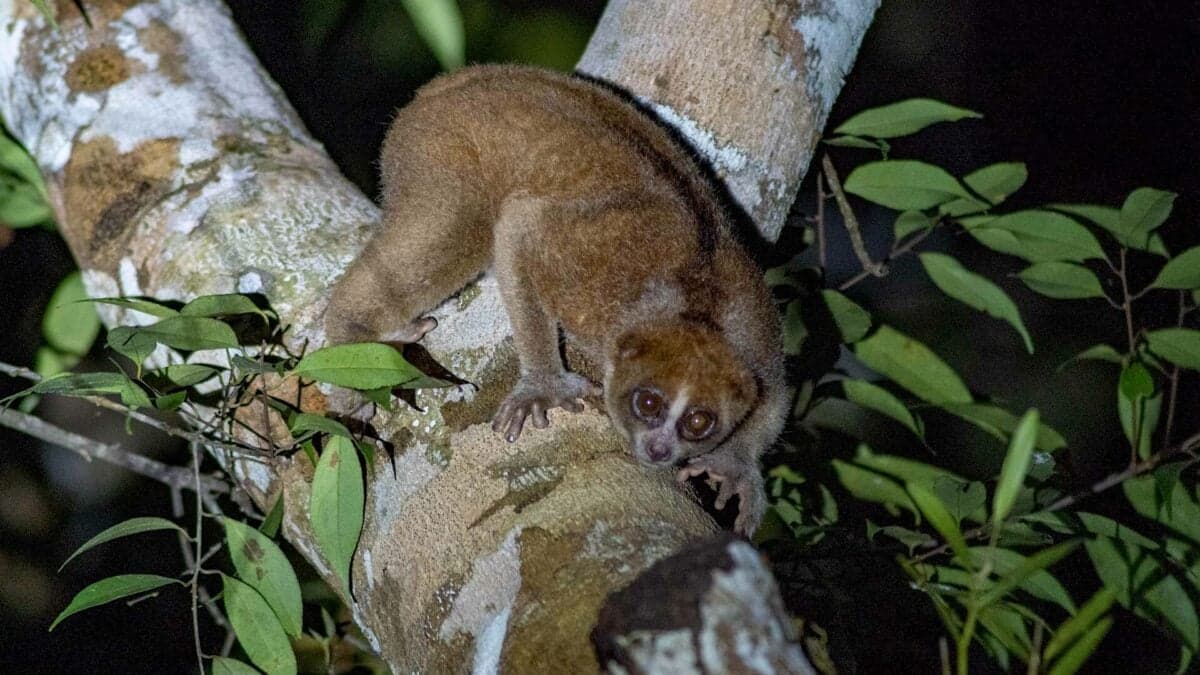
Rediscovery through wildlife rescues
Between 2015 and 2025, the Alobi Wildlife Rescue Center in Indonesia identified up to 90 specimens of the Bangka slow loris (Nycticebus bancanus), a species lost to science since 1937. The primates were rediscovered during rescues involving human-wildlife interactions, including instances where they entered homes and gardens.
Researchers attributed the identification to distinct fur coloration and the circumstances of each rescue. The species had no confirmed sightings for 89 years, leading to fears it may have gone extinct.
Unique traits and human interactions
The Bangka slow loris is one of the world’s few venomous primates. Its toxin, activated by licking a gland on its upper arm, is potent enough to cause anaphylactic shock in humans. The species measures up to 10 inches (25.8 centimeters) in length, making it smaller than its relative, the Sumatran slow loris.
Of the 90 recorded cases, 39 involved interactions with human-made environments. Sixteen specimens were found sneaking into houses and gardens, six were stranded on roadsides, and five were rescued from the wildlife trade or captivity. Seven individuals suffered burns from electric power lines, highlighting the risks of encroaching human activity.
Critical threats to survival
The International Union for Conservation of Nature classifies the Bangka slow loris as "critically endangered." Its habitat on Bangka Island—located about an hour’s flight from Jakarta—has been devastated by illegal tin mining and oil palm plantations. Conservationists warn that urgent action is required to prevent its extinction.
Langka Sani, Director of Alobi Wildlife Rescue Center, emphasized the species’ vulnerability due to habitat loss and human encroachment. The rediscovery offers a narrow window for targeted conservation efforts.
What this means
Lazyfounder analysis — our interpretation, not reported fact.
For founders and operators in wildlife conservation, biodiversity research, or sustainability-focused startups, the rediscovery of the Bangka slow loris underscores the urgency of addressing habitat destruction and human-wildlife conflict. The species’ critically endangered status and its interactions with human environments—such as entering homes or suffering injuries from power lines—highlight the fragility of ecosystems near urban or industrial expansion.
This case also demonstrates the role of local rescue centers in filling gaps left by broader scientific oversight. Startups working on conservation technology, habitat monitoring, or community-based wildlife protection may find opportunities to collaborate with or learn from organizations like Alobi Wildlife Rescue Center. The situation on Bangka Island reflects a global pattern: species teetering on extinction due to industrial activity, often in regions where economic pressures override conservation priorities. For operators in Southeast Asia, this rediscovery is a reminder of the ethical and ecological stakes of industries like mining and agriculture, which continue to reshape landscapes at the expense of biodiversity.
Related on Lazyfounder
Sources
- Gizmodo · 2026-10-22
Lost to Science for 89 Years, a Venomous Primate Has Been Sneaking Into People’s Homes and Gardens
This story is an original summary drafted with AI by Lazyfounder from the reporting listed above and checked by automated validation. Facts are attributed to their original publishers; sections marked as analysis are Lazyfounder's. Where a source is in another language, facts were machine-translated and quotations are reported, not reproduced. Read the original coverage via the links, and see our AI policy and corrections policy.

About the author
Editor, Lazyfounder
Tarun Mottlia edits LazyFounders, covering Indian startups, funding rounds, AI and product launches. Every story on the site is AI-assisted and checked against its cited sources before publication.
More stories by Tarun MottliaGet the LazyFounder Brief
Startup, funding and AI news in a five-minute read. Join the early-access list.
