

Goyal warns automakers on fake localisation, demands export boost and global standards
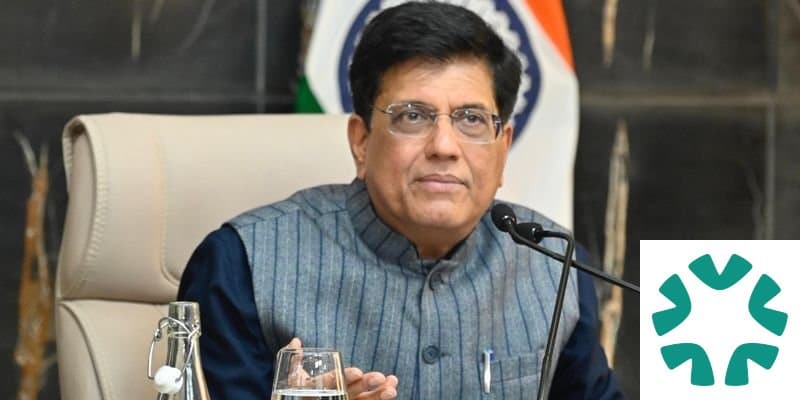
Commerce and Industry Minister Piyush Goyal has warned automakers against superficial localisation efforts, citing discrepancies between claims and actual import-export data. Speaking at a Society of Indian Automobile Manufacturers (SIAM) event, he urged the industry to meet global standards, expand exports, and leverage government support to offset low indigenisation.

Editor, Lazyfounder
30 SEC SUMMARY
- Piyush Goyal urges automakers to increase localisation in India, warning some are merely importing goods at nominal value through subsidiaries.
- Goyal highlights discrepancies between claims of indigenisation and actual import-export data, using AI-driven analysis of IEC codes.
- Maruti Suzuki praised for exports, holding 55% of India’s passenger vehicle export share in Q1 and 97% of EV shipments.
- Government emphasizes global standards for Indian-made vehicles to avoid suboptimal designs that limit export potential.
- Goyal calls for deeper technology investment, export expansion, and leveraging India’s trade agreements for growth.
TABLE OF CONTENTS
KEY HIGHLIGHTS
- Commerce and Industry Minister Piyush Goyal cautioned automakers about inadequate localisation efforts, calling out "black sheep" exploiting loopholes.
- Goyal stated some automakers set up Indian subsidiaries to import goods at nominal value, inflating localisation claims.
- Government is using AI to analyze import-export data via IEC codes to verify indigenisation levels.
- Maruti Suzuki exported 4.47 lakh passenger vehicles in FY 2025-26, leading India’s export market for five consecutive years.
- Indian automakers urged to meet global quality standards to avoid suboptimal designs that hinder exports.
- Goyal encouraged automakers to offset low indigenisation with increased exports, supported by government enablers.
Discrepancies in localisation claims
Commerce and Industry Minister Piyush Goyal cautioned automakers about "black sheep" among them that are not making adequate efforts to increase localisation in India. According to YourStory, he highlighted cases where companies set up subsidiaries in India to import goods at nominal value, which they then use to claim higher indigenisation levels. This practice, he argued, allows them to sell cars in the domestic market while circumventing genuine localisation efforts.
Government’s data-driven scrutiny
Goyal stated that the government is using artificial intelligence to analyze import-export data through Import Export Code (IEC) numbers to verify localisation claims. He emphasized that while some automakers may claim high indigenisation, the government can cross-reference their data with their supplier ecosystems to exposing discrepancies. This scrutiny aims to ensure that localisation efforts are substantive rather than superficial.
Maruti Suzuki’s export leadership
Maruti Suzuki was praised by Goyal for its export performance, with the company holding a 55% share of India’s passenger vehicle exports in the April-June quarter. According to the report, the automaker exported 4.47 lakh units in FY 2025-26 and has led India’s passenger vehicle export market for five consecutive years. Additionally, Maruti Suzuki accounted for 97% of India’s EV shipments in the first quarter of this fiscal year, reinforcing its dominance in the export segment.
Call for global standards and export expansion
Goyal urged automakers to ensure that vehicles manufactured in India meet global standards, cautioning against producing suboptimal designs that limit export potential. He cited instances where Indian-made vehicles were reportedly not exported due to designs considered inferior to globally sold models. To offset low localisation, he encouraged automakers to expand exports, with the government offering support to facilitate this growth.
The minister also stressed the importance of leveraging India’s expanding trade partnerships and growing domestic market to scale globally. He called on the industry to invest in technology, innovation, and research and development to remain competitive.
Government support and future opportunities
Goyal outlined government support for the automotive sector, including land allocation, plug-and-play infrastructure, and country-specific industrial parks based on industry demand. He invited automakers to identify locations for ecosystem development, signaling long-term government commitment to the sector’s growth.
He also highlighted India’s goal of increasing exports, urging the industry to raise its monthly export pace to $12 billion to meet the $1 trillion target for 2026-27. The minister emphasized that global competition would intensify, and automakers must use India’s economies of scale to serve international markets.
What this means
Lazyfounder analysis — our interpretation, not reported fact.
Goyal’s warnings and directives signal a shift toward stricter accountability for automakers claiming localisation benefits. For founders and operators in the automotive sector, this means two things: first, superficial indigenisation—such as importing components through subsidiaries at nominal values—will face regulatory pushback, and second, the government is positioning exports as a key lever for growth, but only for products that meet global quality standards. The emphasis on data-driven scrutiny also suggests that automakers must align their supply chains with demonstrable localisation or risk losing access to incentives. For startups in adjacent sectors—such as auto components, EVs, or logistics—this could create opportunities to partner with established players looking to deepen their indigenisation efforts or expand exports.
Key takeaways
- Automakers must align localisation claims with actual import-export data or risk regulatory scrutiny.
- Exports can mitigate low indigenisation, but global quality standards are non-negotiable for access to international markets.
- India’s trade agreements and growing domestic market present opportunities for scaling globally, but only for those investing in technology and R&D.
- Government support for large projects includes land, infrastructure, and country-specific industrial parks, signaling long-term commitment to the sector.
Sources
This story is an original summary drafted with AI by Lazyfounder from the reporting listed above and checked by automated validation. Facts are attributed to their original publishers; sections marked as analysis are Lazyfounder's. Where a source is in another language, facts were machine-translated and quotations are reported, not reproduced. Read the original coverage via the links, and see our AI policy and corrections policy.

About the author
Editor, Lazyfounder
Tarun Mottlia edits LazyFounders, covering Indian startups, funding rounds, AI and product launches. Every story on the site is AI-assisted and checked against its cited sources before publication.
More stories by Tarun MottliaGet the LazyFounder Brief
Startup, funding and AI news in a five-minute read. Join the early-access list.
