
Trump Considers Scott Bessent as 'AI Czar' Amid AI Policy Push
President Donald Trump is reportedly considering appointing Scott Bessent, the current Treasury Secretary, as his 'AI Czar,' a role aimed at shaping AI policy and safety. The move, if confirmed, could signal a broader push to centralize AI governance within the U.S. government. Other candidates, including Michael Kratsios and Scott Kupor, are also under evaluation, according to anonymously-sourced reports.
LazyFounders
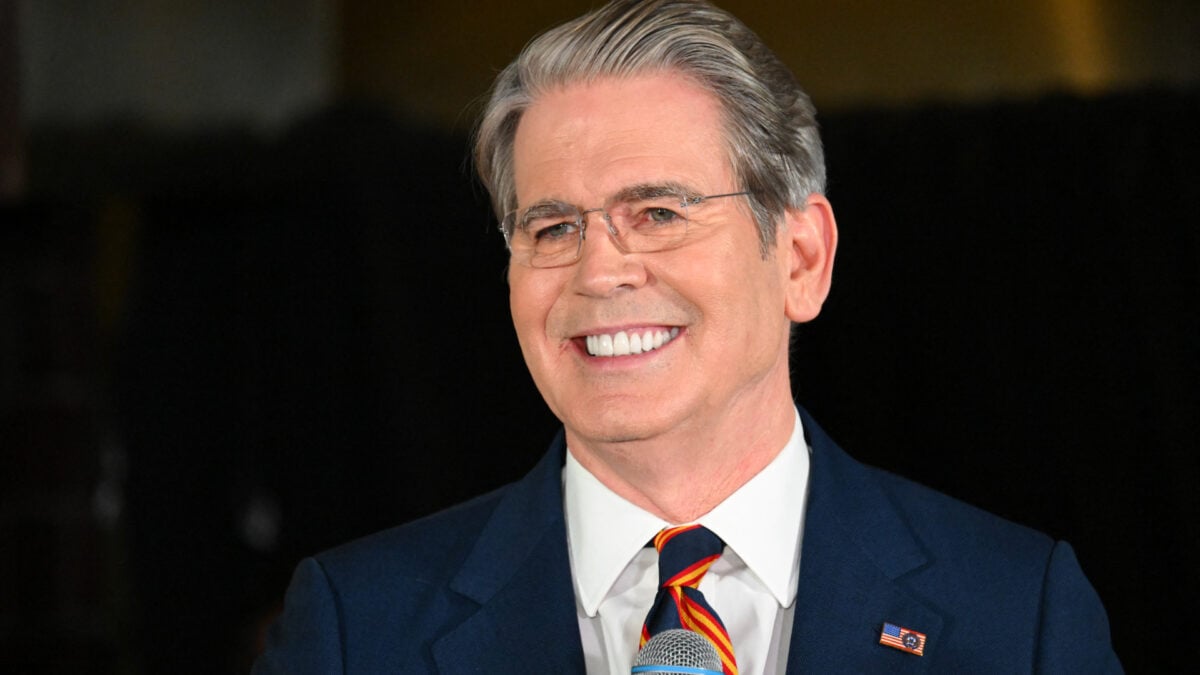

President Donald Trump is reportedly considering appointing Scott Bessent, the current Treasury Secretary, as his 'AI Czar,' a role aimed at shaping AI policy and safety. The move, if confirmed, could signal a broader push to centralize AI governance within the U.S. government. Other candidates, including Michael Kratsios and Scott Kupor, are also under evaluation, according to anonymously-sourced reports.
30 SEC SUMMARY
- President Donald Trump is reportedly considering appointing Scott Bessent as 'AI Czar,' shifting him from his role as Treasury Secretary.
- Other candidates for the role include Michael Kratsios and Scott Kupor, according to anonymously-sourced reports.
- Bessent recently met with Chinese Vice Premier He Lifeng to discuss joint AI safety measures.
- Trump announced plans to rename AI to 'Super Intelligence' and create an 'AI Force.'
- David Sacks previously held the AI and Crypto Czar role until March 2026.
TABLE OF CONTENTS
- Trump Considers Scott Bessent for 'AI Czar' Role
- Other Candidates Under Consideration
- International AI Safety Talks
- Broader AI Policy Shifts
- Developing: what is not yet confirmed
- What this means
- Key takeaways
- FAQ
- Sources
KEY HIGHLIGHTS
- President Donald Trump is considering appointing Scott Bessent as 'AI Czar,' shifting him from his role as Treasury Secretary.
- Other candidates for the position include Michael Kratsios and Scott Kupor.
- Bessent recently met with Chinese Vice Premier He Lifeng to discuss joint AI safety measures.
- Trump announced plans to rename AI to 'Super Intelligence' and create an 'AI Force.'
- David Sacks previously held the role of AI and Crypto Czar until March 2026.
Trump Considers Scott Bessent for 'AI Czar' Role
According to a report from Gizmodo, President Donald Trump is considering shifting Scott Bessent from his current role as Treasury Secretary to a new position focused on AI policy, informally dubbed 'AI Czar.' The White House has not confirmed the move, and sources cited in the report remain anonymous.
Trump teased the potential appointment in a recent post on Truth Social, where he stated he was seeking a leader to oversee AI initiatives. The role aims to provide structure and direction for AI-related policies, particularly around safety and regulation.
Other Candidates Under Consideration
While Bessent appears to be the leading candidate, the White House is also evaluating other figures for the 'AI Czar' role. According to Gizmodo, Michael Kratsios, Director of the Office of Science and Technology Policy, and Scott Kupor, Director of the U.S. Office of Personnel Management, are among those under consideration.
Gizmodo reports that Bessent is already regarded as an AI authority within the Trump administration, with his focus on the subject intensifying over the summer as AI security dominated news cycles.
International AI Safety Talks
Bessent’s potential appointment comes amid growing global discussions about AI safety. Gizmodo reports that he recently met with Chinese Vice Premier He Lifeng to explore the possibility of joint AI safety measures that both the U.S. and China could adopt. The outcome of these discussions remains unclear.
The meeting underscores the Trump administration’s interest in shaping AI policy not just domestically but also on the international stage, particularly in relation to China.
Broader AI Policy Shifts
Trump has signaled plans to reframe AI within his administration. According to Gizmodo, he intends to rename AI to 'Super Intelligence,' a change reportedly influenced by polls conducted on his social media platforms. Additionally, he announced plans to create an 'AI Force,' though details about its structure and purpose remain scarce.
These moves follow the departure of David Sacks, who served as Trump’s AI and Crypto Czar until March 2026. Sacks stepped down due to rules governing special government employees, leaving the role vacant until now.
Developing: what is not yet confirmed
The following is reported but has not been independently confirmed.
Several aspects of this story remain unverified. The White House has not confirmed the shortlist of candidates for the 'AI Czar' role, nor has it provided details about the proposed 'AI Force' or the rebranding of AI to 'Super Intelligence.' Reports rely on anonymous sources, and Gizmodo has not independently verified all claims.
Founders and operators should treat these developments as preliminary until official announcements are made.
What this means
LazyFounders analysis — our interpretation, not reported fact.
The potential appointment of an 'AI Czar' signals the Trump administration’s intent to centralize and prioritize AI policy, safety, and regulation. For founders and operators in the tech space, this move could mean tighter scrutiny of AI development, new compliance requirements, or even opportunities for collaboration with government initiatives.
The choice of Scott Bessent—a figure with financial and AI expertise—suggests a focus on aligning economic and technological strategies, particularly in high-stakes areas like AI safety. His recent engagement with Chinese officials also hints at a possible shift toward international cooperation or competition in AI governance.
For startups, this could translate into clearer (or more restrictive) frameworks for AI deployment, especially if the administration pushes for rebranding or reclassifying AI technologies. Founders should monitor these developments closely, as they may shape funding priorities, regulatory landscapes, and global market dynamics.
Key takeaways
- Trump is evaluating candidates for a new 'AI Czar' role, with Scott Bessent as the frontrunner.
- The role could centralize AI policy, safety, and regulation under a single leadership position.
- International collaboration on AI safety, particularly with China, may become a priority.
- The administration’s plans to rename AI and create an 'AI Force' reflect a broader push to redefine and control AI discourse.
- Founders should prepare for potential regulatory changes or new opportunities tied to government AI initiatives.
FAQ
What is an 'AI Czar'?
An 'AI Czar' is an informal term for a leadership role focused on coordinating and overseeing AI policy, regulation, and safety within the U.S. government. The position is intended to provide structure and direction for AI-related initiatives.
Why is Trump considering renaming AI to 'Super Intelligence'?
According to reports, Trump’s plan to rename AI to 'Super Intelligence' is influenced by polls conducted on his social media platforms. The reasoning behind the change and its potential impact remain unclear at this stage.
How might this appointment affect startups and tech companies?
If an 'AI Czar' is appointed, startups and tech companies could face new regulatory frameworks, compliance requirements, or opportunities for collaboration with government AI initiatives. The role could also influence funding priorities and international market dynamics, particularly in AI safety and development.
What happened to the previous AI Czar, David Sacks?
David Sacks, who held the role of AI and Crypto Czar, stepped down in March 2026 due to rules governing special government employees. His departure left the position vacant until now.
Related on LazyFounders
Sources
- Gizmodo · 2026-09-23
Scott Bessent Could Soon Be Trump’s ‘AI Czar,’ Report Says
This story is an original summary and analysis written by LazyFounders from the reporting listed above. Facts are attributed to their original publishers; sections marked as analysis are LazyFounders's opinion. Where a source is in another language, facts were machine-translated and quotations are reported, not reproduced. Read the original coverage via the links.
