
Singapore's Pioneering Biological Data Centre: A New Era for AI
Discover Singapore's groundbreaking biological data centre in 2026, using human neurons for computing. Learn about its potential for energy efficiency and AI infrastructure.
LazyFounders
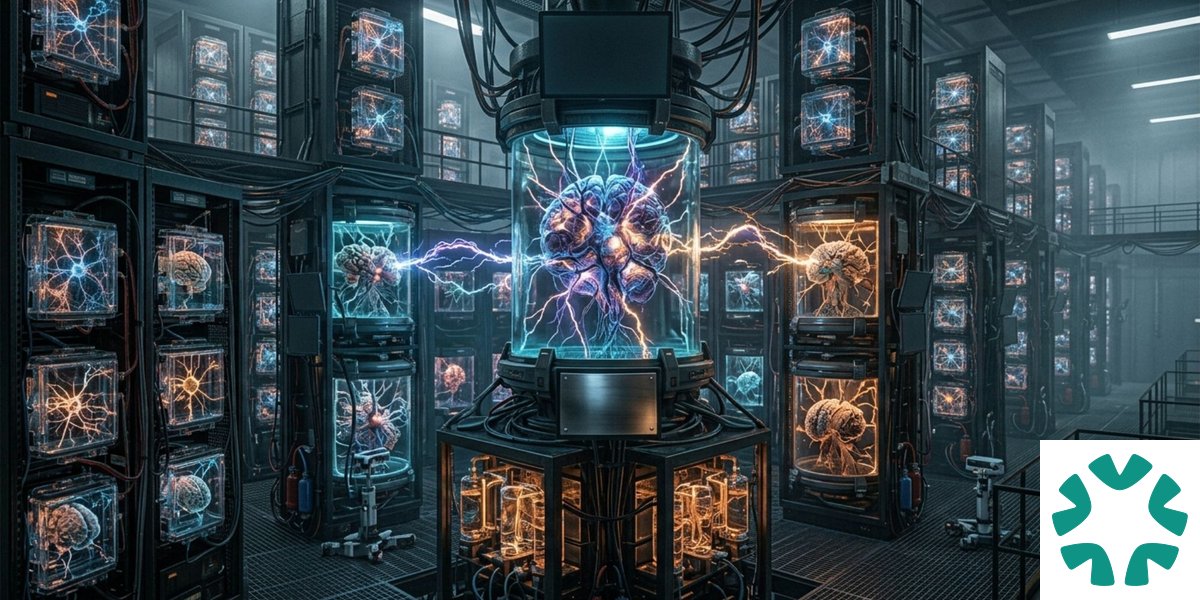

Singapore's Pioneering Biological Data Centre: A New Era for AI
30 SEC SUMMARY
In 2026, Singapore is leading the charge in AI infrastructure with a biological data centre that uses living human neurons for computing tasks. This innovative project combines biological neural networks with conventional electronics, potentially offering significant energy efficiency benefits.
TABLE OF CONTENTS
- Introduction
- How Biological Computing Works
- Inside Singapore's Prototype
- Why Biology Could Matter for AI
- Where the Technology Could Fit
- What Comes Next
- FAQ
- Conclusion
- Call-to-Action
Introduction
In 2026, Singapore is piloting an extraordinary project that could redefine AI infrastructure: a biological data centre using living human neurons to perform computing tasks. This innovative approach combines biological neural networks with conventional electronics, potentially offering groundbreaking energy efficiency.
How Biological Computing Works
A biological data centre replaces some silicon processors with what researchers call 'wetware'. In this system, neurons grown from stem cells form living networks that connect to computer chips through microelectrode arrays. These arrays allow electrical signals to travel between the neurons and the computer, enabling software to interpret the activity as computation.
Inside Singapore's Prototype
Located at the National University of Singapore's Life Sciences Institute, the prototype uses Cortical Labs' CL1 systems arranged in a 20-computer rack. The partners describe the project as an early step towards adaptive computing, where biological neural networks can learn from experience and respond to changing conditions.
Why Biology Could Matter for AI
One of the biggest potential advantages is energy efficiency. Supporters of biological computing argue that neurons could perform certain types of AI computation while using significantly less energy than conventional servers. This could become crucial as demand for AI computing drives data-centre electricity consumption higher.
Where the Technology Could Fit
The system is not designed to replace large GPU clusters overnight. Instead, biological computing could eventually be useful for specialised applications where adaptability and learning from limited data are more important than maximum processing speed. Potential areas include robotics, security, and other systems that need to respond to changing environments.
What Comes Next
The next stage will be important for determining whether biological computing can move beyond an experimental concept. Researchers are expected to compare neuron-based systems with conventional silicon hardware on the same tasks while also working on automated cell maintenance, safety, and ethical considerations.
FAQ
What is the main advantage of biological computing?
The main advantage is potential energy efficiency, as neurons could perform certain types of AI computation with significantly less energy than conventional servers.
What are the challenges of biological computing?
Challenges include demonstrating reliability, reproducibility, and consistent performance while scaling biological systems from millions of neurons to much larger networks.
What applications could benefit from biological computing?
Applications that require adaptability and learning from limited data, such as robotics and security systems, could benefit from biological computing.
Conclusion
Singapore's pioneering biological data centre represents a significant step towards a new era for AI infrastructure. If biological systems can deliver useful computing with significantly lower energy consumption, neuron-powered machines could become a specialised new layer of AI infrastructure.
Call-to-Action
Discover more about the future of AI infrastructure at blogy.in. Join the conversation and stay updated on the latest advancements in biological computing!
Sources
This story is an original summary and analysis written by LazyFounders from the reporting listed above. Facts are attributed to their original publishers; sections marked as analysis are LazyFounders's opinion. Where a source is in another language, facts were machine-translated and quotations are reported, not reproduced. Read the original coverage via the links.
