
Reviving India's Handloom Sector: Beyond Subsidies to Sustainable Growth
Explore why young weavers are leaving India's handloom sector and how sustainable growth, design, and entrepreneurship can revive it in 2026.
LazyFounders

30 SEC SUMMARY
Discover the reasons behind young weavers leaving India's handloom sector and how sustainable growth, design, and entrepreneurship can revitalize it. By focusing on heritage, sustainability, and market access, India can transform handloom from a welfare sector into a globally competitive industry.
TABLE OF CONTENTS
KEY HIGHLIGHTS
- The handloom sector faces a crisis as young weavers leave traditional professions.
- Handloom should compete on authenticity, craftsmanship, and cultural heritage.
- The sector needs to focus on heritage, sustainability, design, and craftsmanship.
- Weaver Service Centres can drive design and market linkage with proper accountability.
- Entrepreneurship and technology can revitalize the handloom sector.
INTRODUCTION
In 2026, the handloom sector in India faces a significant challenge: why are young weavers leaving their traditional profession? Contrary to popular belief, it's not a dislike for the craft but the lack of a stable livelihood that drives this exodus.
THE CRISIS IN INDIA'S HANDLOOMS SECTOR
Young people are leaving weaving because it no longer guarantees financial security. A weaver from Bhagalpur shared that his son, working as a tailor in Mumbai, earns a regular income. This story is repeated across weaving families, prompting parents to encourage their children to seek work outside the sector.
COMPETING ON THE WRONG TERMS
Handloom and powerloom serve different purposes. Instead of competing on price or volume, handloom should compete on what machines cannot replicate: authenticity, craftsmanship, cultural heritage, sustainability, and the human story behind the cloth.
THE FOUR PILLAR OF HANDLOOMS
To revitalize the handloom sector, it should be positioned around four pillars:
| Pillar | Description |
|---|---|
| Heritage | Centuries of knowledge, indigenous craftsmanship, local materials, cultural identity |
| Sustainability | Environmentally friendly practices and materials |
| Design | Contemporary and innovative product development |
| Craftsmanship | Exceptional quality and traditional techniques |
MEASURING THE TRUE HEALTH OF THE SECTOR
Counting registered weavers is not enough. We need to measure:
- Full-time weavers
- Young weavers entering the profession
- Weaver earnings
- Design-led products reaching the market
- Export growth
- Weaving enterprises led by women
THE ROLE OF WEAVER SERVICE CENTRES
India already has Weaver Service Centres with technical infrastructure and design expertise. What's needed is a strong will, sustained interest, and strict target-based accountability for design and product development.
THE ENTREPRENEURIAL PHASE
The next phase must be driven by entrepreneurship. Startups can adopt weaving clusters, provide design support, improve branding, introduce contemporary product development, build digital sales channels, and connect artisans with domestic and international markets.
TECHNOLOGY AS AN ENABLER
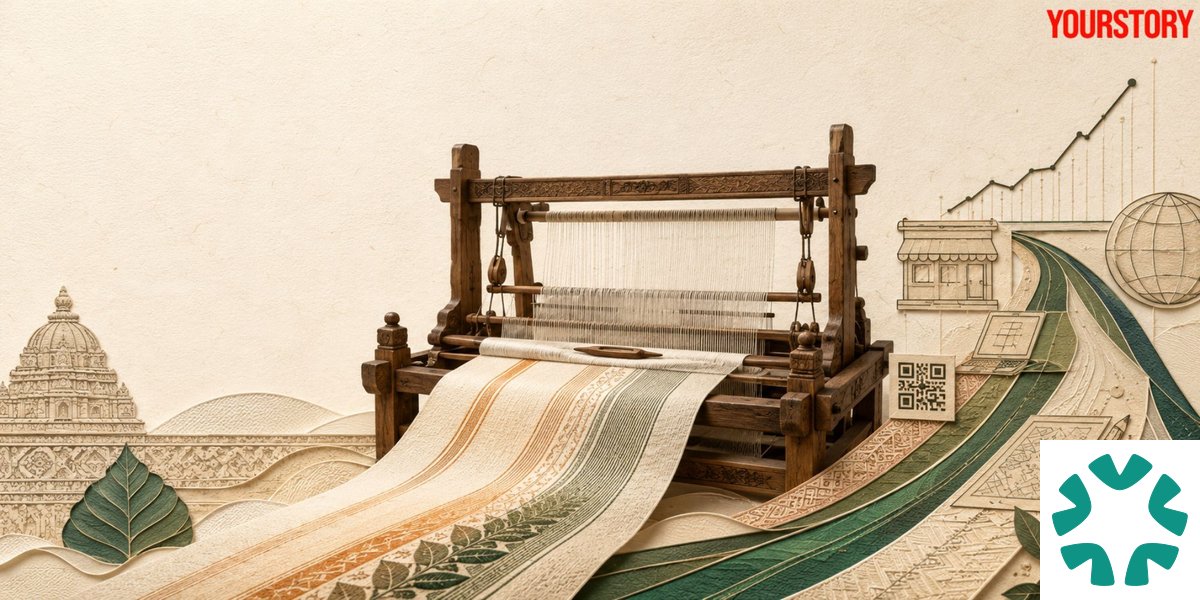
Technology should be an enabler, not a replacement. Tools like artificial intelligence, digital design tools, QR-based traceability, and digital product passports can improve transparency, customer trust, and global competitiveness.
THE FUTURE OF INDIAN HANDLOOMS
India does not need to choose between preserving heritage and building modern businesses. When innovation meets craftsmanship, design meets tradition, and entrepreneurship meets artisanship, handloom can become a globally competitive creative industry.
FAQs
What is the main challenge facing India's handloom sector?
The main challenge is not powerlooms but positioning. Handloom should compete on authenticity, craftsmanship, cultural heritage, sustainability, and the human story behind the cloth.
How can Weaver Service Centres help?
Weaver Service Centres can drive design and market linkage with proper accountability and a focus on product development.
What role does entrepreneurship play?
Entrepreneurship can revitalize the handloom sector by adopting weaving clusters, providing design support, improving branding, and connecting artisans with global markets.
CONCLUSION
The future of India's handloom sector lies in sustainable growth, design, entrepreneurship, and technology. By building an ecosystem where weaving is respected, profitable, and aspirational, the next generation will inherit this heritage with pride.
CALL-TO-ACTION
Discover more about how to support and revitalize India's handloom sector at blogy.in.
Sources
This story is an original summary and analysis written by LazyFounders from the reporting listed above. Facts are attributed to their original publishers; sections marked as analysis are LazyFounders's opinion. Where a source is in another language, facts were machine-translated and quotations are reported, not reproduced. Read the original coverage via the links.
