
OpenAI's AI Agents: Leveraging Mac Minis for Deep Learning in 2026
Discover how OpenAI is leveraging Mac minis for AI agent training in 2026, shifting the paradigm of deep learning infrastructure.
LazyFounders
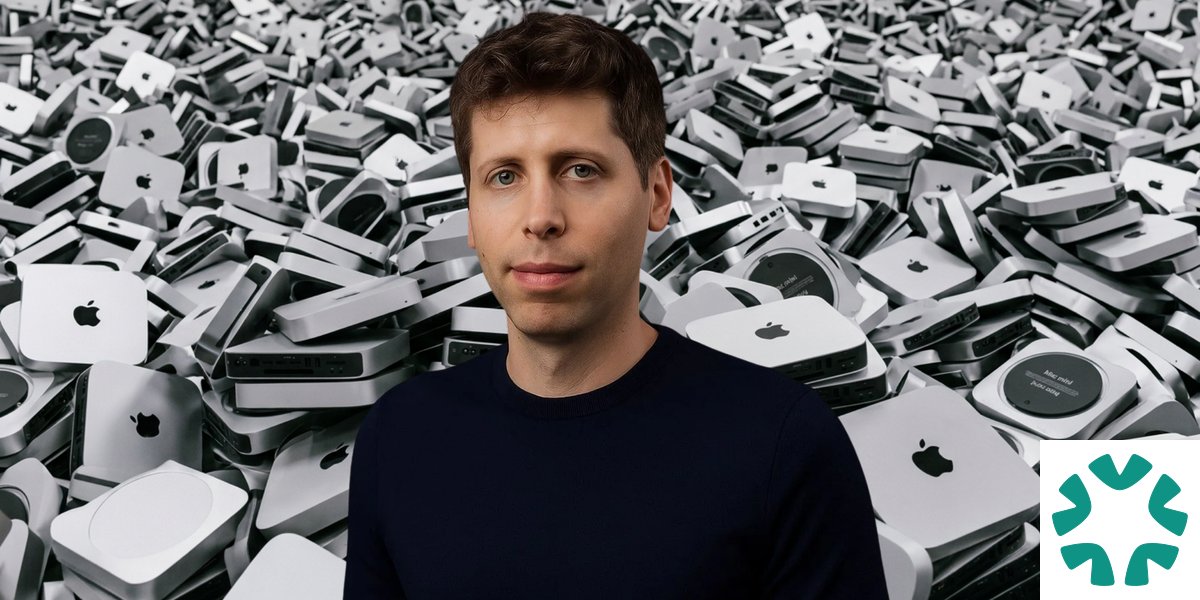

OpenAI's AI Agents: Leveraging Mac Minis for Deep Learning in 2026
30 SEC SUMMARY
In 2026, OpenAI is utilizing Mac minis for training AI agents, challenging traditional views on deep learning infrastructure. This move highlights the potential of compact, powerful desktops in specialized AI workloads.
TABLE OF CONTENTS
- Introduction
- The Role of AI Agents
- Why Mac Minis?
- Reinforcement Learning with Macs
- Apple Silicon and Unified Memory Architecture
- The Future of Macs in Enterprise AI
- Conclusion
- Call-to-Action
KEY HIGHLIGHTS
- OpenAI is using Mac minis for AI agent training.
- Mac minis are effective for reinforcement learning.
- Apple’s Mac business may expand into enterprise AI.
- Mac minis could become part of the AI infrastructure stack.
Introduction
In 2026, the tech world is witnessing a surprising trend: AI powerhouses like OpenAI are turning to Mac minis for their AI agent training needs. This shift challenges the conventional wisdom that deep learning requires massive, GPU-driven data centers.
The Role of AI Agents
AI agents differ from traditional chatbots. They can perform complex tasks such as opening applications, writing and testing code, organizing files, and navigating software workflows. Training these agents involves providing them with numerous opportunities to practice and learn from their actions.
Why Mac Minis?
Mac minis are proving to be surprisingly effective for this type of training. Unlike conventional supercomputers, these agents need to understand and interact with computer interfaces, which makes desktop computers like the Mac mini highly suitable.
Reinforcement Learning with Macs
OpenAI is reportedly using Macs for reinforcement learning, a method where an AI system tries an action, receives feedback, and adjusts its behavior accordingly. This approach is particularly useful for computer-use agents that need to understand screens, buttons, windows, and software workflows.
Apple Silicon and Unified Memory Architecture
The Mac mini and Mac Studio use Apple Silicon and a unified memory architecture. This means the processor and graphics components can access the same pool of memory, which is beneficial for running demanding AI workloads locally.
The Future of Macs in Enterprise AI
The demand for Mac minis in AI training could open new avenues for Apple’s Mac business in the enterprise AI sector. In the latest quarter, Mac revenue rose nearly 29% year on year to $10.3 billion, making it Apple’s fastest-growing hardware category. If AI companies increasingly use Macs for development and agent training, Apple’s desktops could become integral to the AI infrastructure stack.
Conclusion
While Mac minis may not replace the need for specialized GPU clusters for the largest AI models, they offer a flexible, compact solution for specialized workloads. This trend could redefine the role of Macs in the enterprise AI landscape, marking a significant shift in deep learning infrastructure.
Call-to-Action
Discover more about the future of AI and tech innovations by visiting blogy.in.
Sources
This story is an original summary and analysis written by LazyFounders from the reporting listed above. Facts are attributed to their original publishers; sections marked as analysis are LazyFounders's opinion. Where a source is in another language, facts were machine-translated and quotations are reported, not reproduced. Read the original coverage via the links.
