
O-ID raises $1.2m to bring modular humanoid robots to factories
Tokyo-based startup O-ID has secured $1.2 million in pre-seed funding to develop modular humanoid robots for industrial manufacturing and logistics. The round, led by TAWANI Ventures, underscores growing interest in robotics solutions tailored to labor shortages and factory automation.
LazyFounders
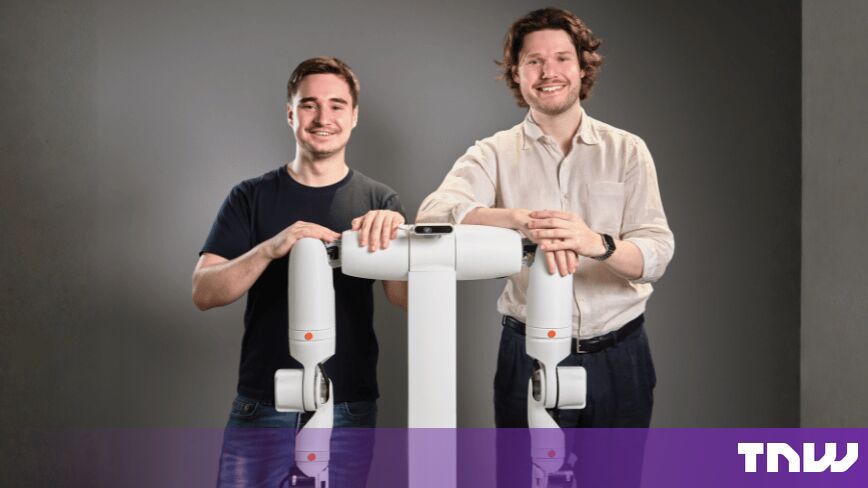

Tokyo-based startup O-ID has secured $1.2 million in pre-seed funding to develop modular humanoid robots for industrial manufacturing and logistics. The round, led by TAWANI Ventures, underscores growing interest in robotics solutions tailored to labor shortages and factory automation.
30 SEC SUMMARY
- Tokyo-based startup O-ID has raised $1.2m in pre-seed funding to develop modular humanoid robots for industrial manufacturing and logistics.
- The round was led by TAWANI Ventures, with participation from Hustle Fund, Techstars, and angel investors.
- O-ID’s robots feature hot-swappable joints and AI sensors to minimize downtime and meet industrial safety standards.
- Japan’s labor shortage, projected at over 11 million workers by 2040, is driving demand for robotics solutions.
- O-ID aims to expand from Japan to the US, targeting automotive and logistics sectors first.
TABLE OF CONTENTS
- Pre-seed funding round leads with $1.2m
- Modular design aims to reduce downtime
- Japan’s labor shortage drives demand
- Founders bring cross-border expertise
- Investor perspectives on modular robotics
- Broader context for modular robotics
- What this means
- Key takeaways
- FAQ
- Sources
KEY HIGHLIGHTS
- O-ID raises $1.2m in pre-seed funding led by TAWANI Ventures to develop modular humanoid robots.
- The robots feature hot-swappable joints and AI sensors to monitor wear and prevent downtime.
- O-ID has signed a letter of intent with Sumitomo Electric Industries for potential collaboration.
- Japan’s labor shortage of over 11 million workers by 2040 drives demand for robotics solutions.
- O-ID’s first markets are automotive manufacturing and logistics in Japan, with plans to expand to the US.
Pre-seed funding round leads with $1.2m
Tokyo-based startup O-ID has raised $1.2 million in pre-seed funding to develop modular humanoid robots for industrial manufacturing and logistics. According to The Next Web, the round was led by Chicago-based TAWANI Ventures, with participation from Hustle Fund, Techstars, and angel investors, including the founders of Humanoid Guide, who were early backers of the robotics company 1X.
The funding will enable O-ID to transition its first robot from prototype to production, with plans to deploy it on Japanese factory floors. The company’s robots are designed to integrate into existing factory layouts without requiring structural modifications.
Modular design aims to reduce downtime
O-ID’s robots are built with hot-swappable joints, limbs, and compute units, allowing for on-site repairs in minutes. According to The Next Web, onboard AI sensors monitor component wear and predict failures, enabling preemptive replacement of parts to avoid downtime. This modular approach contrasts with traditional industrial robots, which the company describes as rigid and costly to maintain.
The startup claims its robots meet current industrial safety standards, making them suitable for immediate deployment. O-ID has also filed a provisional US patent for its modular connector technology.
Japan’s labor shortage drives demand
Japan faces a projected shortage of over 11 million workers by 2040, a gap exacerbated by an aging population and declining replacement of retired factory workers. According to The Next Web, this labor crisis has made robotics a national priority, with Japan targeting ¥10.5 trillion ($65.1 billion) in public and private investment in "physical AI"—AI that controls robots and machinery—by 2040.
O-ID’s first markets are automotive manufacturing and logistics in Japan, sectors where labor shortages are already acute. The company has signed a letter of intent with Sumitomo Electric Industries to explore the use of its technologies in wire harnesses for humanoid robots. O-ID also plans to expand into the US market over time, citing unfilled manufacturing jobs as a growing challenge.
Founders bring cross-border expertise
O-ID was founded in Tokyo in 2025 by Stian Jakobsen, the company’s CEO, and Simon Gormuzov, its CTO. The two met at Waseda University and later joined Techstars Tokyo in 2025. Jakobsen previously worked in cyber defence, while Gormuzov has a background in mechanical robotics and industrial automation.
The startup operates with a dual-entity structure: O-ID, Inc., a Delaware-based parent company, oversees fundraising and international corporate activities, while its Japanese entity leads research, development, manufacturing, and deployment. O-ID builds and manufactures its robots entirely in Japan but designs them to comply with requirements like the US National Defense Authorization Act to facilitate future expansion.
Investor perspectives on modular robotics
William Pritzker, a partner at TAWANI Ventures, described O-ID’s modular humanoid robots as a "generational opportunity" to boost industrial productivity amid declining labor forces. He emphasized the potential for O-ID to transfer Japan’s robotics expertise into an "AI-native, adaptable platform."
Yuki Shirato, managing director at Techstars, stated that O-ID’s founders stood out for building "something truly unique," highlighting the robots’ modularity, reparability, and local manufacturing in Japan.
Broader context for modular robotics
The race to deploy humanoid robots in industrial and logistics settings is accelerating globally. Companies like XPENG, LG, and Figure are investing heavily in the space, with XPENG raising over $900 million for its humanoid production run and LG planning to launch its Nvidia-powered robot in 2027. O-ID’s modular approach differentiates it by focusing on reducing downtime and enabling mass production with minimal disruption to existing operations.
What this means
LazyFounders analysis — our interpretation, not reported fact.
O-ID’s approach to humanoid robots—modular, repair-friendly, and built for existing factory layouts—addresses a critical gap in industrial automation. For founders and operators, this highlights two key insights:
First, the urgency of automation in industries facing labor shortages is creating opportunities for startups that prioritize practicality. O-ID’s focus on swappable parts and AI-driven maintenance isn’t just innovative; it’s a direct response to the costly downtime that plagues traditional robotics. This could set a new standard for how robots are designed for real-world deployment, not just theoretical efficiency.
Second, the choice to manufacture in Japan, a hub for robotics expertise, while targeting expansion into the US market reflects a strategic balance between local precision and global scalability. For startups in hardware or robotics, this model—leveraging regional strengths while building for broader markets—could be a blueprint for navigating supply chain complexities and regulatory demands.
Key takeaways
- O-ID raised $1.2m in pre-seed funding, led by TAWANI Ventures, to bring modular humanoid robots to Japanese factories.
- The startup’s robots are designed for hot-swappable parts and AI-driven maintenance to prevent downtime.
- Japan’s labor shortage and national push for robotics create a favorable environment for O-ID’s growth.
- O-ID plans to expand into the US market after establishing itself in Japan’s automotive and logistics sectors.
- Modularity and compliance with industrial safety standards are central to O-ID’s value proposition.
FAQ
What makes O-ID’s robots different from other industrial robots?
O-ID’s robots are designed with modularity at their core. They feature hot-swappable joints, limbs, and compute units, allowing for quick repairs and minimal downtime. AI sensors monitor component wear, enabling preemptive maintenance to avoid costly disruptions.
Why is Japan a key market for O-ID?
Japan faces a severe labor shortage, with over 11 million workers projected to be missing by 2040. The country has also prioritized robotics as a national strategy, creating a favorable environment for O-ID’s technology, which is tailored for industrial and logistics settings.
What are O-ID’s plans for expansion?
O-ID is initially targeting automotive manufacturing and logistics in Japan. However, the company plans to expand into the US market, where manufacturing job shortages are also a growing concern.
Related on LazyFounders
Sources
- The Next Web · 2026-09-24
“Supply chains are at risk”: O-ID raises $1.2m for modular humanoid robots
This story is an original summary and analysis written by LazyFounders from the reporting listed above. Facts are attributed to their original publishers; sections marked as analysis are LazyFounders's opinion. Where a source is in another language, facts were machine-translated and quotations are reported, not reproduced. Read the original coverage via the links.
