
Nagmani Roy's Journey: From Fashion Retail to Rural Livelihoods
Discover Nagmani Roy's transformative journey from fashion retail to rural livelihoods, connecting traditional crafts with modern markets.
LazyFounders
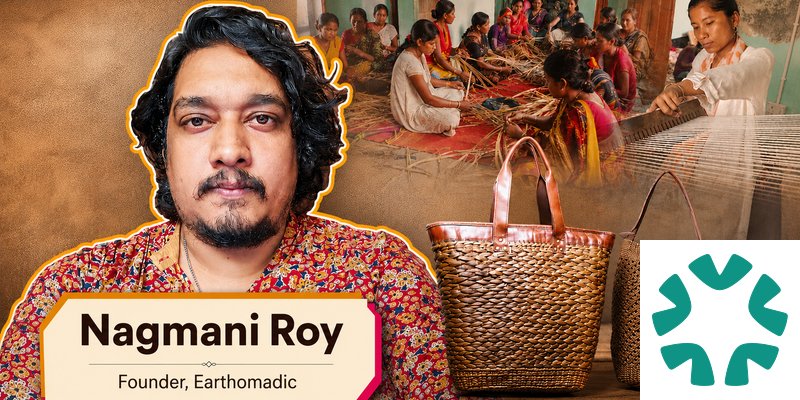

Nagmani Roy's Journey: From Fashion Retail to Rural Livelihoods
30 SEC SUMMARY
Nagmani Roy transitioned from a successful fashion retail brand to empowering rural women through Earthomadic Foundation and Project Anuswaar, connecting traditional crafts with modern markets to create sustainable livelihoods.
TABLE OF CONTENTS
- Early Life and Education
- From Fashion Retail to Rural Entrepreneurship
- Earthomadic Foundation and Project Anuswaar
- The Model of Skill to Market
- Livelihood from Water Hyacinth
- Success Beyond Business
- The Road Ahead
- FAQ
- Conclusion
- Call-to-Action
KEY HIGHLIGHTS
- Nagmani Roy's journey from fashion retail to rural entrepreneurship
- Connecting traditional crafts with modern markets
- Training over 1,700 rural women in various crafts
- Expanding to natural and alternative fibres
- Combining traditional techniques with modern design
Early Life and Education
Nagmani Roy's journey began in a small village in Bihar. Growing up in a lower middle-class family, his early life taught him the value of hard work and resourcefulness. After completing his education in government schools, he pursued fashion design at the National Institute of Fashion Technology (NIFT), Hyderabad, graduating in 2009.
From Fashion Retail to Rural Entrepreneurship
After NIFT, instead of taking a job, Nagmani embarked on an entrepreneurial path. In 2010, he launched Kazari, a women's clothing retail brand that grew to 42 stores over 11 years. However, the COVID-19 pandemic forced the closure of his retail business, leading him to return to his ancestral village in Vaishali, Bihar.
Earthomadic Foundation and Project Anuswaar
In Vaishali, Nagmani observed the untapped potential of rural women with traditional skills but limited market access. This inspired him to establish Earthomadic Foundation and Project Anuswaar to connect traditional crafts with modern markets and create sustainable livelihood opportunities for rural women.
The Model of Skill to Market
Earthomadic's model focuses on more than just training. It involves assessing the community's existing capacity, raw materials, and needs before initiating skill development, design, product development, quality assurance, production, and market access.
Livelihood from Water Hyacinth
One notable initiative is the use of water hyacinth, an invasive aquatic plant, as a raw material for crafting. This initiative not only addresses environmental issues but also provides a sustainable livelihood for women. In April 2025, a skill development program on water hyacinth craft was launched in Lakhanpur, Begusarai, under the central government's RAMP programme.
Success Beyond Business
Earthomadic Foundation initially operated beyond traditional profit motives, relying on project-based opportunities and partnerships. Over the past four years, it has generated business worth around Rs 1.5 crore through product sales and training services. The foundation aims to reinvest its value back into artisans, product development, and market access.
The Road Ahead
Nagmani Roy envisions expanding Earthomadic's work to include natural and alternative fibres like water hyacinth and banana fibre. He also plans to combine traditional techniques with modern design in various product categories, including home products, fashion accessories, furniture, and lighting.
FAQ
What is Earthomadic Foundation?
Earthomadic Foundation is an initiative by Nagmani Roy to connect traditional crafts with modern markets and create sustainable livelihood opportunities for rural women.
How does Earthomadic connect traditional crafts with the market?
Earthomadic assesses the community's needs, develops skills, designs products, ensures quality, manages production, and facilitates market access.
What are some of the crafts promoted by Earthomadic?
Earthomadic promotes crafts such as water hyacinth, sikki, sujini, terracotta, appliqué, leather, crochet, jute, and more.
Conclusion
Nagmani Roy's journey from fashion retail to rural entrepreneurship highlights the potential of traditional skills when connected to modern markets. His work with Earthomadic Foundation and Project Anuswaar demonstrates that entrepreneurship can create sustainable livelihoods and empower rural communities.
Call-to-Action
Discover more about Earthomadic Foundation and Nagmani Roy's initiatives at blogy.in. Join us in supporting rural women's empowerment through traditional crafts.
Sources
This story is an original summary and analysis written by LazyFounders from the reporting listed above. Facts are attributed to their original publishers; sections marked as analysis are LazyFounders's opinion. Where a source is in another language, facts were machine-translated and quotations are reported, not reproduced. Read the original coverage via the links.
