
India's Unique AI Strategy: Insights from Piyush Shah's Global Experience
Discover India's unique AI strategy with insights from Piyush Shah, founder of InMobi and Glance. Learn why India's AI approach differs from Silicon Valley and Beijing.
LazyFounders
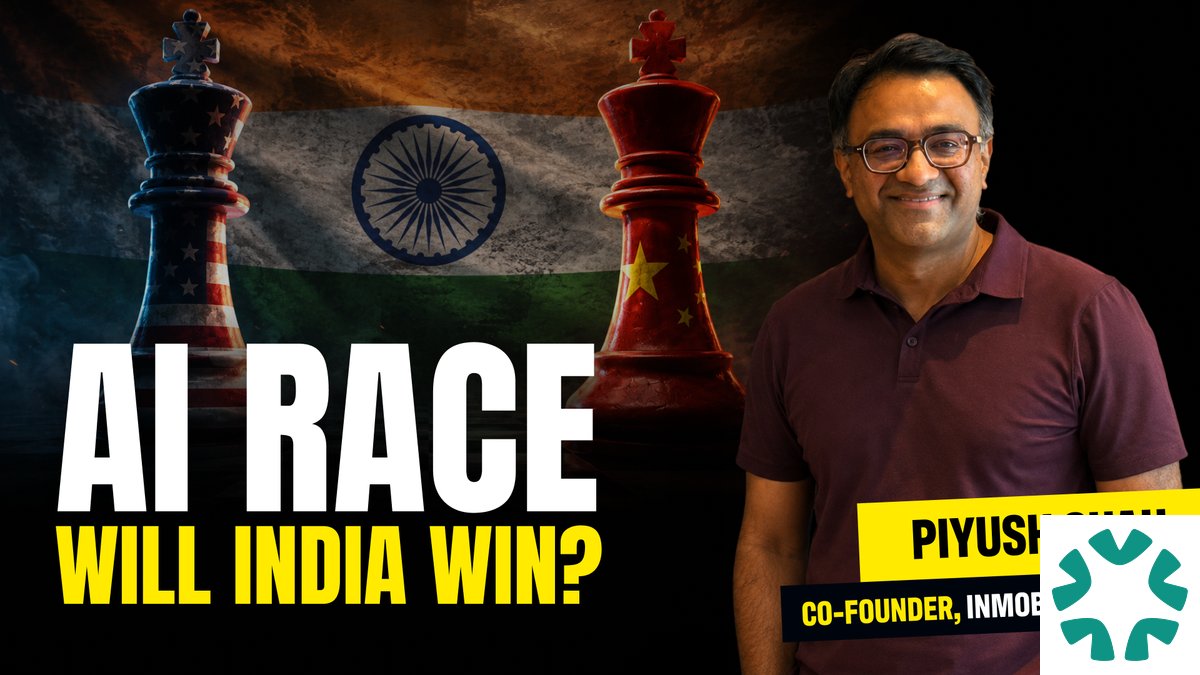

India's Unique AI Strategy: Insights from Piyush Shah's Global Experience
30 SEC SUMMARY
Piyush Shah, founder of InMobi and Glance, shares why India's AI strategy should differ from Silicon Valley and Beijing. He emphasizes that India's opportunity lies in democratizing AI to improve everyday life for millions, rather than focusing on frontier research or manufacturing dominance.
TABLE OF CONTENTS
- Introduction
- India's Unique AI Opportunity
- Inference Economics in Consumer AI
- Enterprise AI's Value Proposition
- Distribution as a Competitive Advantage
- India's Enduring Contribution to AI
- FAQs
- Conclusion
- Call-to-Action
KEY HIGHLIGHTS
- India's AI strategy should focus on democratizing technology for everyday use.
- Inference economics poses a significant challenge for consumer AI.
- Enterprise AI is already demonstrating clear business value.
- Distribution remains a critical competitive advantage for startups.
- India's opportunity lies in solving meaningful problems at scale.
Introduction
Piyush Shah, the visionary founder of two unicorns, InMobi and Glance, has spent nearly two decades operating across Silicon Valley, Beijing, and Bengaluru. His unique vantage point has led him to conclude that every region plays a different role in the AI ecosystem. Shah believes that the real opportunity for Indian founders lies in recognizing where India's strengths truly lie.
India's Unique AI Opportunity
Shah argues that the next decade of AI will not be won by building bigger models but by solving real-world problems, mastering distribution, and creating sustainable business models. Unlike Silicon Valley, which is focused on frontier research, and China, which is industrializing AI, India's opportunity lies in using AI to improve everyday life for millions.
Examples of India's Potential AI Solutions
- AI tutors for education
- Healthcare advisors
- Financial coaches
- Agricultural experts
- Multilingual voice interfaces
Inference Economics in Consumer AI
While consumer AI applications attract significant attention, Shah believes the industry overlooks a major challenge: inference economics. Traditional software companies focus on customer acquisition costs and lifetime value, but AI companies must also contend with the cost of generating every AI response. Shah refers to this as 'Inference CAC'. As usage scales, so does the bill, fundamentally changing the economics of building consumer AI products.
Enterprise AI's Value Proposition
Shah believes enterprise AI has already found clearer business value. During a recent OpenAI event, the focus was on enterprise transformation rather than consumer products. He expects 70% of revenue to come from enterprise AI in the future. InMobi and Glance are investing in infrastructure optimization, recommendation systems, and AI compute efficiency, partnering with startups in advertising, personalization, and commerce.
Distribution as a Competitive Advantage
Despite the ease of building technology, Shah argues that distribution remains a competitive moat. Founders often underestimate the difficulty of go-to-market execution. Selling into global enterprises requires trusted relationships, local presence, and credibility. Thought leadership, publishing insights, and creating domain expertise can become powerful distribution channels for AI startups solving specialized enterprise problems.
India's Enduring Contribution to AI
Shah's optimism about India's AI future does not stem from larger models or faster chips but from solving meaningful problems at scale. Whether through InMobi's work in advertising technology, Glance's AI-powered consumer experiences, or his broader observations across the US, China, and India, Shah believes India's opportunity lies in building AI that reaches more people, solves everyday problems, and creates businesses with sustainable economics.
FAQs
What is inference economics in AI?
Inference economics refers to the cost of generating every AI response, which becomes directly linked to user engagement as usage scales.
Why is distribution important for AI startups?
Distribution remains a competitive moat as selling into global enterprises requires trusted relationships, local presence, and credibility.
What is India's unique opportunity in AI?
India's opportunity lies in democratizing AI to improve everyday life for millions, rather than focusing on frontier research or manufacturing dominance.
Conclusion
Piyush Shah's insights highlight that India's unique opportunity in AI lies in solving meaningful problems at scale and democratizing technology for everyday use. By focusing on these areas, India can make a lasting contribution to the AI era.
Call-to-Action
Ready to explore more about India's AI strategy? Visit blogy.in for more insights and opportunities in the AI field.
Sources
This story is an original summary and analysis written by LazyFounders from the reporting listed above. Facts are attributed to their original publishers; sections marked as analysis are LazyFounders's opinion. Where a source is in another language, facts were machine-translated and quotations are reported, not reproduced. Read the original coverage via the links.