
How to choose the right power bank for your laptop
Choosing the right power bank for your laptop involves more than just picking the highest milliamp-hour (mAh) rating. Capacity measured in watt-hours (Wh) and power output in watts (W) are far more reliable indicators of whether a power bank can effectively charge a laptop. With efficiency losses and compatibility requirements, understanding these metrics is essential for avoiding frustrating or even damaging charging experiences.

Editor, LazyFounders
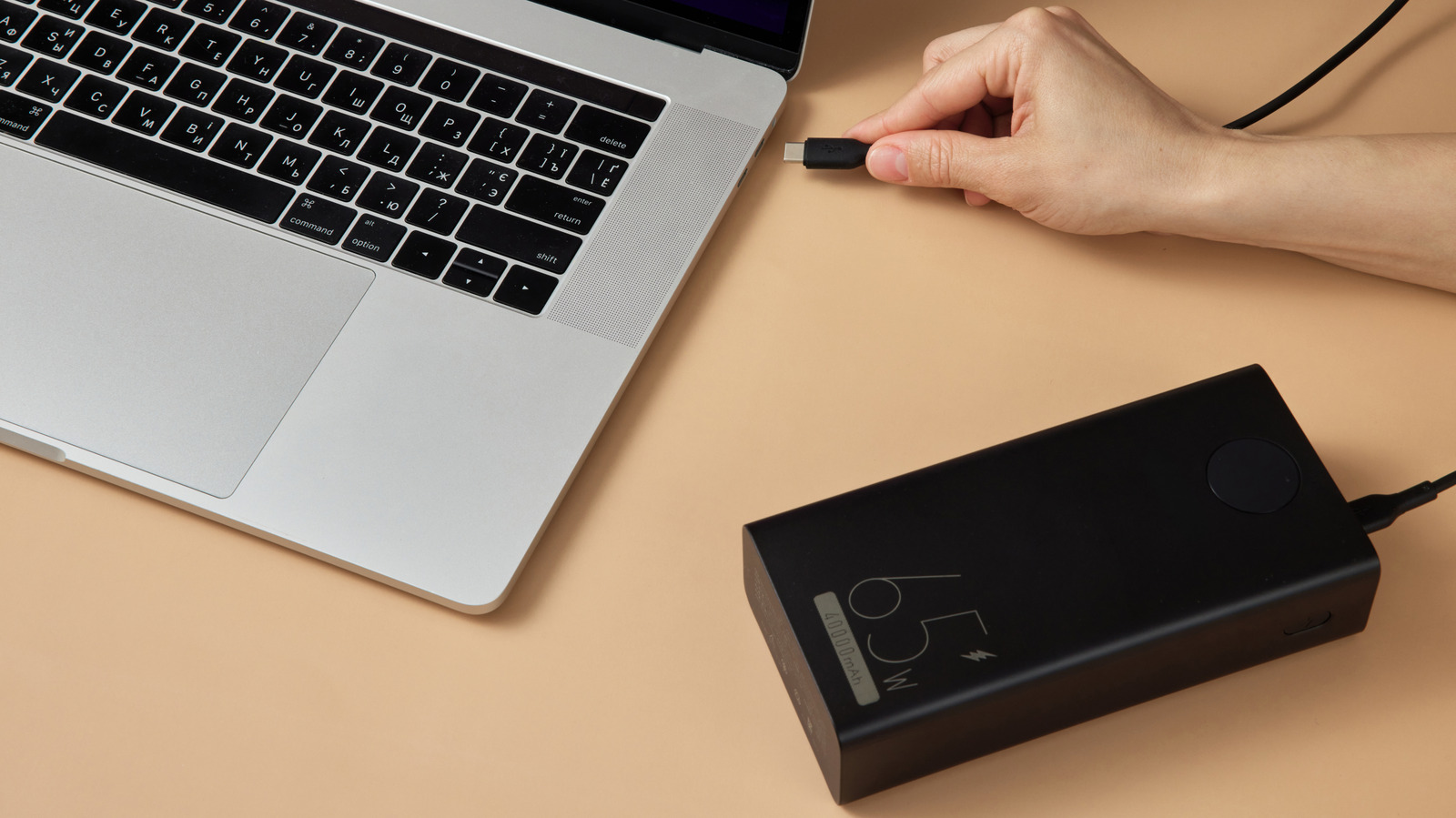

Choosing the right power bank for your laptop involves more than just picking the highest milliamp-hour (mAh) rating. Capacity measured in watt-hours (Wh) and power output in watts (W) are far more reliable indicators of whether a power bank can effectively charge a laptop. With efficiency losses and compatibility requirements, understanding these metrics is essential for avoiding frustrating or even damaging charging experiences.
30 SEC SUMMARY
- Power banks for laptops should be evaluated using watt-hours (Wh) and watts (W), not just milliamp-hours (mAh).
- Lithium-ion power banks operate at 3.7 volts, and their true capacity is measured in Wh (mAh × voltage).
- Modern MacBooks require power banks with capacities ranging from ~37Wh to 100Wh.
- Charging efficiency losses can reduce effective capacity by 20% to 30% or more.
- USB-C Power Delivery (USB PD) is essential for safely charging laptops via power banks.
TABLE OF CONTENTS
- How to evaluate power bank capacity for laptops
- Matching power banks to laptop requirements
- Output and compatibility considerations
- What this means
- Key takeaways
- FAQ
- Sources
KEY HIGHLIGHTS
- Power banks for laptops should be evaluated using watt-hours (Wh) and watts (W), not just milliamp-hours (mAh).
- Modern MacBooks require power banks with capacities ranging from ~37Wh to 100Wh.
- Charging efficiency losses can reduce effective capacity by 20% to 30% or more.
- USB-C Power Delivery (USB PD) is the standard for safely charging laptops via power banks.
- Power banks over 100Wh require approval for air travel in the U.S.
How to evaluate power bank capacity for laptops
According to Engadget, power banks for laptops should be evaluated based on watt-hours (Wh) and watts (W) rather than milliamp-hours (mAh). This is because most power banks use lithium-ion cells operating at 3.7 volts, and their true capacity is calculated by multiplying milliamp-hours by voltage. For example, a 10,000 mAh power bank stores roughly 37Wh before accounting for conversion losses.
A 20,000 mAh power bank, which equates to about 74Wh, is often recommended as a reasonable option for emergency or partial charging of laptops. However, this capacity can be significantly reduced by efficiency losses during charging, which typically range from 20% to 30% or higher for fast charging.
Matching power banks to laptop requirements
Modern MacBook batteries range from approximately 37Wh in the MacBook Neo to 100Wh in the 16-inch MacBook Pro. To ensure effective charging, a power bank’s capacity should align with the laptop’s battery requirements while accounting for efficiency losses. For instance, a 74Wh power bank may only deliver around 52Wh after a 30% efficiency loss, limiting its ability to fully recharge higher-capacity laptop batteries.
USB-C Power Delivery (USB-C PD) is the standard for charging laptops via power banks. Not all power banks support this standard, so it’s critical to verify compatibility. For example, a basic 15W USB-C output may suffice for charging a phone but will fall short for a laptop requiring 65W or more.
Output and compatibility considerations
The output capability of a power bank is just as important as its capacity. USB PD 3.1 can theoretically support up to 240W, but this requires all components—including the laptop, power bank, and cable—to support the same power level. Most standard USB-C cables are rated for up to 3 amps, while higher-wattage charging requires a 5-amp-rated cable.
In the U.S., power banks exceeding 100Wh are not permitted on flights without special approval. This regulation is important for travelers who rely on high-capacity power banks for extended work sessions.
What this means
LazyFounders analysis — our interpretation, not reported fact.
For founders and operators who rely on laptops for work—especially those frequently on the move—choosing the right power bank is more than just a matter of convenience. It’s about ensuring productivity without risking damage to devices or inefficient charging.
The key takeaway here is that not all power banks are created equal. Focusing solely on mAh can be misleading, as voltage and efficiency losses play a critical role in determining whether a power bank can actually charge a laptop. For example, a 20,000 mAh power bank may sound impressive, but if it doesn’t support USB-C PD or account for efficiency losses, it might barely top up a laptop battery.
For startups building hardware or developing products that rely on portable power, this also underscores the importance of clarity in marketing. Spec sheets should prioritize Wh and power output over mAh to avoid misleading customers. If your product involves mobile workstations, IoT devices, or field equipment, ensuring compatibility with USB PD and accounting for efficiency losses could be a competitive advantage.
Key takeaways
- Watt-hours (Wh) and watts (W) are more reliable metrics than milliamp-hours (mAh) for evaluating power banks for laptops.
- Lithium-ion power banks operate at 3.7 volts, and their capacity in Wh is calculated by multiplying mAh by voltage.
- Modern MacBooks require power banks with capacities between ~37Wh and 100Wh, depending on the model.
- Charging efficiency losses can reduce effective capacity by 20% to 30%, particularly with fast charging.
- USB-C Power Delivery (USB PD) is the standard for safely and effectively charging laptops via power banks.
- Power banks exceeding 100Wh require special approval for air travel in the U.S.
FAQ
Why is watt-hour (Wh) a better metric than milliamp-hour (mAh) for power banks?
Watt-hours (Wh) account for both capacity and voltage, providing a more accurate measure of a power bank’s true energy storage. Milliamp-hours (mAh) only measure capacity at a specific voltage, which can be misleading since most power banks operate at 3.7 volts, not the 5 volts often used in device specifications.
What is USB-C Power Delivery (USB-C PD), and why does it matter?
USB-C Power Delivery (USB-C PD) is a standard that enables faster and more efficient charging by dynamically adjusting power output to meet the needs of the connected device. It is essential for charging laptops because it ensures safe and effective power transfer, unlike basic USB outputs that may not provide sufficient power.
How do efficiency losses affect power bank performance?
Efficiency losses occur during the conversion of stored energy into usable power, typically ranging from 20% to 30% or higher for fast charging. This means a 74Wh power bank might only deliver around 52Wh of effective capacity, limiting its ability to fully charge larger laptop batteries.
Can I take a high-capacity power bank on a plane?
In the U.S., power banks exceeding 100Wh require special approval for air travel. Most airlines restrict passengers to power banks under 100Wh to ensure safety.
What should I look for in a USB-C cable for high-wattage charging?
For high-wattage charging, a USB-C cable rated for 5 amps is required. Standard USB-C cables typically support only 3 amps, which may not be sufficient for laptops or other high-power devices.
Related on LazyFounders
Sources
- Engadget · 2026-09-27
How Powerful Of A Power Bank Do You Need To Safely Charge A Laptop?
This story is an original summary drafted with AI by LazyFounders from the reporting listed above and checked by automated validation. Facts are attributed to their original publishers; sections marked as analysis are LazyFounders's. Where a source is in another language, facts were machine-translated and quotations are reported, not reproduced. Read the original coverage via the links, and see our AI policy and corrections policy.
About the author
Editor, LazyFounders
Tarun Mottlia edits LazyFounders, covering Indian startups, funding rounds, AI and product launches. Every story on the site is AI-assisted and checked against its cited sources before publication.
More stories by Tarun MottliaGet the LazyFounder Brief
Startup, funding and AI news in a five-minute read. Join the early-access list.
