
House-Sized Buoys Could Revolutionize Wave Energy Capture
Researchers from Germany and Australia have proposed a new method to capture up to 90% of wave energy using an array of house-sized buoys. The system, though still theoretical, aims to optimize energy capture by tuning each buoy to specific wave rhythms. If proven viable, it could significantly advance renewable energy technology.
LazyFounders
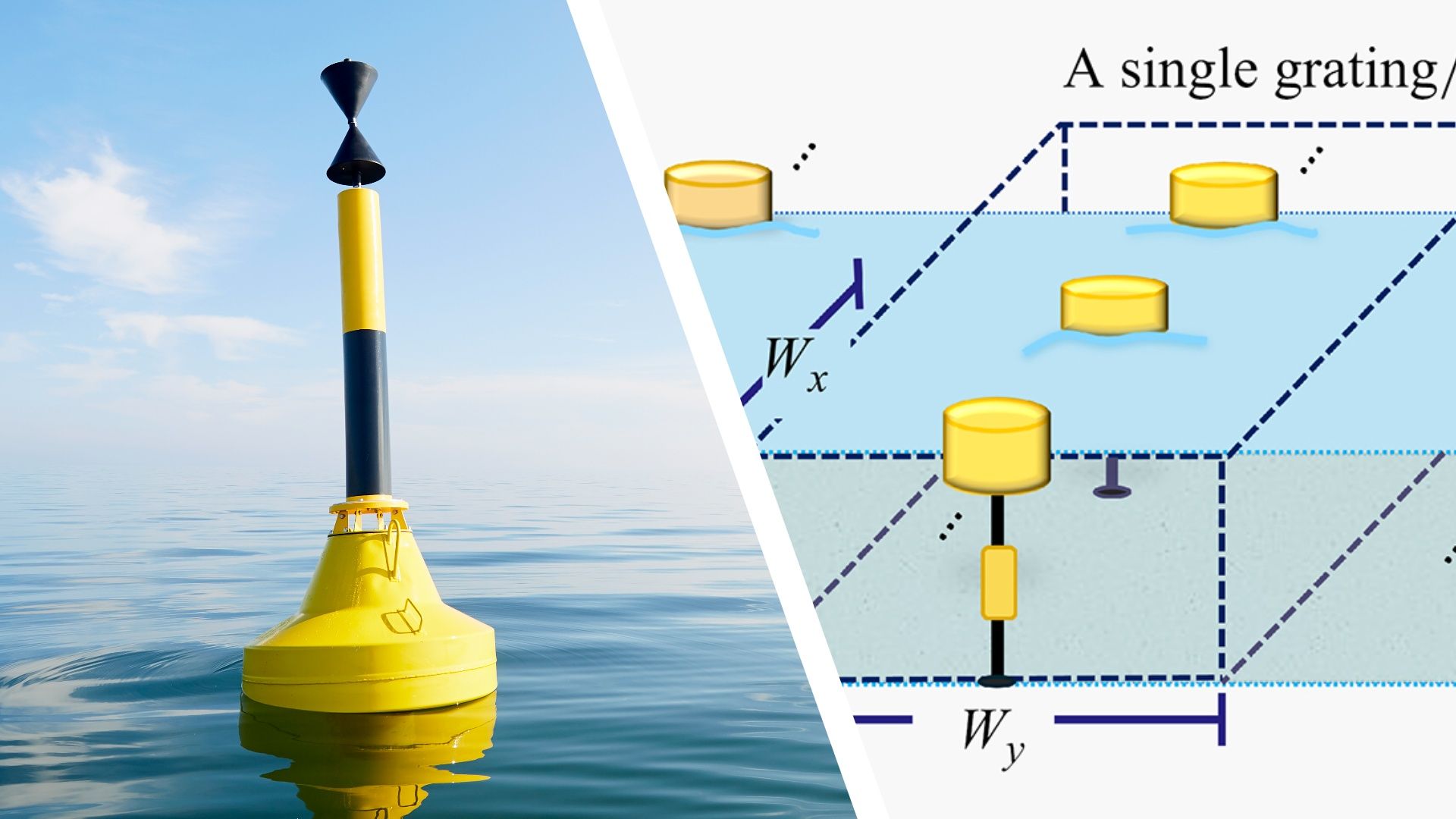

Researchers from Germany and Australia have proposed a new method to capture up to 90% of wave energy using an array of house-sized buoys. The system, though still theoretical, aims to optimize energy capture by tuning each buoy to specific wave rhythms. If proven viable, it could significantly advance renewable energy technology.
30 SEC SUMMARY
- Researchers propose a method to capture up to 90% of wave energy using an array of 60 connected buoys.
- Each buoy, described as house-sized, is tuned to specific wave frequencies for optimal energy capture.
- The system remains theoretical and has not been tested in real-world conditions.
- The array acts as a sieve to minimize energy loss from unpredictable wave directions.
- High installation and maintenance costs are expected, pending further research.
TABLE OF CONTENTS
- A Theoretical Breakthrough in Wave Energy
- How the System Works
- Challenges and Next Steps
- What this means
- Key takeaways
- FAQ
- Sources
KEY HIGHLIGHTS
- Researchers from Germany and Australia propose a wave energy system using 60 connected buoys to capture up to 90% of wave energy.
- Each buoy is designed to be as large as a small house and tuned to specific wave rhythms.
- The system is theoretical and requires further testing to validate its efficiency and viability.
- The array is intended to act as a sieve, reducing energy loss from unpredictable wave patterns.
- Installation and maintenance costs are expected to be significant.
A Theoretical Breakthrough in Wave Energy
Researchers from Germany and Australia have proposed a new method to capture up to 90% of wave energy using an array of 60 buoys, each roughly the size of a small house. According to TechRadar, the system is designed to optimize energy capture by tuning each buoy to specific wave rhythms, known as resonance frequencies.
The buoys would be connected to spring and generator units anchored on the seabed. This setup aims to convert wave motion into electricity more efficiently than existing wave energy systems, though it remains entirely theoretical at this stage.
How the System Works
The proposed system relies on tuning each buoy to a distinct wave frequency, allowing it to resonate with incoming waves. As reported by TechRadar, this individual tuning is intended to maximize energy absorption, even if waves change direction or intensity.
To address the unpredictability of wave patterns, the researchers describe the array as a "sieve system." If one buoy misses a wave, another—better tuned to that specific wave—would capture it. This design aims to minimize energy loss and improve overall efficiency.
Each buoy is projected to generate enough power for several hundred households, though these claims are based on simulations and have not been demonstrated in practice.
Challenges and Next Steps
While the concept promises significant energy capture, it has not been tested in real-world conditions. According to TechRadar, further research and field tests are necessary to validate its viability and efficiency.
The researchers acknowledge that installing and maintaining the buoys will likely be expensive. The costs of deploying and servicing large-scale arrays in open ocean environments could pose a major barrier to adoption.
The system’s reliance on precise tuning and coordination among buoys also raises questions about its resilience to extreme weather, corrosion, and other environmental factors.
What this means
LazyFounders analysis — our interpretation, not reported fact.
This proposal highlights the creative potential of wave energy as a renewable resource, but its theoretical status is a critical reminder for founders and operators in the clean energy space. Innovative ideas often require years of development, testing, and refinement before they can scale commercially.
The focus on tuning each buoy to specific wave frequencies is a novel approach that could improve efficiency compared to uniform wave energy systems. However, the financial and logistical challenges—such as high installation costs, maintenance in harsh ocean environments, and resilience to extreme conditions—are significant.
For startups and investors, this concept underscores the importance of patience and rigorous testing. While simulations can demonstrate potential, real-world deployment is the ultimate test of viability. Wave energy remains a promising but complex frontier, and breakthroughs like this are steps toward unlocking its long-term potential.
Key takeaways
- A new theoretical wave energy system proposes using an array of 60 buoys to capture up to 90% of wave energy.
- Each buoy is designed to be as large as a small house and tuned to specific wave frequencies for optimal energy capture.
- The system could power hundreds of households per buoy but has not been tested in real-world conditions.
- The array is intended to act as a sieve, minimizing energy loss from unpredictable wave directions.
- Further research, field tests, and cost assessments are required to determine feasibility.
FAQ
What is the proposed wave energy system?
The system uses an array of 60 house-sized buoys, each tuned to specific wave rhythms, to capture up to 90% of wave energy. The buoys are connected to spring and generator units on the seabed.
Has this wave energy system been tested?
No, the system is entirely theoretical and has not been tested in real-world conditions. Further research and field tests are needed to validate its viability.
What are the potential challenges of this system?
Challenges include high installation and maintenance costs, resilience to extreme weather, and the logistical complexity of deploying and servicing large-scale arrays in open ocean environments.
Related on LazyFounders
Sources
- TechRadar · 2026-09-22
Researchers say that fields of house-sized buoys could capture up to 90% of wave energy — and each buoy could provide the power for 'several hundred households'
This story is an original summary and analysis written by LazyFounders from the reporting listed above. Facts are attributed to their original publishers; sections marked as analysis are LazyFounders's opinion. Where a source is in another language, facts were machine-translated and quotations are reported, not reproduced. Read the original coverage via the links.
