
AI-Driven Cybersecurity: Shifting from Prevention to Resilience in 2026
Explore how AI is transforming cybersecurity in 2026, shifting focus from prevention to resilience. Learn about the new strategies enterprises must adopt.
LazyFounders

AI-Driven Cybersecurity: Shifting from Prevention to Resilience in 2026
30 SEC SUMMARY
In 2026, AI is revolutionizing cybersecurity by compressing attack timelines and shifting enterprise focus from prevention to resilience. Enterprises must now prioritize recovery and business continuity to manage AI-driven threats effectively.
TABLE OF CONTENTS
- Introduction
- From Prevention to Resilience
- The New Cybersecurity Benchmark
- Recovery as a Business Continuity Capability
- Preparing for Cyber Crises
- AI in Cybersecurity Defense
- The Rise of the Resilience Agent
- Cyber Resilience in the Boardroom
- Conclusion
- FAQ
KEY HIGHLIGHTS
- AI is transforming cybersecurity by making attacks faster and more sophisticated.
- Enterprises need to shift focus from prevention to resilience and business continuity.
- Recovery processes must be automated and tested to manage AI-driven threats.
- AI will play a crucial role in detecting anomalies and orchestrating recovery workflows.
- Cyber resilience is becoming a business issue, not just an IT concern.
Introduction
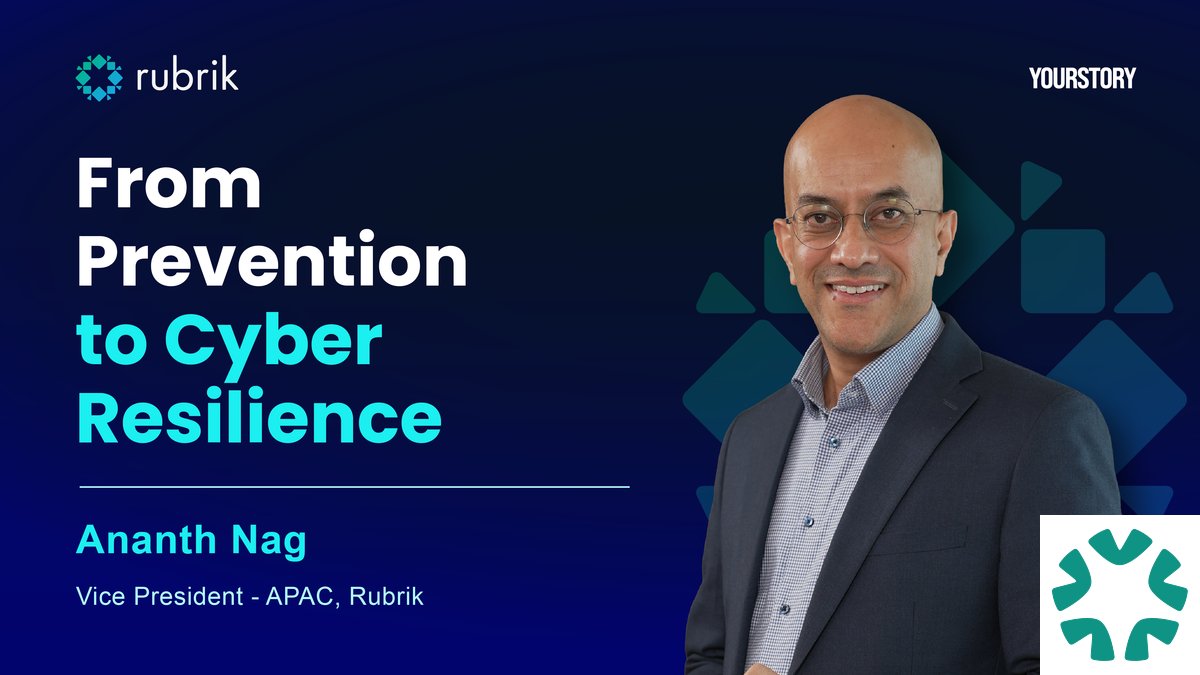
Artificial intelligence (AI) is revolutionizing cybersecurity, forcing enterprises to rethink their strategies. While AI helps in automating operations and strengthening security, it also enables attackers to identify vulnerabilities and launch sophisticated attacks faster than ever before. According to Ananth Nag, Vice President, APAC at Rubrik, this shift is compelling organizations to move from a prevention-focused model to one centered on resilience and recovery.
From Prevention to Resilience
AI has drastically reduced the time it takes for cyberattacks to unfold, compressing timelines from weeks to mere seconds. This rapid pace of innovation and adoption is changing the threat landscape.
Traditionally, enterprises relied on a cybersecurity model centered on prevention, detection, and remediation. Security teams assessed vulnerabilities, prioritized risks, and acted before attackers could cause significant damage. However, AI has altered this approach.
Threat actors now use AI to automate reconnaissance, identify weaknesses, and exploit them in seconds. As attacks become increasingly autonomous, organizations can no longer assume they can stop every intrusion before damage is done.
The New Cybersecurity Benchmark
The long-standing security benchmark—detect an intrusion in one minute, contain it in 10, and remediate it within 60—may no longer be sufficient when attacks unfold almost instantly. Instead of asking whether a breach can be prevented, leaders are increasingly asking how quickly critical business operations can be restored when one occurs.
Nag points to recent cyber incidents involving global brands such as Jaguar Land Rover and Marks & Spencer, where disruptions lasted for weeks, as examples of why business continuity has become just as important as prevention.
Recovery as a Business Continuity Capability
For many organizations, backup strategies still focus on protecting individual systems or applications. Nag believes that approach is no longer enough.
Modern enterprises operate across cloud platforms, on-premises infrastructure, applications, identities, endpoints, and data environments that are deeply interconnected. Restoring a single database or application offers little value if the rest of the business remains offline.
Instead, organizations need to understand what it takes to bring the business back online as a whole. That means recovering identity services, business applications, cloud workloads, infrastructure, and enterprise data—in the right order. It also requires a consolidated view of where trusted data resides and how systems depend on one another, so recovery can happen without introducing further risk.
Preparing for Cyber Crises
Cyber resilience begins well before an attack takes place. Organizations need to continuously identify clean recovery points, test recovery processes, and ensure that critical systems can be restored without reintroducing compromised data or malware.
As enterprise environments become more distributed across cloud infrastructure, on-premises systems, applications, and endpoints, the attack surface continues to grow. Those environments also contain an organization's most valuable assets, making them attractive targets for ransomware and other sophisticated attacks.
AI in Cybersecurity Defense
AI may be making cyberattacks faster and more sophisticated, but Nag believes it will become just as important for defenders. Security teams are already using AI to automate repetitive tasks, analyze large volumes of security data, and improve response times. Over time, he expects AI to take on a much bigger role, helping organizations detect anomalies, prioritize threats, and automate recovery workflows.
The Rise of the Resilience Agent
Nag envisions the next stage of cybersecurity as an autonomous resilience agent, an AI-powered system capable of orchestrating recovery across an enterprise with minimal human intervention. The goal is straightforward. If an incident occurs, business leaders should be able to trigger an intelligent recovery engine that restores applications, infrastructure, identities, and data in the right sequence. Instead of manually coordinating multiple teams during a crisis, enterprises would rely on AI to launch recovery workflows almost instantly.
Rubrik is already moving in that direction by helping customers automate cloud recovery and orchestrate the recovery of business-critical systems, reducing downtime while giving organizations greater confidence in their recovery processes.
Cyber Resilience in the Boardroom
The pace of AI innovation is forcing organizations to rethink more than cybersecurity. As AI agents become embedded across software development, customer operations, and enterprise applications, enterprise environments will become increasingly autonomous—and significantly more complex. That complexity will expand the attack surface while raising the stakes for business continuity.
Nag believes resilience is becoming a business issue rather than simply an IT concern. He points to recent cyber incidents that were resolved before they reached the public eye as evidence that rapid, orchestrated recovery can protect not only operations but also revenue, reputation, and customer trust.
In sectors such as financial services, the implications extend beyond individual enterprises. The ability to recover quickly can have wider consequences for the stability of financial systems and the broader economy.
For that reason, he believes boards need to prepare for the assumption that breaches will occur. As AI continues to reshape both attack and defense, Nag expects resilience to become the defining measure of enterprise cybersecurity. Organizations that invest in recovery, automate critical processes, and regularly test their resilience will be better placed to manage the next generation of AI-driven threats.
Conclusion
In 2026, AI is transforming cybersecurity by shifting the focus from prevention to resilience. Enterprises must adopt new strategies to ensure business continuity and recover quickly from cyber incidents. By leveraging AI and preparing for inevitable breaches, organizations can better manage the challenges posed by the next generation of AI-driven threats.
FAQ
What is the main challenge in cybersecurity today?
The main challenge is the rapid pace of AI-driven attacks, which compress attack timelines from weeks to seconds, making traditional prevention strategies insufficient.
How can enterprises prepare for cyber crises?
Enterprises need to continuously identify clean recovery points, test recovery processes, and ensure critical systems can be restored without reintroducing compromised data or malware.
What role will AI play in future cybersecurity defenses?
AI will play a crucial role in detecting anomalies, prioritizing threats, and automating recovery workflows, helping organizations manage AI-driven threats more effectively.
For more information, visit blogy.in
Sources
This story is an original summary and analysis written by LazyFounders from the reporting listed above. Facts are attributed to their original publishers; sections marked as analysis are LazyFounders's opinion. Where a source is in another language, facts were machine-translated and quotations are reported, not reproduced. Read the original coverage via the links.
