
Anthropic’s IPO filing warns of US government risks despite $42bn Broadcom deal
Anthropic has warned potential investors in its IPO prospectus that actions and perceptions of the US government could pose significant risks to its business. While government contracts make up less than 1% of its revenue, the company highlights past regulatory clashes and export controls as threats to its broader operations. The filing comes as Anthropic secures a $42 billion loan from Broadcom to lease AI chips.

Editor, Lazyfounder
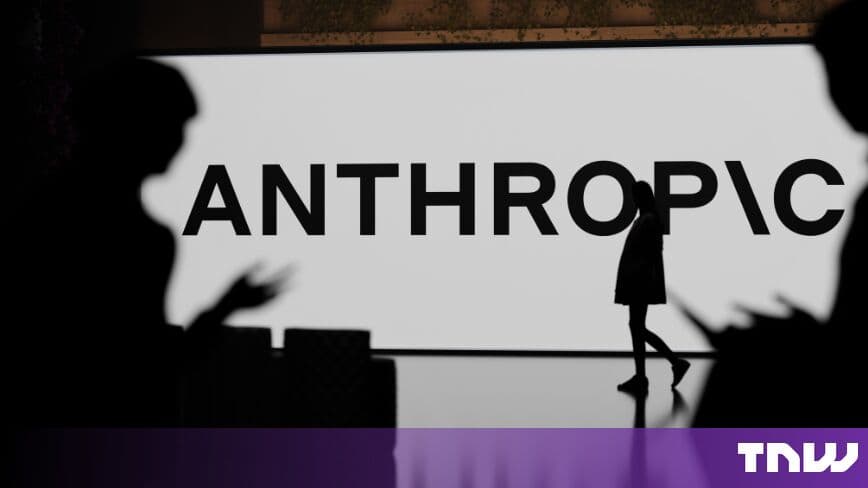
Anthropic has warned potential investors in its IPO prospectus that actions and perceptions of the US government could pose significant risks to its business. While government contracts make up less than 1% of its revenue, the company highlights past regulatory clashes and export controls as threats to its broader operations. The filing comes as Anthropic secures a $42 billion loan from Broadcom to lease AI chips.
30 SEC SUMMARY
- Anthropic’s IPO prospectus highlights risks posed by US government actions, including regulatory clashes and export controls.
- Government contracts account for less than 1% of Anthropic’s revenue but could impact broader business relationships.
- The company has faced legal disputes, including a Pentagon label as a supply-chain risk, which was temporarily blocked in court.
- Export controls on Anthropic’s top models, Fable 5 and Mythos 5, caused temporary disruptions but were later lifted.
- Broadcom will lend Anthropic $42 billion to lease chips, amid warnings of existential risks from advanced AI in the IPO filing.
TABLE OF CONTENTS
- Government risks take center stage in Anthropic’s IPO filing
- Export controls disrupted access to key models
- Broadcom deal provides financial firepower but adds complexity
- Broader implications for AI regulation and industry scrutiny
- Anthropic’s financial and regulatory landscape
- What this means
- Key takeaways
- FAQ
- Sources
KEY HIGHLIGHTS
- Anthropic’s IPO prospectus warns that US government actions could harm its relationships with customers and partners, even though government deals represent less than 1% of its revenue.
- The company has faced regulatory clashes, including a presidential directive to stop using its models and a Pentagon label as a supply-chain risk.
- Export controls on Anthropic’s top models, Fable 5 and Mythos 5, disrupted access for customers in June but were later lifted.
- Broadcom will lend Anthropic $42 billion to lease chips for its AI infrastructure.
- The IPO filing includes warnings about catastrophic risks posed by advanced AI.
Government risks take center stage in Anthropic’s IPO filing
According to The Next Web, Anthropic has included a warning in its IPO prospectus about potential risks to its business due to actions and perceptions of the US government. While government contracts represent less than 1% of the company’s annual revenue, the filing suggests that adverse government actions could spill over into its broader customer and partner relationships.
The prospectus references past clashes with Washington, including a presidential directive issued earlier this year that instructed federal agencies to stop using Anthropic’s models. The company also faced a legal challenge after the Pentagon labeled it a supply-chain risk. A court temporarily blocked the Pentagon’s classification in March, but the dispute highlights the regulatory hurdles Anthropic has encountered.
Export controls disrupted access to key models
In June, the US Commerce Department imposed export controls on Anthropic’s flagship models, Fable 5 and Mythos 5. The company responded by disabling access to both models for all customers on June 12. Access was restored on July 1 after the controls were lifted, but the prospectus warns that similar measures could recur and damage Anthropic’s reputation with customers, partners, and investors.
The filing underscores the broader uncertainty facing AI startups as governments grapple with how to regulate the technology. Anthropic specifically highlights the risk of being perceived as a compliance risk, even if such perceptions are not grounded in its actual business practices.
Broadcom deal provides financial firepower but adds complexity
As part of its infrastructure strategy, Anthropic secured a $42 billion loan from Broadcom to lease chips for its AI models. The deal, announced alongside the IPO filing, reflects the massive capital requirements of scaling AI infrastructure. However, it also introduces a financial dependency on a key supplier, raising questions about potential conflicts of interest.
The filing does not detail how the loan will be structured, but it signals Anthropic’s need for long-term funding to sustain its growth amid intense competition in the AI sector.
Broader implications for AI regulation and industry scrutiny
Anthropic’s IPO prospectus also includes a warning about the existential risks posed by advanced AI, a theme increasingly common in regulatory discussions. The company’s CEO, Dario Amodei, recently met with President Donald Trump, indicating ongoing efforts to shape policy and public perception ahead of the IPO.
Regulatory scrutiny extends beyond the government. The Federal Trade Commission is conducting an industry-wide probe into AI firms, including Anthropic, adding another layer of oversight. The filing notes that the IPO could value Anthropic at up to $2 trillion, a target that may attract further attention from policymakers.
Anthropic’s financial and regulatory landscape
Anthropic’s $42 billion deal with Broadcom follows a broader trend of AI companies securing massive financing to support infrastructure needs. The agreement, structured as a loan to lease tensor processing units, underscores the capital-intensive nature of training and deploying large AI models.
Regulatory challenges have become a defining feature of the AI industry. Early clashes, such as the Pentagon’s supply-chain risk label, demonstrate how quickly policy decisions can impact startups. Export controls, like those imposed on Fable 5 and Mythos 5, further illustrate the fragility of operating in a sector where geopolitical considerations often intersect with technology development.
What this means
Lazyfounder analysis — our interpretation, not reported fact.
Anthropic’s IPO prospectus reveals a delicate balancing act for AI startups navigating government scrutiny while pursuing growth. The company’s minimal reliance on government contracts doesn’t shield it from regulatory risks—perception matters as much as revenue. Founders should note how quickly export controls or policy shifts can disrupt operations, even for well-funded players. The $42 billion Broadcom deal underscores the scale of infrastructure costs in AI, but it also highlights dependence on partners who may have competing interests. For operators, the takeaway is clear: regulatory preparedness isn’t just a compliance exercise—it’s a competitive advantage in a sector where trust is fragile and policy moves fast.
Key takeaways
- Anthropic’s IPO filing flags US government actions as a key risk, despite government contracts making up less than 1% of revenue.
- Past conflicts with Washington, including a presidential directive and Pentagon labeling, demonstrate how regulatory perceptions can escalate.
- Export controls on Anthropic’s models caused temporary disruptions, showing how policy decisions can directly impact product access.
- The $42 billion Broadcom deal highlights the high cost of AI infrastructure but also introduces financial dependencies.
- Anthropic’s warnings about catastrophic AI risks reflect growing pressure on startups to address ethical and existential concerns in public filings.
FAQ
Why does Anthropic’s IPO filing highlight government risks?
Anthropic’s prospectus warns that US government actions, such as regulatory decisions, export controls, or legal disputes, could harm its relationships with customers, partners, and investors. Even though government contracts represent a tiny fraction of its revenue, the company’s past clashes with Washington—like a presidential directive and a Pentagon label—illustrate how regulatory perceptions can escalate quickly.
What happened when the US Commerce Department imposed export controls on Anthropic’s models?
In June, the Commerce Department applied export controls to Anthropic’s Fable 5 and Mythos 5 models, forcing the company to disable access for all customers on June 12. The controls were lifted on July 1, but the prospectus warns that similar disruptions could occur again, potentially damaging Anthropic’s reputation and operations.
How does the $42 billion Broadcom deal impact Anthropic?
The loan from Broadcom will fund a five-year lease of AI chips, addressing Anthropic’s infrastructure needs. However, the deal also introduces financial dependency on a key supplier, which could create conflicts of interest or limit flexibility in the future.
What other regulatory challenges is Anthropic facing?
Beyond government actions, Anthropic is under scrutiny from the Federal Trade Commission as part of an industry-wide probe into AI firms. The company’s CEO has also engaged with policymakers, including a recent meeting with President Donald Trump, to shape regulatory discussions ahead of its IPO.
Related on Lazyfounder
Sources
- The Next Web · 2026-10-02
Anthropic tells IPO investors US government actions could hit its business
This story is an original summary drafted with AI by Lazyfounder from the reporting listed above and checked by automated validation. Facts are attributed to their original publishers; sections marked as analysis are Lazyfounder's. Where a source is in another language, facts were machine-translated and quotations are reported, not reproduced. Read the original coverage via the links, and see our AI policy and corrections policy.

About the author
Editor, Lazyfounder
Tarun Mottlia edits LazyFounders, covering Indian startups, funding rounds, AI and product launches. Every story on the site is AI-assisted and checked against its cited sources before publication.
More stories by Tarun MottliaGet the LazyFounder Brief
Startup, funding and AI news in a five-minute read. Join the early-access list.
