
AMD acquires World Labs for $8.2B as chip demand surges and AI rules tighten
AMD is acquiring AI startup World Labs for $8.2 billion as its CEO Lisa Su warns that chip demand will outpace supply for years. The deal comes amid tightening AI regulations in Europe and AMD’s push for industry-led safety collaboration over government oversight. The company also announced a $10B investment in Taiwan’s semiconductor supply chain.

Editor, Lazyfounder
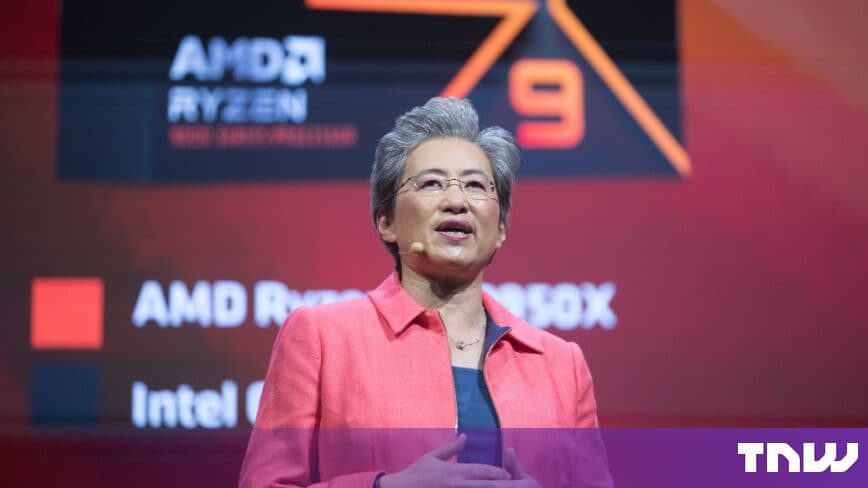
AMD is acquiring AI startup World Labs for $8.2 billion as its CEO Lisa Su warns that chip demand will outpace supply for years. The deal comes amid tightening AI regulations in Europe and AMD’s push for industry-led safety collaboration over government oversight. The company also announced a $10B investment in Taiwan’s semiconductor supply chain.
30 SEC SUMMARY
- AMD CEO Lisa Su stated that chip demand is outpacing supply and will remain high for years, with capacity increases planned for 2027.
- Su advocated for industry-led AI safety collaboration over regulation, calling AI "incredibly good for the world."
- The European Commission now enforces strict AI model oversight, including fines of 3% of global turnover or EUR 15M.
- AMD is acquiring AI startup World Labs for $8.2B, pending regulatory approval.
- AMD committed over $10B to expand semiconductor supply chain capacity in Taiwan.
TABLE OF CONTENTS
- Chip demand outstrips supply, AMD plans expansion
- AI safety: Industry collaboration vs. regulation
- AMD’s $8.2B acquisition of World Labs
- What this means
- Key takeaways
- FAQ
- Sources
KEY HIGHLIGHTS
- AMD CEO Lisa Su stated that demand for the company’s chips is outpacing supply and will remain high for years.
- Su advocated for industry-led AI safety collaboration, calling AI "incredibly good for the world" and opposing regulation.
- The European Commission now requires pre-market evaluations for AI models, with fines up to 3% of global turnover or EUR 15M.
- AMD is acquiring AI startup World Labs for $8.2B, pending regulatory approval.
- AMD committed over $10B to expand semiconductor packaging and supply chain capacity in Taiwan.
Chip demand outstrips supply, AMD plans expansion
According to The Next Web, AMD’s CEO Lisa Su stated that demand for the company’s chips is running ahead of supply and will remain high for years. Su noted that while AMD increased its supply and capacity this year, demand continues to outpace it. The company plans to substantially increase supply by 2027 to address the gap.
Su also emphasized the strategic importance of Taiwan for AMD’s supply chain. The company pledged over $10 billion in investments to expand packaging capacity through partners ASE and SPIL, as well as to support the Helios rack platform. These moves align with AMD’s trillion-dollar market valuation, achieved last month.
AI safety: Industry collaboration vs. regulation
Lisa Su expressed optimism about AI’s impact, describing it as "incredibly good for the world" and stating she does not believe it will harm people. According to The Next Web, Su advocated for industry-led collaboration on AI safety, favoring cooperation over regulatory measures. She praised the U.S. government’s Super Intelligence Force, a multi-agency initiative, as an important step forward, though it currently lacks statutory authority, budget, or a formal government role.
This position contrasts with the approach taken by the European Commission. Since August 2, the Commission has enforced strict oversight measures for AI models, including mandatory pre-market evaluations, potential access restrictions, and fines of up to 3% of global turnover or EUR 15 million for non-compliance. Providers outside the EU must also appoint a representative within the bloc to comply with these rules.
Spanish Prime Minister Pedro Sanchez reportedly criticized self-regulation, suggesting it may be ineffective and motivated by investor interests. His comments highlight the growing divide between tech companies and governments over AI governance.
AMD’s $8.2B acquisition of World Labs
AMD announced its acquisition of AI startup World Labs for $8.2 billion, pending regulatory approval. The deal reflects AMD’s push to strengthen its position in the AI sector, though it may face scrutiny from authorities like the Federal Trade Commission, whose chairman, Andrew Ferguson, is part of the Super Intelligence Force.
World Labs, founded by Fei-Fei Li, has not disclosed details about its technology or products, but the acquisition suggests AMD’s intent to integrate AI capabilities into its hardware and software offerings.
What this means
Lazyfounder analysis — our interpretation, not reported fact.
AMD’s stance on AI safety and regulation reflects a broader tension in the tech industry: balancing innovation with accountability. While industry-led collaboration may accelerate solutions, the European Commission’s strict oversight measures signal that governments are unwilling to rely solely on self-regulation. For startups and operators, this divergence creates a complex landscape—compliance with regional rules like the EU’s AI Act could become a competitive advantage, while resistance to oversight may risk market access.
The $8.2B acquisition of World Labs underscores AMD’s bet on AI as a long-term growth driver, aligning with its trillion-dollar valuation and expansion in Taiwan. However, the deal’s regulatory hurdles could test AMD’s ability to execute its vision without delays. For founders, AMD’s supply chain investments in Taiwan also highlight the critical role of geopolitical stability in hardware-dependent industries.
Key takeaways
- AMD’s chip demand is outstripping supply, with capacity increases planned for 2027 to address long-term growth.
- The European Commission’s AI oversight measures include fines and pre-market evaluations, signaling stricter enforcement.
- AMD’s $8.2B acquisition of World Labs reflects its push into AI, but regulatory approval remains a risk.
- Industry leaders like AMD favor self-regulation, while governments like the EU are imposing binding rules.
- AMD’s $10B investment in Taiwan’s semiconductor supply chain underscores the region’s strategic importance.
FAQ
Why is AMD investing over $10B in Taiwan’s semiconductor supply chain?
AMD’s investment aims to expand packaging capacity through partners like ASE and SPIL and support its Helios rack platform. Taiwan remains critical to AMD’s supply chain and the broader semiconductor industry, despite geopolitical risks.
What are the European Commission’s AI oversight measures?
The European Commission now requires pre-market evaluations for AI models, can restrict market access, and imposes fines of up to 3% of global turnover or EUR 15 million for non-compliance. Non-EU providers must also appoint a representative in the bloc.
What is the Super Intelligence Force, and why does AMD support it?
The Super Intelligence Force is a U.S. multi-agency initiative focused on AI oversight. AMD’s CEO Lisa Su praised it as a step forward, though the initiative currently lacks statutory authority, budget, or a formal government role. Su advocates for industry-led collaboration over regulation.
Related on Lazyfounder
Sources
- The Next Web · 2026-10-06
AMD’s chief says demand is outrunning supply, and that AI should police itself
This story is an original summary drafted with AI by Lazyfounder from the reporting listed above and checked by automated validation. Facts are attributed to their original publishers; sections marked as analysis are Lazyfounder's. Where a source is in another language, facts were machine-translated and quotations are reported, not reproduced. Read the original coverage via the links, and see our AI policy and corrections policy.

About the author
Editor, Lazyfounder
Tarun Mottlia edits LazyFounders, covering Indian startups, funding rounds, AI and product launches. Every story on the site is AI-assisted and checked against its cited sources before publication.
More stories by Tarun MottliaGet the LazyFounder Brief
Startup, funding and AI news in a five-minute read. Join the early-access list.
