
Alibaba Rolls Out Qwen N1 AI Smart Glasses in China
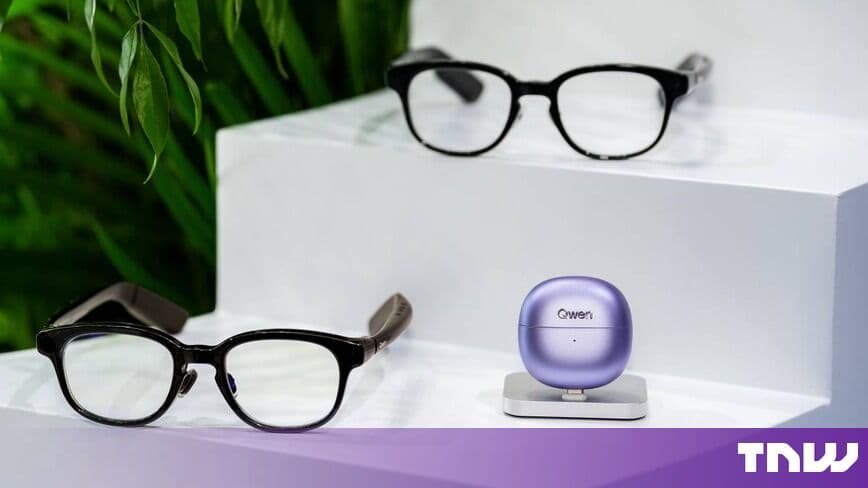
Alibaba has begun selling its Qwen Glasses N1, a pair of AI-powered smart glasses, in China. The glasses start at 2,999 yuan ($450) and include features like a 50-megapixel camera, Alibaba’s Qwen AI assistant, and bone-conduction microphones. The company also launched Qwen Clip AI earbuds in collaboration with Bose.

Editor, Lazyfounder
30 SEC SUMMARY
- Alibaba has launched its Qwen Glasses N1, AI-powered smart glasses, in China starting at 2,999 yuan ($450).
- The glasses feature a 50-megapixel camera, Alibaba’s Qwen AI assistant, and bone-conduction microphones for voice interactions.
- A Pro model includes eye tracking, health monitoring, and iris-scanning payments.
- Alibaba also released Qwen Clip AI earbuds in collaboration with Bose, priced at 1,299 yuan.
- The devices are available on major Chinese e-commerce platforms like Taobao, Tmall, JD.com, and Douyin.
TABLE OF CONTENTS
KEY HIGHLIGHTS
- Alibaba’s Qwen Glasses N1 are now available in China starting at 2,999 yuan ($450), with subsidies lowering the price to as little as 2,218 yuan.
- The glasses include a 50-megapixel camera, Alibaba’s Qwen AI assistant, and features like translation, meeting notes, and voice-activated shopping.
- The Qwen Glasses N1 Pro model adds eye tracking, health monitoring (heart rate, blood oxygen, skin temperature), and iris-scanning for payments.
- Alibaba launched Qwen Clip AI earbuds in partnership with Bose, priced at 1,299 yuan, offering translation and note-taking capabilities.
- Pre-orders for both devices opened on September 22 after being showcased at Alibaba’s Apsara conference.
- The Qwen Glasses N1 are available on Taobao, Tmall, JD.com, and Douyin.
Pricing and availability in China
Alibaba’s Qwen Glasses N1 are now on sale in China, with a starting price of 2,999 yuan ($450), according to The Next Web. Reports from Chinese outlets suggest the base price may be slightly lower at 2,899 yuan. With state subsidies and promotional offers, buyers can pay as little as 2,218 yuan.
The glasses are available on major Chinese e-commerce platforms, including Taobao, Tmall, JD.com, and Douyin. Pre-orders opened on September 22, following their unveiling at Alibaba’s Apsara conference earlier in the month.
Features and capabilities
The Qwen Glasses N1 are equipped with a 50-megapixel camera and run Alibaba’s Qwen AI assistant, which users can interact with via bone-conduction microphones. The assistant can translate conversations, take meeting notes, assist with shopping and payments, and perform tasks through voice commands.
The glasses offer 25 hours of standby time or nine hours of music playback on a single charge, and their battery is swappable. Song Gang, Vice President of Alibaba’s Qwen business, described the N1 as "a second pair of eyes and ears" for users.
The Qwen Glasses N1 Pro, priced at 3,499 yuan, includes additional features like eye tracking, which allows users to ask about objects by looking at them and confirm payments using an iris scan. It also tracks health metrics such as heart rate, blood oxygen levels, and skin temperature.
Qwen Clip AI earbuds and competitive positioning
Alongside the glasses, Alibaba launched Qwen Clip AI earbuds in collaboration with Bose, priced at 1,299 yuan. These earbuds can translate conversations and take notes, offering similar functionality to the glasses but in a more compact form factor.
The Qwen Glasses N1 are priced similarly to Meta’s Ray-Ban smart glasses, which currently lead the market. Alibaba’s approach mirrors Meta’s strategy of using hardware as a gateway to its AI ecosystem, positioning the N1 as a tool for daily AI interaction.
Regulatory compliance for AI wearables
In September, China introduced a voluntary code requiring AI-powered glasses to display a visible light when recording. The Qwen Glasses N1 comply with this guideline, reflecting Alibaba’s alignment with local regulatory expectations.
What this means
Lazyfounder analysis — our interpretation, not reported fact.
Alibaba’s launch of the Qwen Glasses N1 signals a bold step into the competitive AI wearables market, directly challenging incumbents like Meta. Unlike earlier smart glasses—often seen as niche or gimmicky—Alibaba is positioning the N1 as a practical, everyday AI assistant. The inclusion of health monitoring and iris-scanning payments in the Pro model suggests a vision beyond mere convenience, aiming to integrate the glasses into users’ daily routines.
For founders and operators, this launch underscores the importance of ecosystem integration. Alibaba isn’t just selling hardware; it’s using the glasses as a trojan horse for its Qwen AI assistant, much like Meta’s strategy with its Ray-Ban glasses and AI tools. However, the success of this approach will depend on how seamlessly the hardware and AI interact—and whether users find the assistant genuinely useful or just another novelty.
The pricing strategy is also worth noting. By leveraging subsidies and discounts, Alibaba is making the glasses more accessible to a broader audience. This could accelerate adoption in China, where price sensitivity is often a decisive factor. However, the real test will be whether the glasses can justify their cost through consistent, real-world utility.
Key takeaways
- AI wearables are evolving beyond niche use cases, with Alibaba positioning its glasses as a daily AI assistant rather than just a specialty device.
- Pricing strategies matter: subsidies and discounts can significantly lower the barrier to adoption in competitive markets like China.
- Partnerships with established brands (e.g., Bose) can lend credibility to new hardware entrants in a crowded space.
- Regulatory considerations, such as China’s requirement for recording indicators, highlight the need to align product features with local policies.
FAQ
How do the Qwen Glasses N1 compare to Meta’s Ray-Ban smart glasses?
The Qwen Glasses N1 are priced similarly to Meta’s Ray-Ban smart glasses but offer additional features like health monitoring, eye tracking, and iris-scanning payments in the Pro model. Both are positioned as gateways to their respective company’s AI ecosystems.
What platforms are selling the Qwen Glasses N1 in China?
The Qwen Glasses N1 are available on Taobao, Tmall, JD.com, and Douyin.
Can the Qwen Glasses N1 translate conversations in real time?
Yes, the glasses feature Alibaba’s Qwen AI assistant, which can translate conversations, take meeting notes, and assist with tasks like shopping and payments via voice commands.
What are the key differences between the Qwen Glasses N1 and N1 Pro?
The Qwen Glasses N1 Pro includes eye tracking, health monitoring (heart rate, blood oxygen, skin temperature), and iris-scanning for payments, while the base N1 model lacks these features. The Pro model is priced at 3,499 yuan, compared to 2,999 yuan for the N1.
Related on Lazyfounder
Sources
- The Next Web · 2026-10-13
Alibaba starts selling its Qwen N1 AI glasses in China from $450
This story is an original summary drafted with AI by Lazyfounder from the reporting listed above and checked by automated validation. Facts are attributed to their original publishers; sections marked as analysis are Lazyfounder's. Where a source is in another language, facts were machine-translated and quotations are reported, not reproduced. Read the original coverage via the links, and see our AI policy and corrections policy.

About the author
Editor, Lazyfounder
Tarun Mottlia edits LazyFounders, covering Indian startups, funding rounds, AI and product launches. Every story on the site is AI-assisted and checked against its cited sources before publication.
More stories by Tarun MottliaGet the LazyFounder Brief
Startup, funding and AI news in a five-minute read. Join the early-access list.
