
Airtel Money’s $7B IPO excludes Nigerian fintech arm due to regulatory rules
Airtel Money will list on the London Stock Exchange on October 14 with a $7 billion valuation, but its Nigerian fintech business, SmartCash, will not be part of the offering. The exclusion follows a Central Bank of Nigeria directive requiring the separation of telecom and fintech operations. Despite the setback, Airtel aims to reintegrate SmartCash in the future.

Editor, Lazyfounder
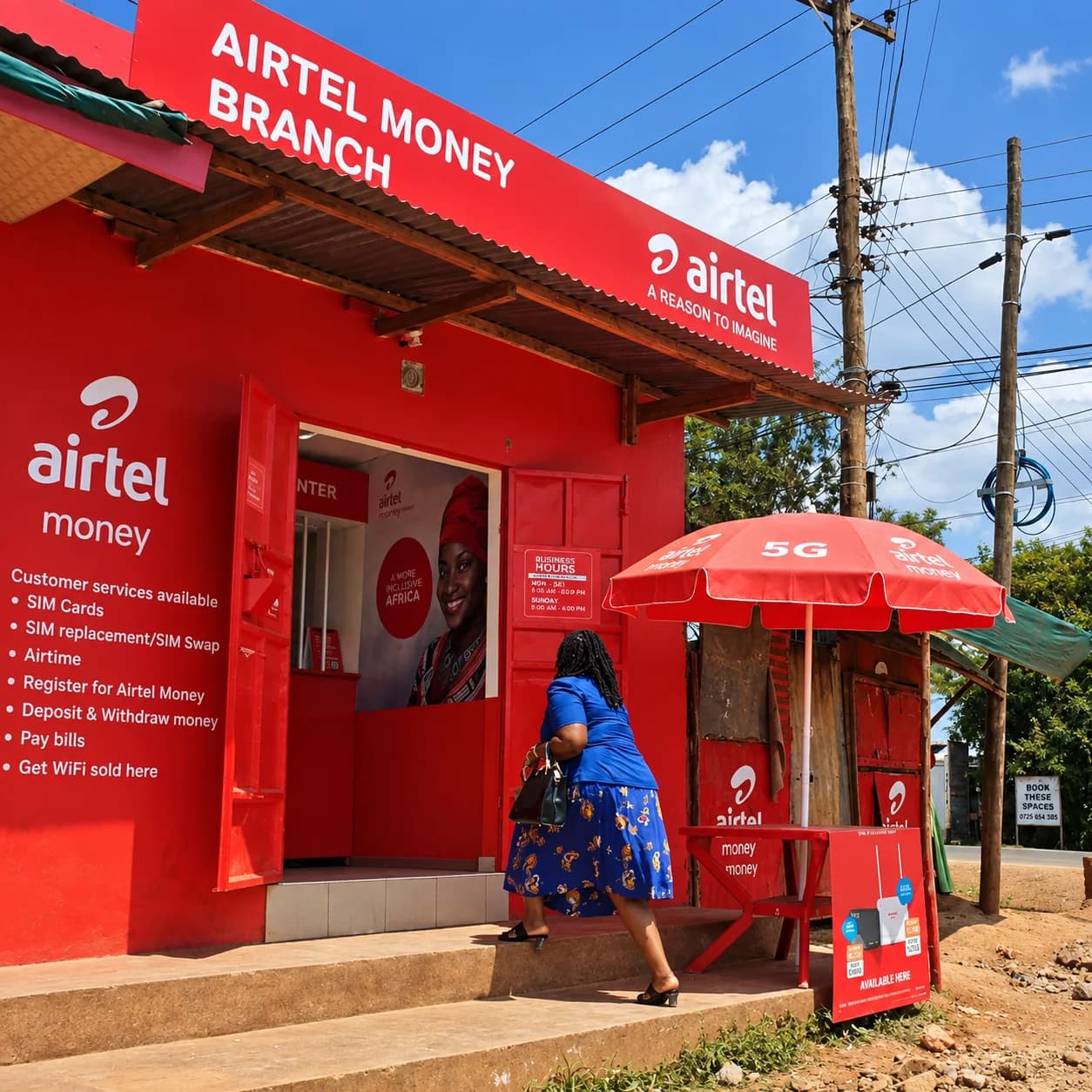
Airtel Money will list on the London Stock Exchange on October 14 with a $7 billion valuation, but its Nigerian fintech business, SmartCash, will not be part of the offering. The exclusion follows a Central Bank of Nigeria directive requiring the separation of telecom and fintech operations. Despite the setback, Airtel aims to reintegrate SmartCash in the future.
30 SEC SUMMARY
- Airtel Money will list on the London Stock Exchange on October 14 with a $7 billion valuation but exclude its Nigerian fintech business, SmartCash, due to regulatory requirements.
- The exclusion of SmartCash follows a Central Bank of Nigeria directive requiring Airtel to transfer its 25% stake back to Airtel Networks Limited.
- Airtel Money operates in 13 African countries and serves 53 million monthly active users as of June 2026.
- Nigeria’s mobile money market processed ₦20.71 trillion ($13.49 billion) in Q1 2025, with competitors like OPay dominating the space.
- MTN and Airtel’s mobile money businesses have struggled to gain traction against fintech players like OPay and PalmPay.
TABLE OF CONTENTS
- Airtel Money’s IPO proceeds without Nigerian fintech arm
- Regulatory compliance drives fintech-telecom separation
- Market competition and adoption challenges
- What this means
- Key takeaways
- FAQ
- Sources
KEY HIGHLIGHTS
- Airtel Money will list on the London Stock Exchange on October 14 with a $7 billion valuation, excluding its Nigerian fintech business, SmartCash.
- The exclusion of SmartCash follows a Central Bank of Nigeria directive requiring Airtel to transfer its 25% stake back to Airtel Networks Limited for $3 million.
- Airtel Money operates in 13 African countries and serves 53 million monthly active users as of June 2026.
- Nigeria’s mobile money market processed ₦20.71 trillion ($13.49 billion) in Q1 2025, with OPay reporting a gross transaction value of $358 billion for the year.
- MTN and Airtel dominate Nigeria’s telecom market but their mobile money services have yet to gain significant traction compared to fintech competitors.
Airtel Money’s IPO proceeds without Nigerian fintech arm
Airtel Money, the fintech arm of Airtel Africa, is set to list on the London Stock Exchange on October 14 with a valuation of $7 billion. However, the offering will exclude SmartCash, its Nigerian mobile money business, due to a directive from the Central Bank of Nigeria (CBN). According to TechCabal, the CBN required Airtel to transfer its 25% stake in SmartCash back to Airtel Networks Limited, the group’s Nigerian telecom entity.
The stake transfer was completed for $3 million, a nominal sum reflecting the regulatory mandate rather than a market-driven transaction. Despite the exclusion, Airtel Money has indicated plans to explore reintegrating SmartCash into its operations in the future, pending regulatory approvals.
Regulatory compliance drives fintech-telecom separation
The exclusion of SmartCash from Airtel Money’s IPO underscores a broader trend in Africa’s telecom and fintech sectors. Regulatory pressures are pushing telecom companies to separate their fintech businesses from core operations. According to TechCabal, this trend is not limited to Airtel; MTN Group has also taken similar steps.
In April, MTN Group completed the separation of its mobile money business in Ghana. Additionally, MTN Nigeria shareholders approved the separation of MoMo Payment Service Bank and Y’ello Digital Financial Services from its telecom operations into a new holding structure. These moves reflect evolving regulatory frameworks aimed at enhancing oversight and competition in the fintech space.
In Nigeria, Payment Service Banks (PSBs), a category that includes mobile money operators, are permitted to accept deposits and facilitate payments but are barred from lending activities. This regulatory structure aims to balance financial inclusion with risk management, but it has also created challenges for telecom-backed mobile money providers.
Market competition and adoption challenges
Despite dominance in Nigeria’s telecom sector, MTN and Airtel have struggled to replicate their success in the country’s rapidly growing mobile money market. According to TechCabal, the two companies combined serve 167.62 million telecom subscribers in Nigeria, yet their mobile money services have attracted fewer than 10 million users collectively.
In contrast, fintech competitors like OPay and PalmPay have gained significant traction. OPay alone reported 39.3 million monthly active users in 2025 and a gross transaction value of $358 billion for the year. Nigeria’s mobile money market processed ₦20.71 trillion ($13.49 billion) in the first quarter of 2025, highlighting the scale of opportunity—and competition—in the sector.
SmartCash has attempted to differentiate itself with a zero-fee banking model and a 15% annual interest rate on savings deposits. However, these efforts have yet to translate into substantial market share gains. Airtel Networks currently holds a majority stake in SmartCash Nigeria, with a nominee shareholding remaining below 0.01% within the group’s perimeter.
What this means
Lazyfounder analysis — our interpretation, not reported fact.
Airtel Money’s decision to exclude SmartCash from its IPO is a practical response to regulatory constraints, but it also highlights the complexities telecom operators face in integrating fintech businesses across diverse markets. For founders and operators, this case underscores three key lessons:
First, regulatory compliance is non-negotiable. The CBN’s directive left Airtel with little choice but to restructure, even if it means temporarily sidelining a market as large as Nigeria. Startups and scale-ups must proactively engage with regulators to anticipate shifts in policy, especially in fintech, where laws can evolve rapidly.
Second, the separation of telecom and fintech operations is becoming a continental trend. MTN’s similar moves in Ghana and Nigeria suggest this is not an isolated incident but a structural shift. For operators, this means rethinking go-to-market strategies, operational independence, and even branding for fintech arms. The goal is to ensure compliance while preserving the agility that makes fintech businesses competitive.
Finally, dominance in one sector—like telecom—does not guarantee success in another, like mobile money. MTN and Airtel’s struggles in Nigeria’s fintech space, despite their massive subscriber bases, show that incumbency is not enough. Fintech competitors like OPay have leveraged user-centric models (e.g., zero fees, high interest rates) to outpace telecom-backed services. For founders, this is a reminder that innovation, not just scale, drives adoption in crowded markets.
Key takeaways
- Airtel Money’s IPO will proceed without its Nigerian fintech arm, SmartCash, due to regulatory compliance issues.
- The Central Bank of Nigeria mandated the transfer of SmartCash’s stake back to Airtel Networks Limited, completed for $3 million.
- Airtel Money aims to reintegrate SmartCash in the future, subject to regulatory approvals.
- Despite strong telecom subscriber bases, MTN and Airtel’s mobile money services lag behind fintech competitors in Nigeria’s rapidly growing market.
- The separation of telecom and fintech operations is becoming a trend across Africa, with MTN Group also restructuring its mobile money businesses.
FAQ
Why is SmartCash excluded from Airtel Money’s IPO?
SmartCash is excluded due to a directive from the Central Bank of Nigeria (CBN) requiring Airtel to transfer its 25% stake in the business back to Airtel Networks Limited. The CBN’s regulation aims to enforce separation between telecom and fintech operations.
Will SmartCash be reintegrated into Airtel Money in the future?
Airtel Money has indicated it is exploring ways to reintegrate SmartCash, but any such move would depend on future regulatory approvals.
How does Airtel Money’s IPO valuation compare to its competitors?
Airtel Money’s $7 billion valuation reflects its pan-African operations and 53 million monthly active users. However, its exclusion of Nigeria—a major mobile money market—could limit its immediate growth potential compared to competitors like OPay, which dominate locally.
Why have MTN and Airtel’s mobile money services struggled in Nigeria?
Despite their telecom dominance, MTN and Airtel have faced challenges in mobile money adoption due to stiff competition from fintech players like OPay and PalmPay. These competitors have leveraged aggressive pricing, user-friendly interfaces, and targeted marketing to capture market share.
What are Payment Service Banks (PSBs) in Nigeria?
Payment Service Banks (PSBs) are financial institutions in Nigeria permitted to accept deposits and facilitate payments but barred from lending activities. They are designed to promote financial inclusion, particularly in underserved areas, but face operational restrictions that limit their scope.
Related on Lazyfounder
Sources
- TechCabal · 2026-10-06
Why Airtel Money’s $7bn IPO doesn’t include its Nigerian fintech business
This story is an original summary drafted with AI by Lazyfounder from the reporting listed above and checked by automated validation. Facts are attributed to their original publishers; sections marked as analysis are Lazyfounder's. Where a source is in another language, facts were machine-translated and quotations are reported, not reproduced. Read the original coverage via the links, and see our AI policy and corrections policy.

About the author
Editor, Lazyfounder
Tarun Mottlia edits LazyFounders, covering Indian startups, funding rounds, AI and product launches. Every story on the site is AI-assisted and checked against its cited sources before publication.
More stories by Tarun MottliaGet the LazyFounder Brief
Startup, funding and AI news in a five-minute read. Join the early-access list.
