
AI tools aim to predict optimal harvest dates for fruit farmers
Fruit farmers are turning to AI-powered tools to predict the best harvest dates for crops like apples, berries, and tomatoes. These systems analyse weather, crop development, and other factors to help growers avoid financial losses and improve productivity. While adoption remains slow, advancements in technology are making precision farming more accessible.

Editor, Lazyfounder
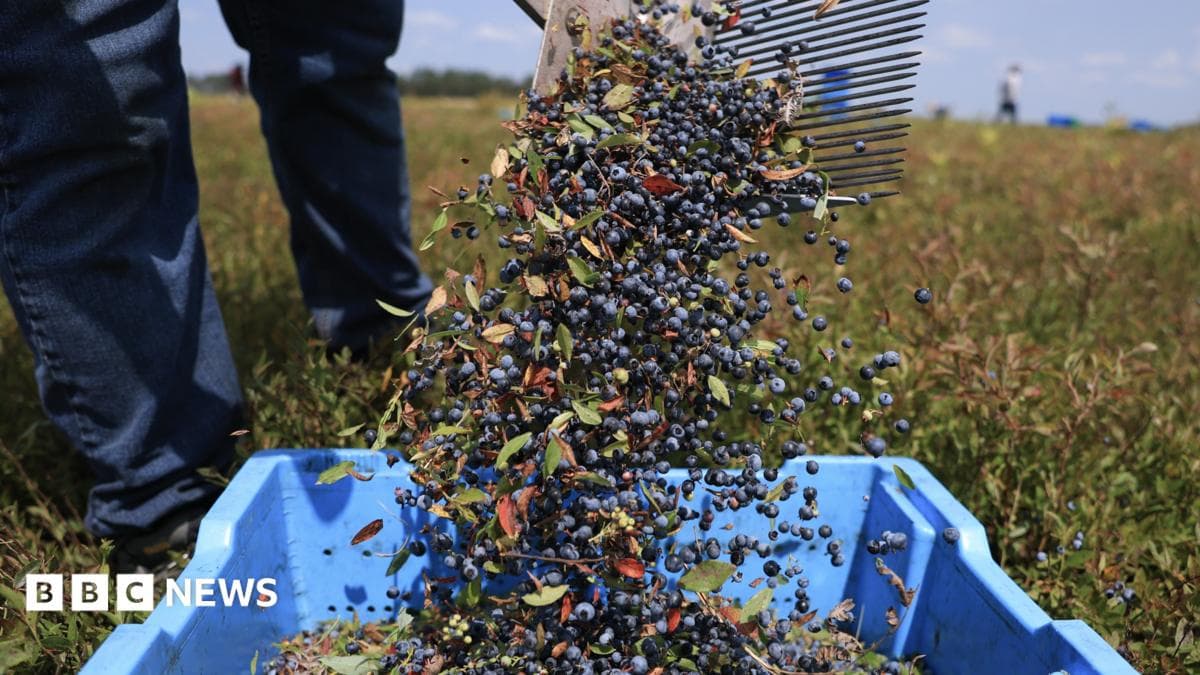
Fruit farmers are turning to AI-powered tools to predict the best harvest dates for crops like apples, berries, and tomatoes. These systems analyse weather, crop development, and other factors to help growers avoid financial losses and improve productivity. While adoption remains slow, advancements in technology are making precision farming more accessible.
30 SEC SUMMARY
- AI-powered tools are being tested to predict optimal harvest dates for fruits like apples, berries, and tomatoes.
- Companies like Okanagan Specialty Fruits and FruitCast use AI to analyse crop data and improve harvest timing.
- Millimetre wave technology and low-cost drones are being developed for non-invasive fruit ripeness detection.
- Farmers remain cautious about adopting AI due to trust and data privacy concerns.
- Extreme weather events are increasing the need for precise harvest predictions.
TABLE OF CONTENTS
- AI for precise harvest forecasting
- Emerging technologies for fruit ripeness detection
- Challenges slowing AI adoption in farming
- What this means
- Key takeaways
- FAQ
- Sources
KEY HIGHLIGHTS
- AI models forecast ideal harvest dates by analysing weather, crop development, and other variables.
- Okanagan Specialty Fruits uses Vivid Machines' AI-powered cameras to estimate yields and harvest timing for genetically modified apples.
- FruitCast provides AI-driven harvest forecasts for strawberries, raspberries, blackberries, blueberries, and tomatoes in the UK.
- Millimetre wave technology is being explored for non-invasive fruit ripeness detection.
- Low-cost drones are being developed to count crops and analyse fruit development.
AI for precise harvest forecasting
According to BBC News, AI-powered tools are being developed to help farmers predict the best time to harvest fruits like apples, berries, and tomatoes. These systems analyse weather conditions, crop development, and other variables to provide actionable forecasts for growers.
Okanagan Specialty Fruits, a US-based company, operates over 1,250 acres of apple orchards in Washington State. The company uses AI-driven cameras developed by Vivid Machines to estimate crop yields and predict harvest dates. Its apples are genetically engineered to resist browning, which adds complexity to determining the optimal harvest window.
FruitCast, a UK-based startup, offers AI-driven harvest forecasts for strawberries, raspberries, blackberries, blueberries, and tomatoes. Raymond Martin, co-founder and chief operating officer of FruitCast, reports that these tools help growers avoid financial losses caused by incorrect harvest timing, such as booking workers unnecessarily or missing peak profit windows.
AI systems can also detect early flower buds that are difficult to see with the naked eye, providing growers with early insights into potential yields.
Emerging technologies for fruit ripeness detection
Researchers are exploring new methods to detect fruit ripeness without invasive testing. Yasaman Ghasempour, a researcher at Princeton University, and her team developed a millimetre wave-based detector that can assess ripeness without damaging the fruit. This technology aims to provide farmers and customers with accurate, real-time data.
Brix meters, which use infrared light to measure sugar content in fruit, are another tool being used to determine ripeness without cutting into the crop. These devices offer a non-destructive way to assess fruit quality.
Kevin Wang, a researcher at the University of Florida, has developed a low-cost crop-counting tool using $100 drones. This tool helps farmers analyse crop development and estimate yields without significant investment.
Challenges slowing AI adoption in farming
Despite the potential benefits, AI adoption in agriculture remains slow. Farmers are often reluctant to share sensitive data, such as fertiliser and irrigation plans, with third-party AI models due to concerns about privacy and control.
Joel Carter, a representative of Okanagan Specialty Fruits, highlights the trust gap as a significant barrier to widespread adoption. Growers worry about relying on external systems for critical decisions like harvest timing.
Ben Palone, senior director of automation and commercialisation at Western Growers, notes that extreme weather events, like droughts and heatwaves, are increasing the need for precise harvest predictions. However, the industry’s cautious approach to new technology is slowing progress.
What this means
Lazyfounder analysis — our interpretation, not reported fact.
AI-driven harvest forecasting could be a game-changer for fruit farmers, especially as climate change introduces more variability into growing seasons. Tools that predict harvest dates with greater accuracy can help growers avoid financial losses, optimise labour costs, and ensure crops reach markets at peak quality. However, the slow adoption of these technologies reveals a broader issue in agriculture: trust in data-driven solutions is still fragile.
For founders and operators in agtech, this presents both an opportunity and a challenge. The opportunity lies in developing tools that are not only accurate but also transparent and respectful of farmers’ data privacy concerns. The challenge is convincing a traditionally risk-averse industry to embrace innovation. Until AI systems prove their reliability over multiple growing seasons, many farmers will likely treat them as supplements rather than replacements for their own expertise.
Key takeaways
- AI-powered tools are emerging to help farmers predict optimal harvest dates, reducing financial risks associated with incorrect timing.
- Companies like Okanagan Specialty Fruits and FruitCast are piloting AI-driven systems to provide actionable insights for fruit growers.
- Non-invasive technologies, such as millimetre wave detectors and low-cost drones, are being developed to improve crop analysis and ripeness detection.
- Farmers’ concerns about data privacy and trust in AI systems are significant barriers to widespread adoption.
- Extreme weather events are increasing the need for precise harvest predictions, but the industry’s cautious approach to new technology is slowing progress.
FAQ
How does AI predict harvest dates for fruit?
AI systems analyse weather conditions, crop development, historical data, and other variables to forecast the optimal time to harvest fruits like apples, berries, and tomatoes. These tools can also detect early flower buds and predict yield sizes.
What are the benefits of using AI for harvest forecasting?
AI-driven harvest forecasting helps farmers avoid financial losses by reducing risks like booking workers unnecessarily or missing peak profit windows. It also improves efficiency by ensuring crops are harvested at the right time for maximum quality.
Why is AI adoption slow in agriculture?
Farmers are often reluctant to share sensitive data, such as fertiliser and irrigation plans, with third-party AI models due to concerns about privacy and control. Additionally, there is a lack of trust in AI systems, as many growers prefer to rely on their own expertise.
What new technologies are being used to detect fruit ripeness?
Researchers are exploring millimetre wave technology, brix meters (which use infrared light), and low-cost drones to detect fruit ripeness non-invasively. These tools aim to provide accurate data without damaging the crop.
Related on Lazyfounder
Sources
- BBC News (Tech & Business) · 2026-09-30
The AI telling farmers when to harvest
This story is an original summary drafted with AI by Lazyfounder from the reporting listed above and checked by automated validation. Facts are attributed to their original publishers; sections marked as analysis are Lazyfounder's. Where a source is in another language, facts were machine-translated and quotations are reported, not reproduced. Read the original coverage via the links, and see our AI policy and corrections policy.

About the author
Editor, Lazyfounder
Tarun Mottlia edits LazyFounders, covering Indian startups, funding rounds, AI and product launches. Every story on the site is AI-assisted and checked against its cited sources before publication.
More stories by Tarun MottliaGet the LazyFounder Brief
Startup, funding and AI news in a five-minute read. Join the early-access list.
